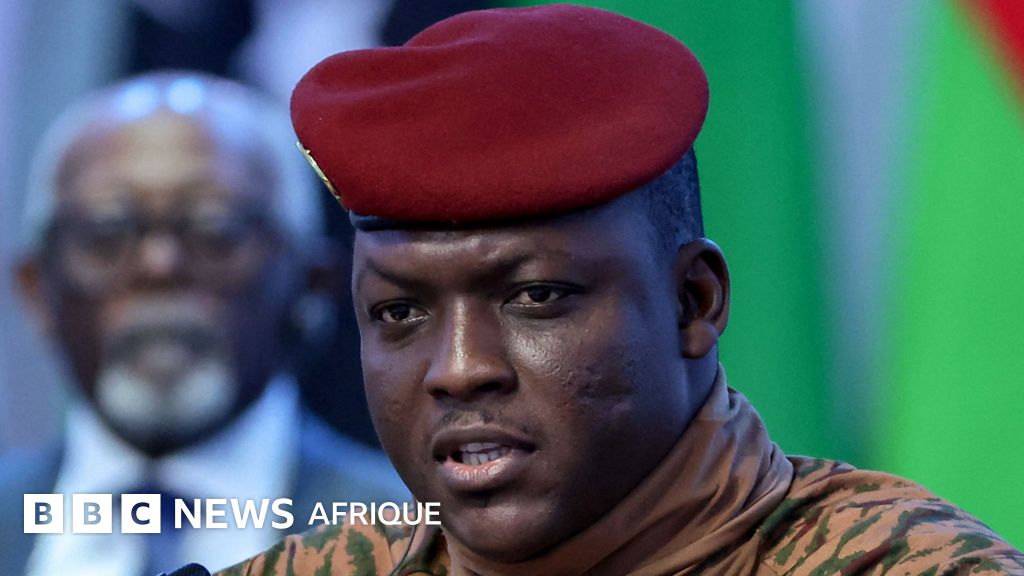
The military leader of Burkina Faso has declared that the country must abandon democracy, calling the system incompatible with its revolutionary goals. In a nationally televised interview, Captain Ibrahim Traoré, who seized power three years ago, stated that citizens should “forget the question of democracy,” asserting that it has brought nothing but suffering to the nation.
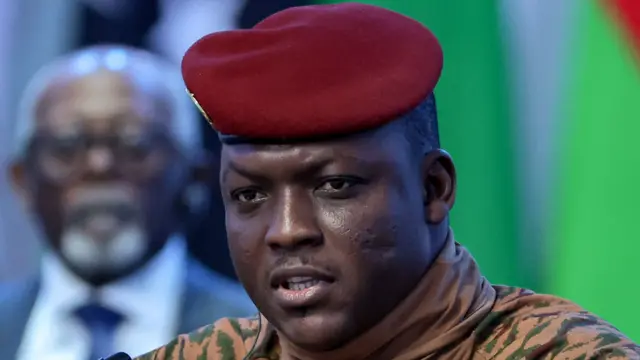
Photo: TASS via Reuters
a shift away from democratic promises
Traoré initially pledged to restore democracy by July 2024, yet just two months before this deadline, the military junta extended his mandate by five years. In January, authorities banned all political parties as part of a broader plan to “rebuild the state,” consolidating power under military rule.
During the primetime interview, Traoré expanded on these decisions, declaring, “Democracy is not for us. People must forget about it.” He cited the example of Libya, a neighboring country that descended into chaos after Western-backed intervention overthrew its long-time ruler, Muammar Gaddafi. Since then, Libya has struggled with ongoing conflict, failed elections, and a fragmented government.
a new political model for Burkina Faso
The 38-year-old leader, who presents himself as a revolutionary opposing Western imperialism, outlined his vision for Burkina Faso’s future. He dismissed political parties as divisive and dangerous, arguing that traditional leaders and grassroots structures should form the foundation of a new system centered on sovereignty, patriotism, and revolutionary mobilization.
“A true politician in Africa – at least in Burkina Faso – embodies all vices: a liar, a flatterer, a smooth talker,” Traoré stated. “We have our own approach. We are not trying to copy anyone. We are here to completely change how things are done.”
He emphasized economic and military self-reliance, insisting that shorter workdays would not help Burkina Faso catch up with wealthier nations. “Working six or eight hours a day will not allow us to develop,” he argued, calling for a more dedicated and rigorous approach to nation-building.
controversial policies and growing unrest
Since taking power, Traoré has cracked down on dissent, targeting opposition figures, media outlets, and civil society groups. Critics accuse his government of silencing opponents by sending them to frontline combat against Islamist militants, a strategy that has drawn international condemnation.
Despite these controversies, Traoré has gained significant support across Africa for his anti-Western rhetoric and panafricanist stance. Like neighboring juntas in Mali and Niger, Burkina Faso has distanced itself from Western allies—particularly France—in its fight against Islamist insurgencies. Instead, the country has turned to Russia for military assistance, though violence in the region continues unabated.
escalating violence and civilian casualties
Human rights groups report that over 1,800 civilians have been killed in Burkina Faso since Traoré’s rise to power in 2023. According to the findings, two-thirds of these deaths are attributed to state forces and allied militias, with the remainder linked to Islamist extremists.
The military leader’s uncompromising stance on democracy and his consolidation of power reflect a broader trend in West Africa, where juntas are increasingly rejecting democratic norms in favor of centralized, military-led governance. As Burkina Faso navigates this turbulent period, the future of its political system—and the region—remains uncertain.