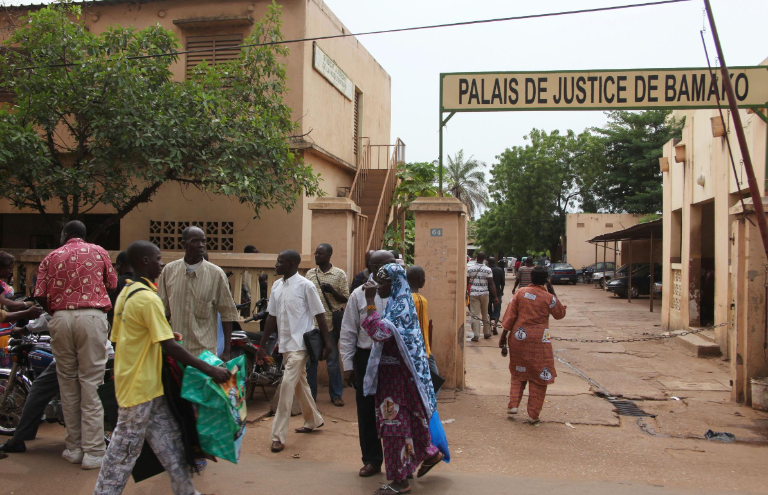
Adama Sangaré, former mayor of Bamako district, has been sentenced to a decade in prison following a high-stakes trial centered on contested land allocations in the Bamako-Sénou airport zone. Despite the verdict, the defense team continues to challenge the ruling, raising critical questions about the legal foundation of the conviction and the court’s jurisdiction. The decision marks a pivotal moment not only for Sangaré but also for Mali’s broader property governance framework.
Why the defense insists the case is a matter of administrative oversight
The crux of the defense’s argument hinges on the assertion that Sangaré’s alleged wrongdoing stemmed from administrative actions taken during his tenure—not criminal intent. Legal representatives have emphasized that procedural irregularities in land divisions and allocations should not automatically translate into criminal offenses like forgery, embezzlement, or public asset misuse. They contend that such matters fall under civil or administrative law, where sanctions are typically administrative rather than penal.
Central to this defense is the claim that the decisions in question—though possibly flawed—were made within the scope of municipal authority. The defense questioned the jurisdiction of the criminal court, arguing that administrative legality should be scrutinized under specialized procedures rather than within a penal framework. This stance challenges the very foundation of the prosecution’s approach, pushing for re-evaluation of whether criminal intent can be inferred from administrative discrepancies.
Political context vs. legal accountability: a defense built on Ibrahim Boubacar Keïta’s instructions
An unexpected layer of the case involves Sangaré’s claim that his actions were carried out under verbal directives from Ibrahim Boubacar Keïta, Mali’s former president. According to testimonies presented in court, these land allocations were part of broader efforts to resettle internally displaced persons from northern Mali during post-conflict reconstruction. Sangaré’s legal team argues that these political directives justified his administrative decisions, blurring the lines between policy execution and individual liability.
However, the prosecution dismissed this narrative, asserting that the land allocations lacked legal justification or compliance with public property regulations. The exchange raises profound questions: Can administrative decisions executed under presidential directives absolve officials of personal accountability? The court’s response—a decade-long prison sentence—suggests that the judiciary does not view political context as a shield against legal consequences.
The financial controversy fueling the conviction
Financial irregularities remain a cornerstone of the prosecution’s case. Prosecutors presented evidence linking Sangaré to unauthorized exemptions in frais d’édilité (construction fees), resulting in an alleged public loss of 483.964 million Central African CFA francs. Additionally, 49.39 million CFA francs were flagged for irregularities in fee collection.
Sangaré countered that fee waivers were within his legitimate powers as mayor, and denied involvement in the management of demolition-related funds, which he claimed were handled by state agencies. Despite these arguments, the court ruled that the financial irregularities were sufficient to uphold the conviction, ordering collective restitution from multiple defendants including Sangaré.
A broader legal fallout: who else was impacted by the ruling?
The ripple effects of the verdict extended beyond Sangaré. Ten-year sentences were handed down to former sub-prefects Daha Keïta and Ibrahim Koïta, as well as local officials Adam Aïché Traoré, Fatouma Samassékou, and Bourama Komagara (with five years suspended). Former Commune VI mayor Souleymane Dagnon received the harshest penalty—a 20-year sentence—prompting an arrest warrant due to his absence during the trial. Meanwhile, Sékou Keïta was acquitted of all charges.
The prosecution had initially sought 15 years for most defendants and 20 for Dagnon. The disparity in sentences underscores tensions between the judiciary’s interpretation of accountability and the defense’s appeals for contextual leniency. The severity of punishments signals a judicial stance against perceived abuse of public office, yet it also intensifies debates over proportionality in cases involving administrative discretion.
The appeal: where the judicial saga may lead next
With the defense announcing plans to appeal, the case is far from settled. The appeal process will scrutinize the original verdict’s legal reasoning, particularly regarding jurisdiction, intent, and the admissibility of Sangaré’s defense claims. This next phase could clarify whether administrative decisions can be criminalized without clear evidence of personal malfeasance.
The outcome holds significant implications for Mali’s land governance. It challenges the blurred boundaries between public policy, municipal authority, and criminal liability—particularly in high-stakes infrastructure zones like the Bamako-Sénou airport area. As the appeal unfolds, the case may redefine how administrative decisions are evaluated in the justice system, setting a precedent for future disputes over land allocation and state asset management.
From courtroom to policy: what this case reveals about Mali’s land governance
The Bamako-Sénou land scandal exposes systemic vulnerabilities in Mali’s real estate regulation, where administrative discretion often clashes with legal strictures. The trial highlights the critical need for transparent procedures in land allocation, especially in zones of strategic importance like airport vicinities. It also raises ethical questions about the accountability of public officials who operate at the intersection of policy and personal discretion.
Beyond Sangaré’s personal fate, the case underscores the importance of judicial clarity in distinguishing between administrative negligence and criminal intent. The appeal could set a precedent that reshapes how Mali’s legal system addresses public sector corruption, ensuring that consequences align with evidence and intent—not just political pressure or administrative convenience.