The coup’s initial justification versus today’s stark reality
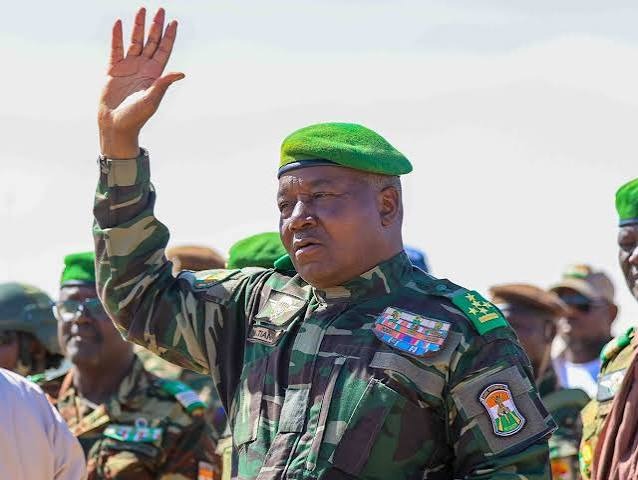
When General Abdourahamane Tiani and his National Council for the Safeguarding of the Homeland (CNSP) seized power on July 26, 2023, they framed their intervention as a necessary break from the failures of President Mohamed Bazoum’s democratic government. Three years later, instead of reversing the alleged decline in security, governance, and sovereignty, the military regime has deepened many of the very issues it vowed to fix—often in ways that former critics now describe as more damaging than the original problems.
Geopolitical pivot: from anti-French slogans to opaque alliances
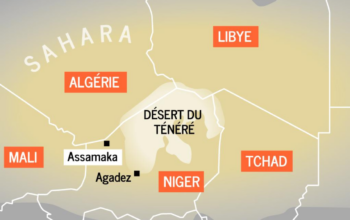
The CNSP’s first major move was to demand the withdrawal of French and American troops, presenting this as a triumph of regained sovereignty. Yet, rather than consolidating autonomy, Niamey has pursued new partnerships whose terms remain largely undisclosed. The presence of Russian military trainers and Algeria’s recent troop deployment near Madama—over 200 kilometers inside Niger’s borders—raise serious concerns about the transparency and legitimacy of these arrangements. Crucially, neither the National Assembly nor the public has been consulted, undermining the very principle of popular consent the junta claims to uphold.
This shift from one set of foreign influences to another reveals a troubling pattern: what the CNSP once condemned as foreign subjugation under Bazoum has now become an unchecked reliance on new regional and international actors. The result is a sovereignty that feels less reclaimed and more reshaped—one defined not by national consensus but by behind-the-scenes deals.
Security crisis: more strikes, but no sustainable progress
The junta’s loudest argument for its takeover was the escalation of armed group attacks across the Sahel. Yet despite intensified airstrikes and frequent military updates, the reality on the ground tells a different story. In Diffa, Maradi, Tahoua, and Tillabéri, entire communities remain trapped in cycles of violence, with schools and health centers repeatedly forced to close. The Islamic State in the Greater Sahara (EIGS) and Jama’at Nusrat al-Islam wal Muslimin (JNIM) continue to exploit weak state control, proving that military force alone cannot restore stability.
Moreover, the junta’s heavy-handed security tactics have fueled resentment in affected areas, alienating local populations and pushing some toward armed opposition. Far from eliminating threats, this approach has fueled a vicious cycle of instability—one that the CNSP has yet to break.
Economic contradictions: stalled projects and lost momentum
The promise of economic self-reliance was central to the CNSP’s narrative, yet development progress has stalled under military rule. Major energy projects, including the stalled Kafra oil permit and the uncertain future of the trans-Saharan gas pipeline, remain in limbo. Investors, wary of political uncertainty and shifting regulations, have adopted a wait-and-see approach, leaving critical infrastructure plans frozen in bureaucratic gridlock.
The junta’s focus on short-term political survival over long-term economic strategy has left Niger’s financial future in jeopardy. Without clear fiscal policies or coherent industrial planning, the country risks falling further behind its neighbors in regional economic integration and infrastructure development.
The silence of erstwhile supporters and the erosion of public debate
One of the most striking aspects of this transition is the muted response from civil society and political allies who once loudly criticized Bazoum’s government. While dissent was once met with robust protest, today even direct criticism of the junta’s policies is often met with tacit acceptance or outright suppression. The space for public criticism has shrunk, and dissenting voices risk being sidelined or labeled as threats to national unity.
This double standard—demanding accountability from civilian leaders but excusing military missteps—underscores a troubling reality: the junta’s sovereignty narrative serves more as a shield against scrutiny than a framework for genuine reform. With each passing month, Niger’s citizens bear the brunt of this unending transition, their hopes for stability and prosperity deferred indefinitely.
A leadership trapped in its own contradictions
The military junta entered power promising to restore order, accountability, and independence. Instead, it has replicated and amplified the very problems it sought to eliminate. In doing so, it has not only failed its people but also revealed the fragility of its own legitimacy. Three years on, the question remains: can a regime built on broken promises ever deliver the change it once pledged?