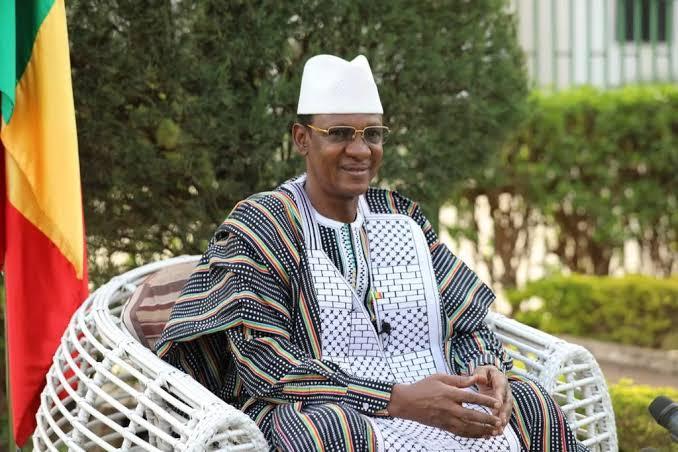
Bamako — 440 days. That staggering figure marks the latest milestone in the prolonged pretrial detention of Choguel Kokalla Maïga, a man who once shaped the narrative of Mali’s military-led transition. More than a year in isolation has transformed him from a vocal architect of the junta’s ideology into a prisoner of its shifting loyalties.
The architect’s fall: from architect to adversary
Choguel Maïga was no ordinary figurehead. During his tenure as Prime Minister, he stood at the forefront of Bamako’s push for what he called “reclaimed sovereignty” — a doctrine he delivered with fervor on global stages, from the United Nations to regional summits. His speeches framed military rule not as a rupture with democracy, but as a necessary correction, a return to self-determination after years of external influence.
Behind the scenes, however, his role was more than rhetorical. He was the bridge between civilian elites and the ruling junta, translating military priorities into policy and public discourse. Yet that very utility now appears to have been provisional. Once his perspective diverged—once he dared to suggest hesitation or advocate for divergent paths—the alliance evaporated. His arrest and continued detention reveal a brutal truth: loyalty in Mali’s current system is a transaction, not a guarantee.
The judicial system as a political tool: how pretrial detention became an instrument of control
Passing 440 days without trial is not merely a delay in justice—it is a strategy. By stretching legal proceedings to their breaking point, Mali’s judicial apparatus has been repurposed from a temple of fairness into a mechanism of silent suppression. The message is unmistakable: dissent, even historical, carries consequences.
The contradictions are stark:
- Justice deferred, justice denied: While officials declare a new era of institutional renewal and accountability, the protracted detention of Maïga demonstrates that extrajudicial control remains the default response to political friction.
- The architect becomes the casualty: The irony could not be sharper. Maïga, who once championed and strengthened the very security and legal frameworks now used against him, now finds himself ensnared by the systems he helped erect.
- A warning to all: His prolonged imprisonment sends a chilling signal to every civil leader in Mali: today’s loyalist can become tomorrow’s prisoner. There is no credit for past service—only obedience to the present line.
A transition consuming its creators
The detention of Choguel Maïga is not just an individual tragedy—it is a reflection of a regime locked in perpetual self-purge. By silencing him, Bamako signals the end of civilian political ambition within its ranks. The junta has chosen the silence of prison cells over the cacophony of public debate, reinforcing the perception that open governance has been replaced by enforced conformity.
These 440 days are more than a statistic. They are a testament to a power that, in its quest for absolute control, has transformed loyalty into liability. Maïga’s incarceration does not resolve contradictions—it exposes them. It reveals a system not committed to transition, but to dominance at any cost.
The long shadow of 440 days
Maïga’s case is emblematic of a broader dilemma: in a transition ruled by military logic, the architecture of power is inherently fragile. Those who build it may one day discover that the foundation was shallow, the pillars unstable. What began as a promise of rebirth has, for many, become a cycle of betrayal disguised as necessity.
As Mali moves forward, the nation watches. But the real question is whether its leaders will listen—or if they will continue to bury their architects before the foundations collapse under their weight.