Parliamentary friction threatens to derail revised budget negotiations
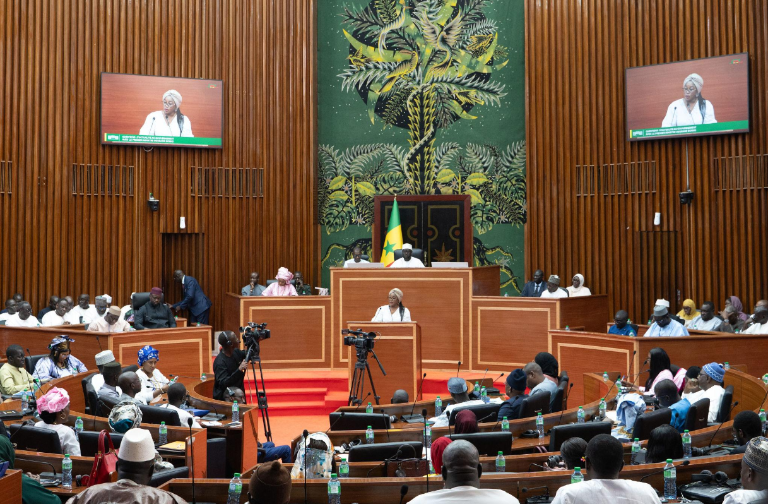
As Senegal braces for a critical parliamentary vote on the revised budget bill, the government is scrambling to salvage a proposal rejected in committee last Friday. Prime Minister Ahmadou Al Aminou Lô is now locked in behind-the-scenes negotiations with lawmakers from the ruling PAPE faction, whose unexpected resistance has exposed deep cracks within the president’s own political camp.
The revised budget, scheduled for a full Assembly debate on October 27, faces unprecedented pushback from the majority bloc itself. The committee rejection—where PAPE holds a commanding majority—serves as a stark warning that the government’s fiscal decisions are no longer receiving automatic approval from its allies. This development signals a shift in parliamentary dynamics, where loyal lawmakers now feel emboldened to challenge executive proposals rather than rubber-stamp them.
Economic constraints collide with political expectations
The government’s dilemma runs deeper than arithmetic. Behind the numbers lies a fundamental disagreement over how fiscal discipline should be balanced with economic stimulus and public service priorities. With state coffers strained and pressure mounting to fund education, healthcare, and infrastructure, the revised budget was meant to reallocate resources without derailing debt management targets. Yet, the committee vote suggests that legislators view the proposed trade-offs as either too harsh or misdirected.
While some lawmakers may object to specific reductions—such as cuts to certain social programs or delays in planned investments—the rejection in committee appears rooted in broader concerns. Is it a protest against the government’s perceived management style? A demand for more transparency in budget drafting? Or a strategic move to assert parliamentary autonomy ahead of future votes? The ambiguity surrounding the committee’s objection only intensifies the uncertainty facing Prime Minister Lô’s negotiating team.
The government’s high-stakes balancing act
In a context where financial constraints leave little room for sweeping changes, Prime Minister Lô faces an unenviable task: defend the economic logic of the budget while addressing legitimate parliamentary concerns without compromising national fiscal stability. The revised budget isn’t just a ledger; it’s a reflection of political priorities—where some see prudent austerity, others detect misplaced priorities or weak consultation.
Sources close to the Prime Minister’s office describe a deliberate effort to revise certain allocations while preserving core objectives such as debt sustainability and fiscal responsibility. Yet, the challenge remains: how to recalibrate numbers without appearing to concede to political pressure rather than economic necessity. The government must walk a tightrope—flexing enough to accommodate key allies, firm enough to avoid eroding public trust in financial governance.
Compromise vs. conflict: the negotiating endgame
With time running out before the plenary vote, the focus has shifted to closed-door discussions. The Prime Minister has called for renewed dialogue with dissenting PAPE lawmakers, framing it as the final chance to secure passage of the bill. But success depends on whether the concessions offered are seen as sufficient—or whether the standoff has already hardened positions irrevocably.
For the government, failure to reach a compromise would not only block the revised budget but weaken its authority to push forward with future economic measures. For the dissenting legislators, the stand could embolden further challenges, reshaping the balance of power between the executive and parliament. The stakes are not just fiscal; they are institutional.
What’s next when the Assembly reconvenes?
The October 27 plenary session will be consequential. A simple compromise could avert a deeper crisis and restore confidence in the government’s ability to govern. But a continued stalemate risks reinforcing perceptions of dysfunction, chilling private investment and straining relations between the presidency and its own parliamentary base.
The broader question looms: how sustainable is a political system where the majority no longer functions as a unified bloc? As Senegal navigates this delicate moment, the outcome of this budget battle may serve as a precedent for how future disputes between the executive and its allies could unfold—shaping not just fiscal policy, but the very nature of governance in the country.
The Prime Minister now faces the unenviable task of reconciling economic necessity with political reality—before the Assembly makes the final call.