Ibrahim Traoré calls for abandoning democracy in Burkina Faso
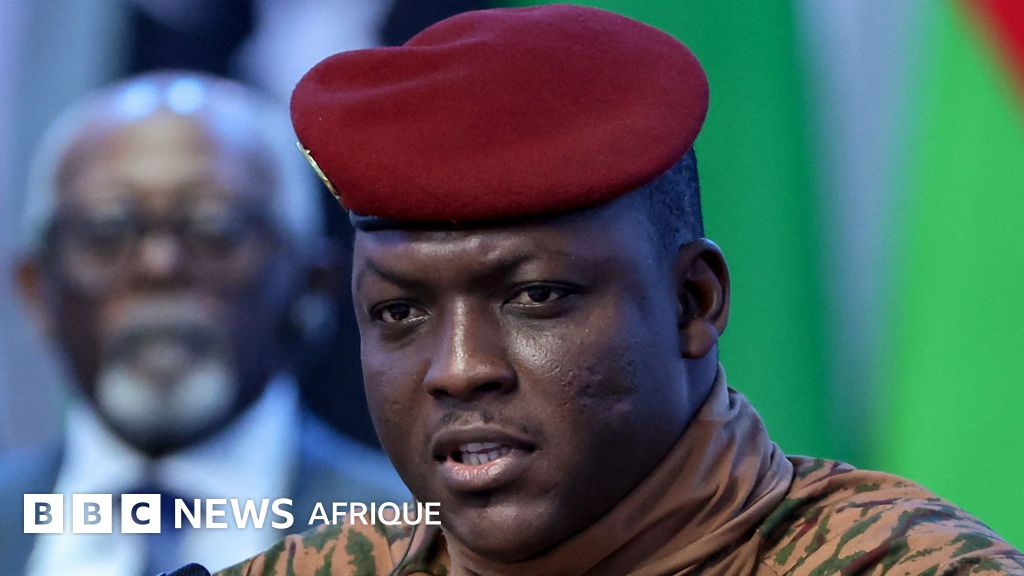
The military leader of Burkina Faso has declared that democracy is “deadly” and must be “forgotten,” during a televised interview broadcast on national television.
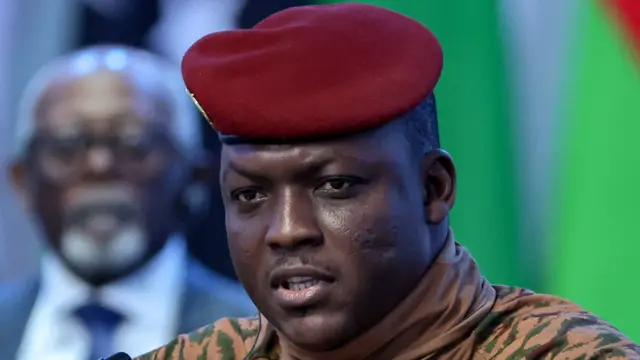
Captain Ibrahim Traoré, who seized power in a coup three years ago, argued that most Africans do not want democratic systems and suggested Burkina Faso would pursue an alternative path without elaborating further.
Initially, Traoré had pledged to restore democratic governance by July 2024. However, with the deadline approaching, the military junta extended its rule by five years, citing the need for prolonged stabilization.
In January, authorities banned all political parties as part of a broader strategy to “rebuild the state,” transferring their assets to government control. Traoré has repeatedly criticized political parties, describing them as divisive, dangerous, and incompatible with his revolutionary vision.
Rejection of democratic principles
During the interview, Traoré stated bluntly: “People must forget about democracy. It is not for us.”
He drew parallels with Libya, warning that Western-backed democratic transitions often lead to chaos. Traoré, who presents himself as an anti-imperialist revolutionary, argued that Libya’s post-Gaddafi instability—marked by prolonged conflict and failed elections—validates his skepticism toward democracy.
“Wherever Western powers impose democracy, it always ends in bloodshed,” he declared. His comments reflect growing disillusionment with democratic models across the Sahel region, where military juntas have taken power in recent years.
Vision for Burkina Faso’s future
Traoré outlined a new system centered on sovereignty, patriotism, and revolutionary mobilization, emphasizing traditional leaders and grassroots structures. He dismissed Western-style governance as a failed experiment, insisting Burkina Faso would forge its own path.
Economic and military self-reliance were highlighted as priorities. Traoré argued that short working hours—six to eight hours per day—would not suffice to lift Burkina Faso out of poverty, calling for a more disciplined and industrious approach.
His government has clamped down on dissent, targeting opposition figures, media outlets, and civil society groups. Critics have accused the junta of silencing opponents by deploying them to frontline combat zones against Islamist militants.
Regional shifts and ongoing violence
Traoré’s stance aligns with neighboring juntas in Mali and Niger, which have severed ties with Western partners—particularly France—in the fight against Islamist insurgencies. Instead, these nations have turned to Russia for military support, though violence persists unabated.
Human rights organizations report over 1,800 civilian deaths in Burkina Faso since Traoré’s rise to power in 2023. Two-thirds of these fatalities are attributed to state forces and allied militias, while the remainder are linked to Islamist extremists.
The junta’s policies have sparked mixed reactions. While some praise Traoré’s panafricanist rhetoric and defiance of Western influence, others condemn his authoritarian tactics and the escalating humanitarian crisis.