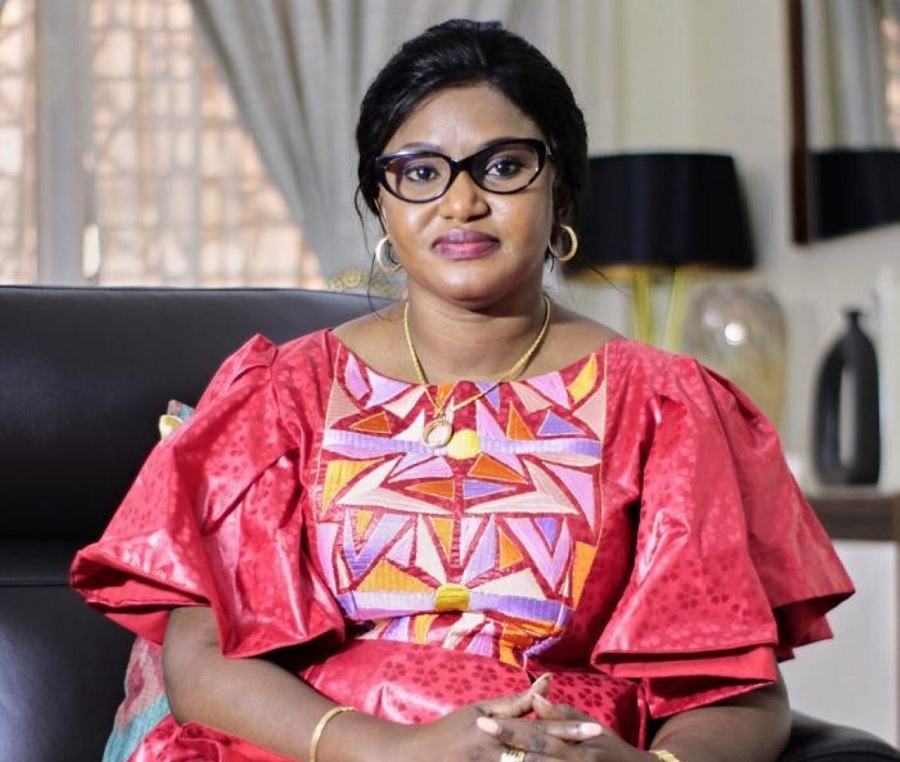
The unsung backbone of Senegal
On July 31, Africa honors its women—a tradition rooted in the 1962 Dar es Salaam Women’s Conference, which later inspired the 1974 creation of the Pan-African Women’s Organization. This year, the African Union has designated 2026 as the year of water, emphasizing sustainable access and sanitation to meet Agenda 2063 goals. Yet in Senegal, two truths remain obscured: the nation’s economy thrives on the backs of women whose labor is systematically overlooked, and these same women bear the brunt of water scarcity and inadequate sanitation—issues the AU’s focus aims to address.
Migrant women, whether internal or from neighboring African nations, form the invisible scaffolding of Senegal’s labor force. Domestic workers, street vendors, market traders, and informal laborers, their contributions are woven into the fabric of daily life in Dakar and beyond. Yet their recognition in public policy and social discourse remains glaringly absent. Access to clean water and dignified sanitation—fundamental to their labor and dignity—remains a distant privilege rather than a guaranteed right for many.
From rural wells to urban hustle
Before crossing borders, many women embark on an internal journey—from Senegal’s rural heartlands to its urban centers. In villages across the country, water collection is a daily ritual, overwhelmingly shouldered by women and girls. This burden stifles education, health, and economic opportunities, pushing young women toward cities like Dakar in search of work. Each year, thousands migrate internally, entering the informal sector as domestic workers, street food vendors, or small-scale traders—roles that underpin urban economies (Lo, Coulibaly, Sakho, 2014). The National Agency of Statistics (ANSD) reports that informal employment accounts for nearly half of Senegal’s workforce, with women making up 51.3% nationally. Yet in Dakar, their representation drops to 41.5%, confined to the most precarious roles—jobs without contracts, social protections, or legal recourse. This internal migration, often ignored, serves as the first step in longer migratory paths.
Senegal: a land of both departure and welcome
Senegal’s role as a host nation is equally significant. The 2023 General Population Census (RGPH-5) reveals that 207,791 foreigners reside in the country, comprising 1.1% of the population, with 44.3% being women. The majority hail from neighboring West African nations: Guinea (40.3%), Mali (14.9%), Guinea-Bissau (4.4%), Gambia (3.0%), and Mauritania (2.1%). In border regions like Kédougou, Malian and Guinean nationals outnumber returning Senegalese residents. This long-standing hospitality now faces erosion.
Recent months have seen a surge in xenophobic rhetoric, particularly targeting Guinean Fulani communities, accused of straining public schools and altering demographic balances. Political voices have called for stricter residency conditions and revisions to birthright citizenship laws—echoing the cyclical xenophobic violence seen in South Africa, where Senegalese migrants in Durban have faced similar persecution.
The double vulnerability of foreign women
Foreign women in Senegal face compounded challenges. Like their Senegalese counterparts in internal migration, they often work in informal domestic or commercial sectors, devoid of contracts or social protections. Their access to water and sanitation hinges on employers or local networks, leaving them exposed to exploitation, harassment, and violence—especially when collective suspicion targets entire nationalities or ethnic groups. These women, already marginalized by informality and lack of legal status, are the first to suffer when xenophobia escalates. Reporting abuses becomes a gamble, risking further precarity or community backlash.
ECOWAS-AES rupture: a legal gamble for migrant workers
The January 2025 breakdown in relations between ECOWAS and the Alliance of Sahel States (AES)—comprising Mali, Burkina Faso, and Niger—has left migrant workers from these nations in legal limbo. Free movement and residency rights, once guaranteed by the 1979 ECOWAS Protocol and its institutional safeguards (including the ECOWAS Court of Justice), now depend on fragile political declarations. For domestic workers from Mali or Burkina Faso lacking foreign identity cards—a common scenario given the high rates of undocumented migration in West Africa—residency is no longer a secured right but a precarious privilege subject to political whims.
The Sahel’s volatile security landscape, marked by deadly attacks in Mali in early 2026, may further drive Malian women to seek refuge in Senegal. This underscores the urgency for civil society and unions to monitor how these women—now stripped of multilateral protections—are treated in administrative processes, particularly regarding access to foreign identity cards, healthcare, and education for their children.
Colonial borders and the politics of belonging
To understand this moment, one must reject imported narratives and examine the phenomenon from within. Africa’s modern borders, as Achille Mbembe argues, are colonial artifacts, drawn without regard for preexisting kinship, trade, or cultural networks. Postcolonial states, grappling with fragile legitimacy, have turned to policies of “autochthony”—defining who truly “belongs” to the nation at the expense of those labeled as foreigners, even after generations of residence. This logic fueled South Africa’s Afrophobia and now resurfaces in Dakar. An anti-racist lens adapted to Africa must name this phenomenon for what it is: intra-African xenophobia, a hierarchy of belonging among Black populations that perpetuates the colonial divide-and-rule strategy Frantz Fanon warned against in *The Wretched of the Earth*.
A decolonial feminist perspective adds another layer. Scholars like Oyèronké Oyèwùmí and Amina Mama have shown how colonialism reshaped gender categories, which postcolonial nationalists later repurposed to define national belonging. Foreign women—through their fertility, children born on Senegalese soil, or roles as domestic workers—become prime targets in the policing of national boundaries. The attacks on birthright citizenship disproportionately affect them, revealing how gender and migration intersect in the control of who “belongs.”
Water and sanitation: the silent barriers for migrant women
The AU’s 2026 theme is not merely technical jargon—it is a gendered issue with direct implications for migrant women. In Dakar’s peripheral neighborhoods, where internal and foreign migrants settle, access to piped water and sanitation remains patchy. The absence of decent toilets exposes women and girls to nighttime insecurity. In workplaces, domestic workers housed by employers rely entirely on their employers’ goodwill for water and sanitation access—no labor laws mandate these rights. This dependency mirrors the plight of Senegalese domestic workers abroad and African domestic workers in Senegal alike.
Making sustainable water and sanitation access a continental goal is also a feminist imperative. Policies that ignore migrant neighborhoods or tie essential services to administrative status fail those most in need. The AU’s agenda will remain empty rhetoric unless it addresses the concrete barriers faced by women who migrate, whether leaving, returning, or arriving from another African nation.
A hospitality to uphold: water as a shared right
The African Women’s Day should not be a perfunctory tribute, nor should the AU’s 2026 theme remain a summit slogan. Together, they demand a dual political realization: without migrant women—whether Senegalese moving within their country or Africans settling in Senegal—entire sectors of the subregion’s economies would collapse. And without guaranteed access to clean water and dignified sanitation for these women, in their homes, workplaces, and neighborhoods, Agenda 2063’s goals will remain unattainable for those who need them most. Hospitality that stops at national borders, or a water policy that overlooks these women, misses the same opportunity for justice.
You may also like
Cameroun’s douala-bafoussam highway in critical condition
Gabon debates dignity after attacks on president’s mother
Chad tackles gender-based violence with new victim support mapping in N’Djamena
Rising cost of living in Chad: economist calls for market price monitoring
Benin traditional leaders: trusted figures but urged to stay out of politics