The hidden calculus of Burkina Faso’s security pacts with Russia
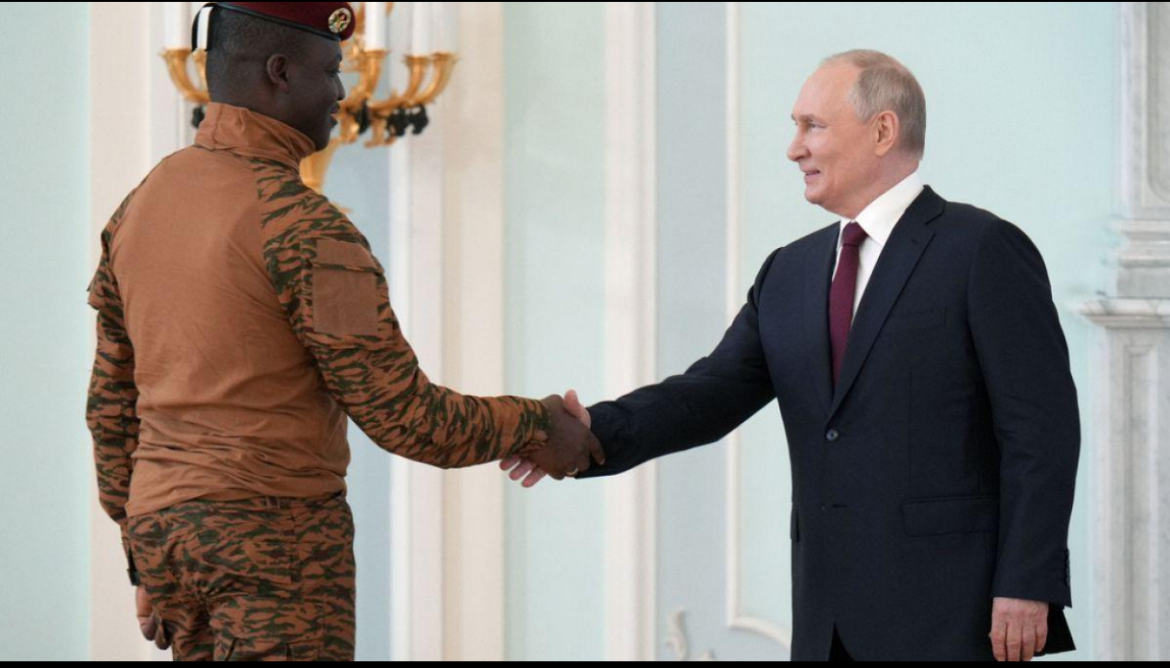
Behind the polished announcements of cooperation between Ouagadougou and Moscow lies a far more intricate reality. The gold mines of Burkina Faso have become more than just economic assets—they now function as strategic leverage in a shifting power geometry. With Ibrahim Traoré’s transitional government under pressure, the alliance with Russia extends beyond counterterrorism to include the protection of the regime itself. But how exactly is the country’s vast gold wealth playing into this equation?
The security contract at Bissa mine: a window into Moscow’s playbook
At the heart of this evolving dynamic sits the Bissa gold mine, operated by Russia’s Nordgold. For years, the site had been protected by RSB-Group, a Russian security firm now displaced by a rival. Documents suggest tensions run deeper than corporate competition: RSB-Group has raised concerns over alleged security failings tied to the new contractor, including accusations of inadequate protection for Fulani villages near the mine. Such claims, though unverified, underscore a critical truth—security in Burkina Faso’s mining zones is no longer just about guarding assets; it’s a bargaining chip in a broader political chess game.
From counterterrorism to regime protection: the dual role of Russian forces
Observers note a marked shift in Russia’s involvement in Burkina Faso. While officially framed as support against jihadist insurgencies, evidence points to a parallel ambition: securing Ibrahim Traoré’s leadership. In mid-2024, reports confirmed the presence of Russian paramilitary units during a major public ceremony in Ouagadougou. Some were stationed at strategic nodes—presidential premises and intelligence-linked facilities—suggesting their role transcends battlefield operations. Their deployment reflects a deeper calculation: shoring up a fragile transitional government in exchange for access to lucrative sectors, including gold mining.
Gold as geopolitical currency: what Moscow gains from Burkina Faso’s mines
Russia’s economic footprint in Burkina Faso is significant. Nordgold, controlled by oligarch Alexei Mordashov, operates two major mines—Bissa and Bouly. The company’s presence gives Moscow a vested interest in the security and operational continuity of these sites. In early 2023, Ouagadougou reclaimed 300 kilograms of gold from Bissa Gold under emergency provisions, signaling a pattern: gold reserves are increasingly viewed as national strategic reserves. This move, framed as public necessity, underscores a pragmatic truth—gold is now a lever of sovereign power and a potential bargaining tool in international relations.
The unspoken trade-off: security for influence
Geopolitical analysts suggest a potential quid pro quo: Russian security assistance in exchange for economic concessions in gold and other extractive sectors. While no formal agreement has been publicly disclosed, the timing of events is telling. As Traoré’s government navigates domestic instability, Moscow’s offer of trained personnel and tactical support arrives precisely when Ouagadougou is seeking ways to stabilize its rule. Meanwhile, Russian firms gain privileged access to mining concessions and security contracts, reinforcing their position in a country where investment risk remains high.
Beyond Bissa: power, profit, and the human cost
The tensions at Bissa mine extend far beyond corporate rivalries. Local communities bear the brunt of shifting security dynamics. Allegations of increased insecurity for villages near mining sites highlight a dangerous paradox: while mines are fortified to protect production, surrounding populations may face greater exposure to violence and displacement. The Bissa controversy serves as a cautionary tale—one where the pursuit of power and profit risks deepening humanitarian strain, even as Burkina Faso’s gold wealth becomes a key player in regional power struggles.
Conclusion: a fragile equilibrium built on shifting sands
Burkina Faso’s alliance with Russia is not just about arms and ideology—it is increasingly about gold, governance, and survival. The gold mines of Bissa and Bouly are not merely economic assets; they are instruments in a delicate power exchange. As Traoré’s regime seeks to consolidate control in an era of crisis, Moscow steps in with security, influence, and access to riches beneath the earth. The question is no longer whether gold fuels this partnership, but at what cost. For the citizens of Burkina Faso, the stakes could not be higher—between the promise of stability and the peril of exploitation.