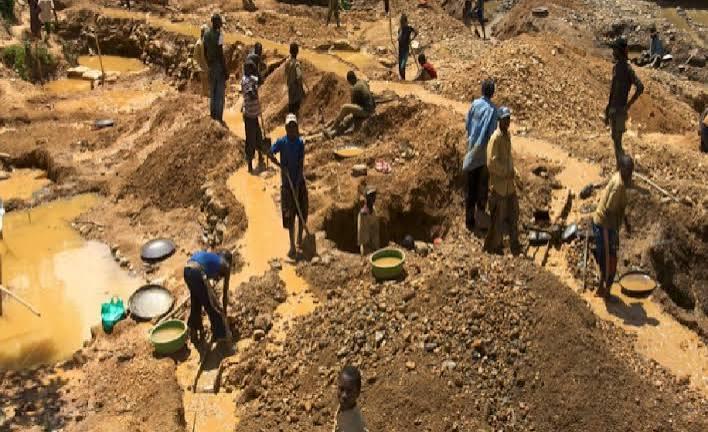
Why the promise of gold in Guinea turned into the ultimate nightmare for burkinabè youth
Fleeing bullets and autocracy only to be hunted down in the lawless pits of Guinea’s gold rush — that’s the brutal paradox facing thousands of young Burkinabè miners. After Burkina Faso’s military leadership failed to protect its people from escalating terror attacks and crushed any hope of political reform, these desperate youths saw one last option: cross into neighboring Guinea’s gold-rich regions, where informal mining offered a glimmer of survival. But a recent violent crackdown by Guinean authorities has left them stranded, stripped of shelter, and once again facing an impossible choice between returning to a collapsing homeland or living as outcasts in a foreign land.
What drives burkinabè miners to risk everything in guinean gold fields?
The root of this wave of migration lies not in choice, but in survival. Burkina Faso, once a beacon of fragile stability in the Sahel, has become a graveyard of collapsing governance. Under the rule of a junta promising order through force, the country has unraveled: rural areas are overrun by armed groups, cities are choked by curfews, and unemployment among young adults has reached catastrophic levels. With every promise of security broken and every avenue for political expression shut down, hundreds of thousands of young Burkinabè have faced an impossible equation — stay and face terror, dictatorship, or hunger, or risk the perilous journey westward toward Guinea’s burgeoning informal gold economy. The allure wasn’t gold itself; it was the illusion of a way to feed a family when the state had given up entirely on doing so.
The hidden costs of survival in Guinea’s unregulated mines
What began as a desperate gamble quickly devolved into survival’s cruelest trap. The mining camps of Siguiri, particularly in Kouremalé, Djatéla, and Bouré-Kourda, became temporary refuges for those who had nowhere else to go. These sites, unregulated and untouched by labor laws, operate as extractive economies in miniature — feeding demand from global buyers while crushing those who dig the dirt. Miners worked up to 16 hours a day, often without protective gear, in pits prone to collapse. They lived in flimsy shelters made of plastic sheeting and wood, vulnerable to rain, disease, and disease-carrying mosquitoes. Payments were erratic, frequently delayed or denied, and child labor was common. For Burkinabè miners, already traumatized by displacement, the vulnerability doubled — without citizenship, rights, or access to justice, they were at the mercy of local patrons and armed enforcers within the camps. The gold they risked their lives to extract rarely stayed in their hands for long.
Then came the reckoning.
Guinea’s security sweep: a cleanup with no safety net
>From camps to ashes in 48 hours
Guinea’s government recently launched an aggressive operation targeting illegal mining sites across Siguiri. Bulldozers flattened makeshift homes. Drills destroyed excavation tunnels. Stockpiles of ore were seized. The stated goal was to restore order and curb smuggling. But for the Burkinabè miners who had bet their last coin on these camps, the raid was anything but orderly. Families who had slept in mud-floored shacks awoke to smoke and sirens. Within two days, hundreds were displaced — again. With their camp destroyed, their meager belongings burned, and no compensation, they were left with nothing but debt, dementia, and desperation. Officials offered no relocation support, no legal recourse, no time to collect belongings. Even the bodies of those buried in shallow graves near the pits were left untouched — a final indignity.
No status, no voice, no way home
Now, thousands of Burkinabè miners are stranded in Guinea’s border regions, trapped between two collapsing systems. They cannot return to Burkina Faso with dignity — their country is still mired in terror and military rule. They cannot remain in Guinea — the government has made it clear that their presence is unwanted. Without legal documentation, they are invisible to aid agencies and unprotected by labor laws. The few NGOs operating in the area hesitate to assist those labeled “illegal migrants,” fearing legal retaliation. The result? A silent humanitarian crisis unfolding in the shadows of one of West Africa’s most lucrative industries. These young people are not just economic migrants — they are refugees of governance failure, pawns in a game where the rules favor armed factions and foreign buyers, not laborers with shovels.
The deeper crisis: when autocracy produces refugees at home and abroad
This crisis is not merely a tale of two countries. It is the inevitable outcome of a regional governance collapse that treats youth as disposable pawns. The military juntas of the AES bloc — Burkina Faso, Mali, and Niger — have each justified their seizure of power by citing security and sovereignty. Yet in practice, they have done the opposite: they have displaced millions, stifled dissent, and pushed their most vulnerable citizens into the arms of smugglers, traffickers, and now, death traps disguised as goldfields. These regimes have not failed to govern — they have governed by neglect, using terror as a tool to maintain power while outsourcing the survival of their people to neighboring states. The message to the youth is clear: your lives are secondary to our hunger for control. The result? A generation condemned to wander — from bullet-riddled towns to outlaw mines, from exile to crackdown, always one step behind survival.
Is there a way out?
There are no easy answers. Regional cooperation on mining regulation and migrant rights remains weak. Development agencies are stretched thin, and Guinean authorities show little appetite for integrating non-citizens into formal economies. Meanwhile, Burkina Faso’s junta continues its military campaigns, offering no political horizon for its young people. The only glimmers of hope come from grassroots networks — local activists and migrant-led groups who quietly distribute food, share information, and guide newcomers toward safer options, even if none are truly safe. But without systemic change — including accountability for military abuses, real investment in rural economies, and cross-border protection for displaced miners — the cycle will continue. Until then, the road from Burkina Faso to Guinea’s gold pits remains a one-way ticket to ruin.