The hidden calculus behind Burkina Faso’s return to capital punishment
The resurgence of the death penalty in Burkina Faso marks more than just a legislative shift it reveals the intricate tensions between authoritarian assertion and genuine security imperatives in a nation grappling with jihadist insurgency. While authorities frame the move as a bulwark against terrorism, its implementation exposes deeper questions: Can extreme justice curb violence, or does it merely reinforce a culture of fear in an already fragile civic landscape?
The legal calculus: from abolition to enforcement in a climate of terror
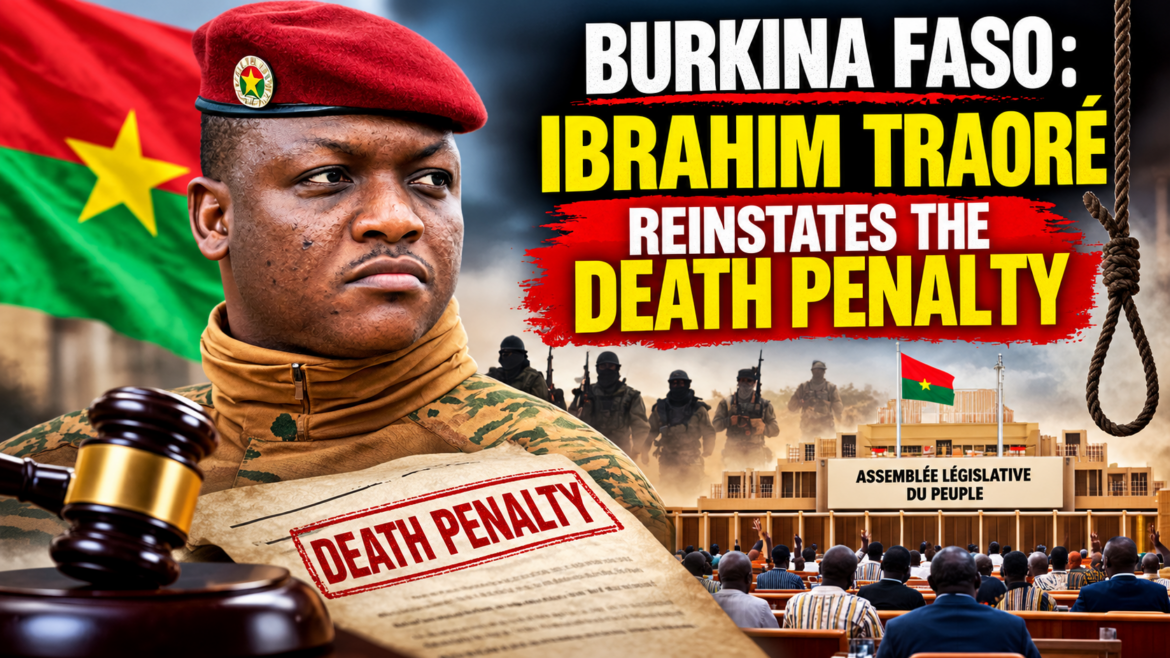
The Burkina Faso Legislative Assembly’s unanimous endorsement of the revised Penal Code reintroducing capital punishment in October 2026 signals a definitive departure from the nation’s 2018 abolition. The regime, led by Captain Ibrahim Traoré, presents this as a decisive stride toward restoring order. Yet the policy’s rationale targeting terrorism, espionage, treason, and even fatal smuggling operations reveals a government prioritizing punitive spectacle over systemic security measures.
The core issue lies not in the severity of penalties but in their feasibility. A rigorous judicial framework, meticulous investigations, and transparent proceedings are essential when life-and-death consequences hang in the balance. Errors or abuse could render this policy irreversible, casting long shadows over fairness and accountability.
The paradox of power: can severe punishment translate to public safety?
Burkina Faso’s crisis predates this legislation years of jihadist attacks have displaced communities and eroded stability. The military regime argues that draconian sanctions will deter future atrocities. However, history suggests that punitive escalation rarely addresses root causes: insufficient intelligence, underfunded security forces, and weak state presence in vulnerable regions.
The true benchmark of success must transcend headline-grabbing penalties. It must measure tangible reductions in attacks, the rescue of embattled villages, and the restoration of daily life for citizens who remain trapped between jihadists and a beleaguered state.
Key crimes eligible for capital punishment under the new code
Acts of terrorism resulting in mass casualties
State espionage and treason during active conflict
Parricide and premeditated multiple homicides
Trafficking prohibited substances that cause fatalities
Traoré’s iron fist: authority enhanced or justice undermined?
As Ibrahim Traoré consolidates his leadership, his rhetoric underscores an uncompromising stance: zero tolerance for perceived betrayal. Statements equating dissent with treason have raised alarms about the conflation of regime protection with national security.
A judiciary’s strength is measured not solely by its penalties but by its impartiality, evidentiary rigor, and safeguards against wrongful conviction. Capital punishment removes the possibility of reversal, demanding flawless justice a standard difficult to uphold amid accusations of forced conscription, disappearances of critics, and disregard for due process.
Liberty under siege: where security narrative meets democratic erosion
The Penal Code revision arrives against a backdrop of troubling civic suppression. Confirmed reports of forced enrolment in counter-terrorism units, detentions of journalists, and silencing of magistrates critical of the government paint a picture of expanding authoritarian control. These developments challenge the narrative that the death penalty is merely a tool for protecting civilians.
In a functional democracy, security and free expression coexist. When legislation stifles dissent under the guise of stability, it risks fostering public mistrust rather than security. The question persists: Are these reforms truly safeguarding citizens, or are they serving as instruments to suppress internal critique of the regime’s policies?
The psychological burden: fear as governance in Burkina Faso
Governance through intimidation may silence opposition, but it cannot build sustainable security. Fear does not restore broken supply chains, reopen shuttered schools, or shield farmers from ambushes in the Sahel. Nor does it inspire confidence in institutions designed to serve the people.
The real test of Traoré’s strategy lies in measurable outcomes: fewer fatalities, fewer displaced families, and restored freedom of movement. Until these benchmarks are achieved, the death penalty’s introduction risks becoming another symbol of state failure rather than a solution to the crisis.
Reconciling force and fairness: a sustainable security vision
A nation besieged by terror deserves decisive leadership. But leadership devoid of accountability fosters resentment, fuels radicalization, and erodes public legitimacy. Effective governance requires balancing deterrence with transparency, firmness with fairness.
The Burkina Faso of the future cannot be forged solely through the shadow of the guillotine. It must emerge from institutions that protect, serve, and inspire trust even in the darkest hours of crisis.
The choice is clear: Will the regime’s iron fist forge resilience or deepen despair? The answer may well define Burkina Faso’s trajectory for decades to come.
By Pierre Tchuente — Journalist