The decision handed down by the ECOWAS Court of Justice in late January 2026 marked a turning point in the constitutional saga of Togo. Nearly nine months later, a new communication from the regional court has reignited debates over the country’s democratic trajectory, the concentration of power under President Faure Gnassingbé, and the shifting alliances reshaping West Africa’s political landscape.
What the October 2026 letter from the ECOWAS Court reveals about Togo’s unresolved constitutional puzzle
In a formal letter dated October 23, 2026, addressed to Togo’s Minister of Justice, the acting registrar of the ECOWAS Court of Justice, Dr. Ousmane Diallo, requested detailed information on the steps the government has taken to implement the court’s ruling in ECW/CCJ/JUD/01/26. The landmark decision, issued on January 29, 2026, found the Togolese state in violation of Article 23 of the African Charter on Democracy, Elections and Governance, which requires member states to uphold democratic governance principles.
The court did not overturn the 2024 constitutional reform that replaced Togo’s presidential system with a parliamentary one. However, it ordered the government to ensure that future institutional changes comply with international democratic standards. The inquiry into implementation efforts now places Lomé under renewed scrutiny, raising critical questions about its commitment to regional judicial decisions and domestic democratic norms.
This case stems from a legal challenge led by the Togolese Human Rights League (LTDH) and twelve other plaintiffs against the state. Their petition centered on the claim that the constitutional overhaul was designed not to strengthen democratic governance, but to consolidate executive power under Faure Gnassingbé—despite his shift from the presidency to the newly created role of Prime Minister of the Council of Ministers.
The 2024 reform: a constitutional facelift or a power retention strategy?
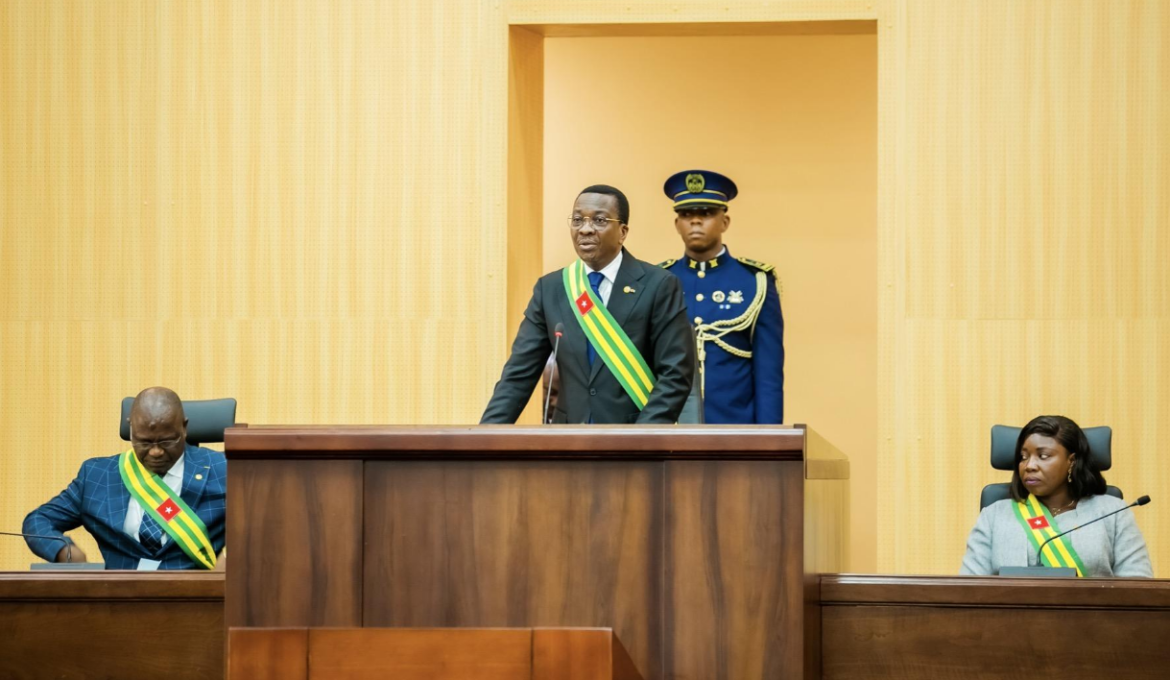
On March 25, 2024, Togo’s National Assembly approved a sweeping constitutional amendment. The new text dismantled the traditional presidential system, transferring executive authority to the Prime Minister, who is to be chosen based on parliamentary majority. By May 3, 2025, Faure Gnassingbé was appointed to this position, marking the first time in decades the same individual held the country’s top executive role without a fresh presidential election.
Opponents of the reform have consistently argued that the transition masked a political maneuver rather than a genuine democratic evolution. Critics point out that the move allowed the ruling party to maintain control over the executive while sidestepping the need for a direct popular vote. The ECOWAS Court’s finding of a democratic deficit underscores these concerns and signals that the international community is not satisfied with the status quo.
The constitutional change enabled Gnassingbé to remain at the helm of government despite the formal shift to a parliamentary framework. While the office’s name changed, the underlying concentration of power remained intact, raising concerns about transparency, checks and balances, and the long-term sustainability of Togo’s democratic institutions.
Diplomatic realignment: Togo’s shifting alliances in a fractured Sahel
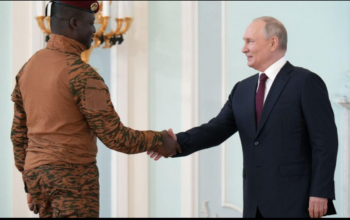
The timing of the ECOWAS Court’s renewed pressure coincides with a period of deep transformation across West Africa. The rise of military-led governments in Mali, Burkina Faso, and Niger—collectively known as the Alliance of Sahel States (AES)—has created a geopolitical divide within the ECOWAS bloc. These regimes have publicly rejected certain democratic norms embraced by ECOWAS, emphasizing national sovereignty and resistance to external influence.
Togo, a long-standing member of ECOWAS, has cautiously strengthened ties with the AES, raising eyebrows across the region. In January 2025, Foreign Minister Robert Dussey publicly entertained the idea of Togo joining the alliance. By April 2026, Lomé had adopted a new cooperation strategy focused on political dialogue, security, and economic integration with Sahelian states. Officially, the government frames this pivot as a tool for regional stability and bridge-building between ECOWAS and the AES.
Yet the convergence in political rhetoric and governance models—especially regarding power centralization, weakened checks and balances, and constrained civic space—has sparked speculation about ideological alignment. While the paths to power differ—elected mandate versus military takeover—the outcomes in terms of democratic governance appear increasingly similar. This convergence, though still evolving, underscores a paradox: Togo remains a member of ECOWAS while cultivating relationships with regimes that openly challenge the organization’s democratic foundations.
ECOWAS pressure as a litmus test for Togo’s democratic credibility
The October 2026 letter from the ECOWAS Court is more than a procedural follow-up; it is a political signal. The court’s findings, combined with the government’s response obligations, present Lomé with a defining moment. Will Togo demonstrate a commitment to restoring democratic credibility, or will it continue along a path that prioritizes institutional continuity over reform?
For Faure Gnassingbé and his administration, the stakes could not be higher. The reform is not only about legal compliance—it touches on national legitimacy, regional credibility, and the future of democratic governance in West Africa. As the continent undergoes a period of profound political realignment, with military rulers gaining influence and democratic institutions under pressure, Togo’s actions will be closely watched.
Can the system correct itself?
The ECOWAS Court did not invalidate the 2024 constitution, but its ruling acknowledged a breach of democratic principles. This nuanced approach reflects an effort to balance respect for national sovereignty with the protection of regional norms. However, the responsibility now lies with Lomé to translate the court’s guidance into tangible reforms. Failure to do so risks deepening skepticism about Togo’s willingness—or ability—to uphold democratic commitments.
What comes next for Togo’s democratic experiment?
As the government prepares its response to the ECOWAS Court, all eyes are on how it will reconcile two seemingly conflicting priorities: preserving political control and meeting regional expectations. With civil society groups and opposition voices intensifying their calls for accountability, the coming months will reveal whether the constitutional shift has truly modernized the state or merely relocated power from one institution to another.
The court’s renewed intervention may be the spark needed to push Togo toward a more transparent and inclusive governance model—or it may simply underscore the persistence of a political paradigm resistant to fundamental change. In either case, the decisions made in the wake of this scrutiny will shape the country’s democratic future for years to come.