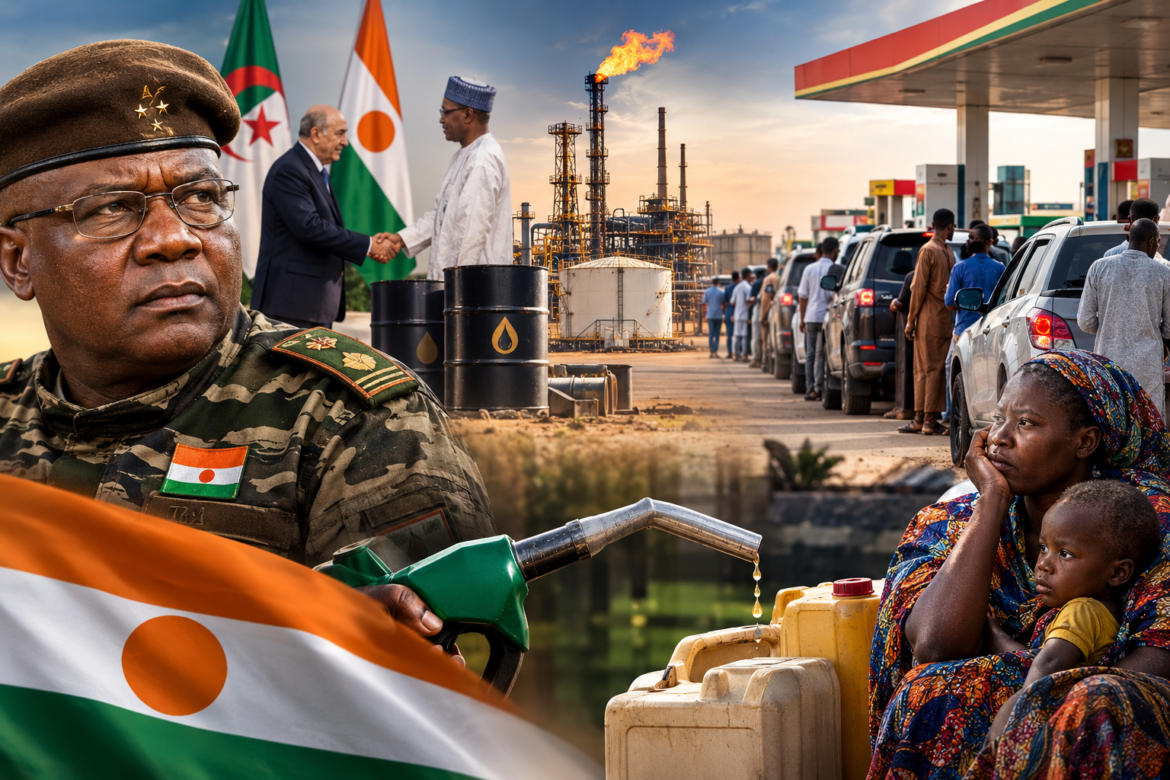
The recent security agreement between Algeria and Niger arrives at a pivotal moment for Niamey, as the nation navigates a complex landscape of diplomatic partnerships and strategic alliances. Yet, beneath the surface of these high-profile collaborations lies a pressing domestic issue: how can a petroleum-producing country face persistent fuel shortages that disrupt daily life for its citizens?
Unmasking the paradox of oil wealth and domestic scarcity
The contradiction is stark. Niger possesses significant oil reserves and has invested in extraction and refining infrastructure, yet its domestic fuel supply remains unstable. Long queues at petrol stations, transportation disruptions, and economic slowdowns reveal the tangible impact on ordinary Nigeriens from commuters to small business owners when fuel becomes scarce.
Tracing the flow of Niger’s oil resources
The core of the problem extends beyond production to the distribution and control of national resources. Critical questions demand answers: where does Niger’s extracted oil go? What portion is allocated for domestic consumption, and how much is exported under what terms? Are the refining, storage, and distribution systems adequately meeting the country’s needs? Authorities must provide transparent, data-backed responses to these inquiries to address public concerns.
Equally important is the growing role of foreign partners in Niger’s strategic sectors. The increasing influence of actors like Russia, a key ally to several military regimes in the Sahel, raises questions about the economic and security agreements being forged. The nature of these partnerships and their implications for Niger’s sovereignty warrants closer scrutiny.
The transparency imperative for true sovereignty
If Niger’s leadership champions enhanced sovereignty over its natural resources, this claim must be substantiated by tangible benefits for its people: consistent fuel supply, affordable pricing, and clear accountability in the management of oil revenues. Sovereignty is not merely measured by the number of accords signed or the diversity of international partners but by the government’s ability to convert resources into visible improvements for its citizens.
Security partnerships vs. energy self-sufficiency
While the Niger-Algeria security pact addresses legitimate regional concerns, particularly in the volatile Sahel, diplomatic agreements alone cannot resolve everyday economic and social challenges. Security cooperation does not substitute for effective energy policies or transparent resource management. The two must work in tandem to deliver meaningful outcomes.
For many Nigeriens, the fundamental question remains unanswered: what is the value of oil wealth if it fails to ensure a stable domestic fuel supply? True sovereignty requires more than symbolic gestures it demands actionable solutions that prioritize the nation’s needs over opaque external interests.
Clearing the fog around Niger’s oil chain
Niamey now faces the critical task of demystifying its oil supply chain, clarifying accountability for shortages, and proving that its strategic decisions serve the national interest above all. Until petrol stations can reliably meet demand, rhetoric about economic independence will continue to clash with an inescapable reality: who truly benefits from Niger’s oil, and where do its people stand in the equation?
By Pierre Tchuente — Journalist