The unexpected passing of Russia’s ambassador to the United States has sent shockwaves through the corridors of power in Moscow, leaving a critical void in one of the most strategically vital diplomatic posts at a time of escalating global tensions.
Why the loss of an ambassador matters more than it seems
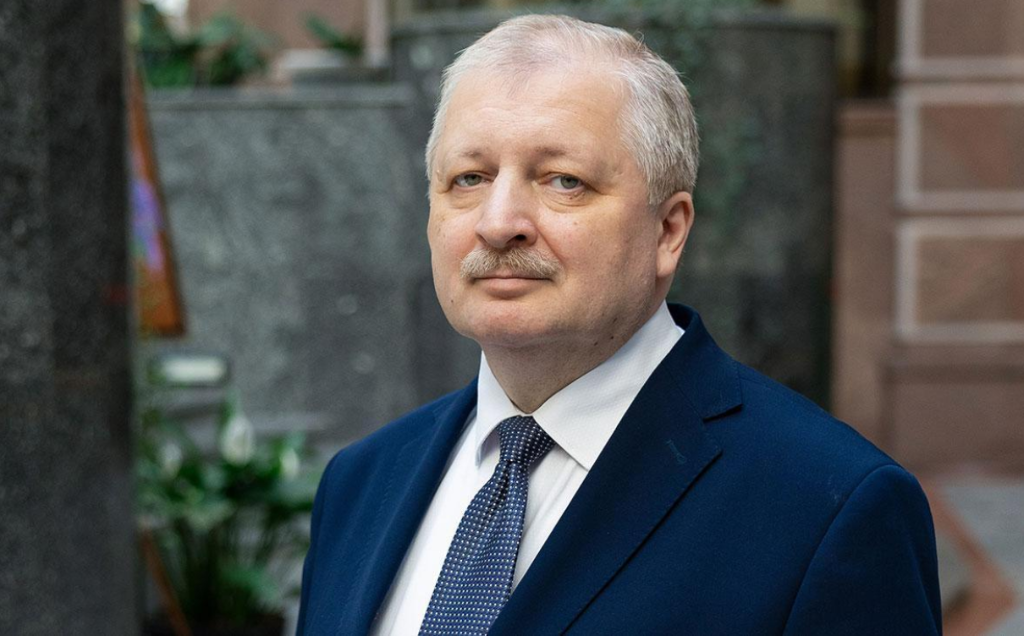
Ambassadors are often seen as mere figureheads, but in the case of Russia’s representative in Washington, the role is far more consequential. Alexandre Dartchiev, who assumed the post in March 2025, was not just a diplomat—he was a seasoned strategist with decades of experience navigating the complex undercurrents of Russian-American relations.
His appointment came at a defining moment: when the Kremlin sought to stabilize a relationship in freefall, marked by the war in Ukraine, crushing Western sanctions, and deepening mistrust between Moscow and Washington. Dartchiev’s deep understanding of U.S. political mechanics and his long-standing presence in North American diplomacy made him an indispensable asset for the Kremlin. His sudden absence raises urgent questions about the future of bilateral communications and Moscow’s ability to steer negotiations during a period of heightened global instability.
The man behind the title: a career built on navigating high-stakes diplomacy
Dartchiev’s diplomatic journey was defined by its focus on North America. Before taking the helm in Washington, he served as Russia’s ambassador to Canada from 2014 to 2021, a role that honed his ability to interpret American policy shifts and manage sensitive bilateral issues. His earlier career included leadership positions within the Russian Foreign Ministry, where he specialized in U.S.-related affairs.
This background positioned him as one of the Kremlin’s most trusted voices in the West. His mission in Washington was clear: to preserve Russia’s interests amid hostile rhetoric, economic blockades, and geopolitical realignment. In an era where diplomatic channels are often weaponized or abandoned, Dartchiev’s role was to keep open lines of communication—even when political tensions threatened to shut them down.
A death shrouded in silence: what we know—and don’t know
The initial announcement from Russia’s Foreign Ministry offered little clarity. The terse statement confirmed Dartchiev’s death at age 66 but provided no details on the circumstances surrounding his passing. This opacity fueled speculation, a common response when official narratives are slow to emerge.
Later clarifications from Foreign Ministry spokeswoman Maria Zakharova revealed that Dartchiev died in Moscow due to an unspecified chronic illness. While this explanation has been accepted without public contradiction, the lack of transparency about his condition and the absence of medical disclosure have deepened intrigue. There is, however, no credible evidence linking his death to his diplomatic duties or external pressures.
The strategic stakes of filling the vacancy
The position Dartchiev held is more than a symbolic post—it is a critical node in Russia’s global diplomatic network. Even in times of severe diplomatic rifts, embassies serve as crucial instruments of crisis management, backchannel communication, and policy advocacy. For Moscow, the Washington embassy is one of the few remaining platforms from which to articulate its positions directly to the U.S. administration and influence decision-makers in the world’s most powerful economy.
His replacement will not be merely symbolic. The Kremlin is likely to choose a successor whose profile aligns with its current priorities—whether that means prioritizing a hardline negotiator, a reform-minded reformist, or a figure with deep intelligence or KGB-linked experience. The choice will send a clear signal about Moscow’s strategy moving forward, especially as it faces continued pressure from sanctions, NATO expansion, and the unyielding conflict in Ukraine.
What this means for Russian-American relations
Dartchiev’s death comes at a precarious juncture. While the Biden and Trump administrations have pursued parallel if divergent approaches to Moscow, fundamental disagreements persist over arms control, Ukraine, energy security, and cyber governance. In this fraught environment, the absence of a permanent envoy complicates efforts to de-escalate crises or restart stalled negotiations.
Until a successor is named, temporary chargés d’affaires will maintain basic embassy functions. But the loss of institutional memory, diplomatic intuition, and personal relationships built over decades cannot be overstated. Dartchiev was not just a bureaucrat—he was a bridge, albeit a fragile one, between two nations whose fates are inextricably linked.
Short-term impact: continuity with a shadow of uncertainty
In the immediate term, Russia’s diplomatic apparatus is resilient. The embassy in Washington will continue to operate, consular services will remain available, and bilateral consultations, where they exist, will proceed. Yet beneath the surface, there is unease. The death has exposed vulnerabilities in Moscow’s foreign policy infrastructure—vulnerabilities that become more pronounced under pressure.
Long-term implications: a test of adaptability
For the Kremlin, recovering from this loss will require more than a nameplate change. It will demand a recalibration of strategy. Can Moscow sustain diplomatic pressure while navigating leadership transitions? Will Washington perceive the delay in appointing a new envoy as a sign of indecision or disengagement? Dartchiev’s passing may well serve as a litmus test for the resilience—and limitations—of Russian foreign policy in an era of unprecedented geopolitical fragmentation.
At 66, Dartchiev was a seasoned diplomat in the prime of a career devoted to great-power diplomacy. His loss is not just a personal tragedy—it underscores the fragile nature of international relations when they rely on individual brilliance rather than systemic strength.