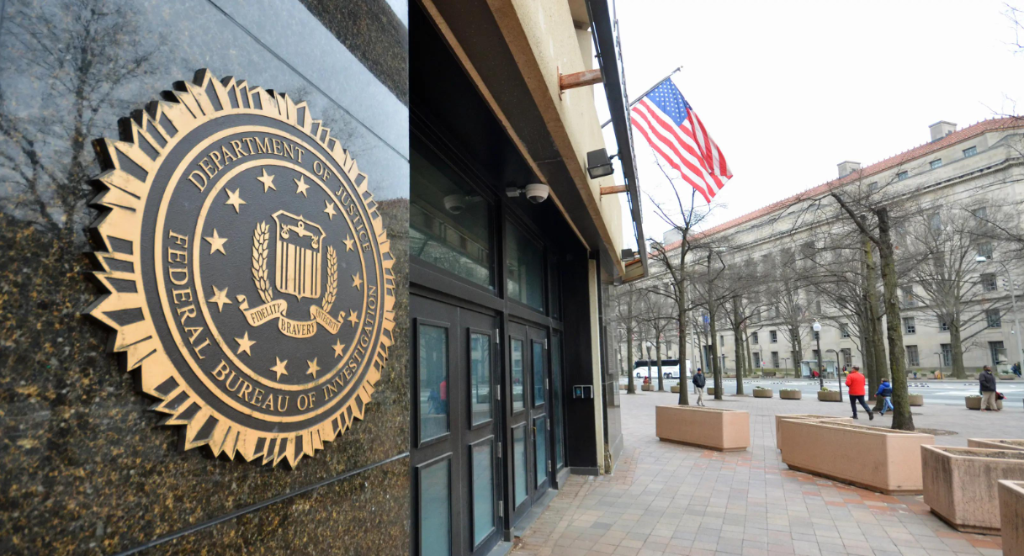
In a move that has sparked fierce debate across Ivory Coast, the presence of Federal Bureau of Investigation (FBI) agents inside the Economic and Financial Crimes Unit (EFCU) in Abidjan has thrust the delicate balance between international cooperation and national sovereignty into the spotlight. Justice Minister Jean Sansan Kambilé has broken his silence to shed light on the real reasons behind this controversial collaboration, distancing it from alleged corruption scandals while emphasizing its primary objective: dismantling transnational cybercrime networks operating from Ivorian soil.
Why the FBI Is Now Operating Inside Ivory Coast’s Financial Justice System
The controversy erupted amid reports suggesting the FBI’s involvement in investigations targeting magistrates within the EFCU—allegations the Ivorian government has vehemently denied. According to Minister Kambilé, the American agents were invited not to interfere in domestic judicial matters but to assist local authorities in combating a growing cyber threat: sextortion and money laundering.
« The FBI’s deployment is not about investigating our judges, » Kambilé clarified. « It’s about addressing crimes committed by individuals who use our territory as a base to harm victims elsewhere. » To date, the joint efforts have led to the arrest and prosecution of nearly a dozen suspects, many of whom are still facing legal consequences.
The hidden drivers of cybercrime networks based in Abidjan
At the heart of this collaboration is a sophisticated cybercrime operation: sextortion. This insidious crime involves luring victims—often through social media—into sharing intimate content, which criminals then use to blackmail them for financial gain. The psychological toll on victims, including reported cases of suicide, has alarmed both Ivorian and American authorities.
Investigations have revealed that several American victims were targeted by networks operating from Ivory Coast. The perpetrators, frequently using fake profiles, build trust over time before demanding payment under threat of exposing private material. For the Ivorian government, this is not merely a foreign issue—it’s a homegrown problem with deadly consequences.
The FBI’s technical expertise and cross-border investigative tools have proven critical in identifying suspects and gathering evidence, which local authorities say would have been far more challenging to obtain independently.
How the joint Ivorian-US task force is dismantling cybercriminal networks
To streamline this fight, a specialized Joint Task Force was established, bringing together Ivorian prosecutors, EFCU investigators, and FBI agents. This collaboration framework enables real-time intelligence sharing, coordinated raids, and joint prosecutions—especially when financial flows cross international borders.
Minister Kambilé confirmed that this partnership has already yielded tangible results: « Dozens of investigations have been initiated, and nearly a dozen individuals have faced justice. » The task force doesn’t just focus on sextortion; it also targets money laundering schemes linked to cybercrime, which often share logistical and financial infrastructures.
The FBI’s physical presence at the EFCU has facilitated regular consultations with Ivorian magistrates and financial crime experts. According to officials, these exchanges have strengthened local investigative capabilities and contributed to Ivory Coast’s recent removal from the Financial Action Task Force (FATF) grey list—a major milestone in its compliance with international financial transparency standards.
Addressing corruption rumors: clearing the air on the FBI’s role
Earlier reports had suggested the FBI was involved in a corruption investigation within the EFCU, including claims that Gendarmerie officers were being directed by American agents and that offshore accounts were linked to the scandal. The Justice Ministry swiftly denied these allegations, calling them baseless.
In a formal statement, authorities insisted that no American agency has pressed charges against any Ivorian official and that no Gendarmerie investigation into EFCU magistrates has been influenced by the FBI. The minister emphasized that this collaboration is purely about crime control—not political pressure or internal probes.
« There is no hidden agenda, » Kambilé asserted. « Our partnership is based on shared threat assessments and mutual legal assistance—nothing more. »
What legal powers do FBI agents actually have in Ivory Coast?
Despite clarifications, skepticism persists about the extent of FBI authority within a sovereign Ivorian judicial institution. Under international law, foreign agents can assist but cannot exercise unilateral investigative or arrest powers on foreign soil.
The collaboration operates under strict protocols: FBI agents work under Ivorian judicial supervision, assist in evidence collection, and provide technical support—but they do not lead or conduct arrests independently. The legal framework relies on mutual legal assistance treaties and bilateral agreements, ensuring that all actions comply with Ivorian sovereignty.
The broader question: sovereignty vs. international cooperation in Africa
While the immediate benefits of the FBI’s presence—criminal convictions, financial transparency, and international recognition—are clear, the arrangement forces a deeper national conversation: How can African states collaborate with global powers without compromising their autonomy?
Ivory Coast’s decision to invite the FBI reflects a pragmatic approach to modern threats that no single nation can tackle alone. Yet the optics of foreign agents operating within domestic justice institutions raise legitimate concerns about long-term sovereignty and the risk of neocolonial influence.
For now, the Ivorian government is banking on transparency. Officials point to the results—arrests, convictions, FATF delisting—and argue that this model could serve as a blueprint for other African nations facing similar cyber threats. But as the debate continues, one thing is certain: the presence of the FBI in Abidjan is far more than a footnote in the fight against cybercrime—it’s a turning point in the delicate calculus of security, justice, and national identity.