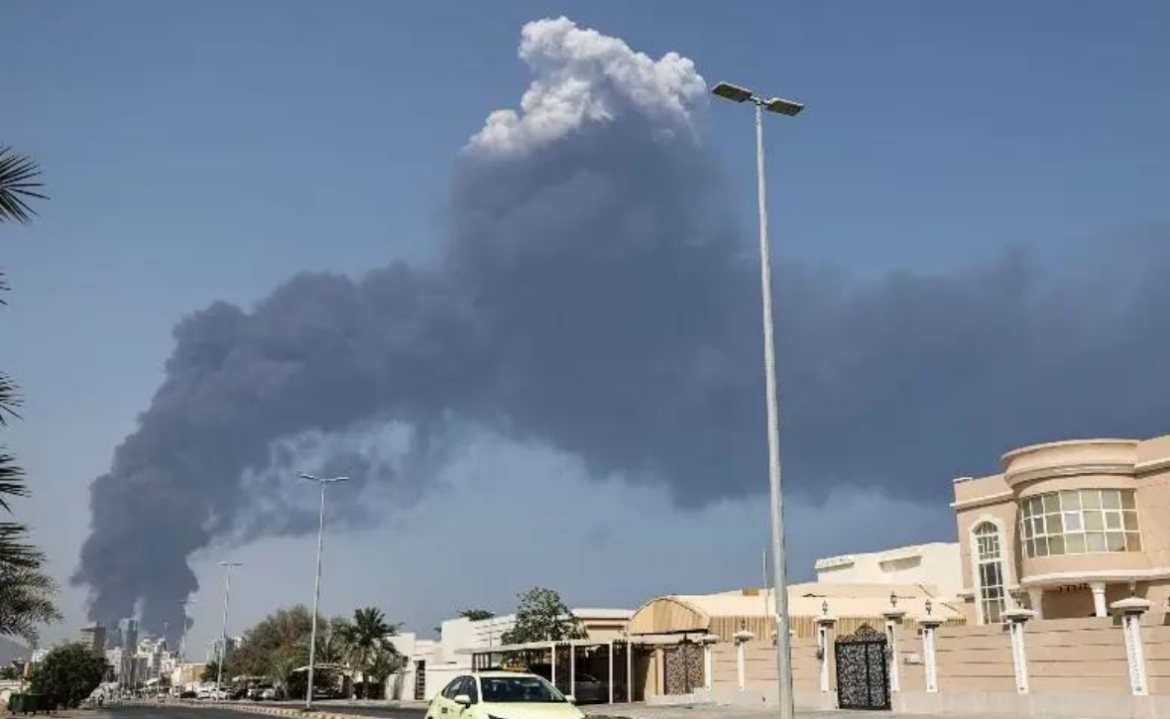
Beneath the surface of the latest military exchanges between Washington and Tehran lies a deeper narrative—one of calculated moves, regional alliances, and the unspoken pressures shaping the new front in the Gulf. On November 18, 2026, Iran launched precision strikes against key US military installations in Bahrain and Kuwait, not merely as retaliation, but as part of a broader strategy to reshape the balance of power across the Middle East. These attacks weren’t isolated incidents; they were the latest escalation in a shadow war where each strike tests the limits of deterrence and regional stability.
The geopolitical chessboard moves: why Bahrain and Kuwait became the latest battlegrounds
The selection of Bahrain and Kuwait as targets was far from accidental. Bahrain, home to the US Navy’s Fifth Fleet headquarters, sits at the heart of America’s military presence in the Gulf. It is not just a symbol of US influence—it is the operational nerve center coordinating maritime security from the Gulf of Oman to the Red Sea. Kuwait, meanwhile, hosts the Ali Al Salem air base, a critical logistical hub for American forces operating across the region. Both countries serve as strategic footholds in the delicate dance of power between Washington and Tehran.
But these strikes carried an even deeper message: Iran is signaling that no US military asset in the Gulf is beyond reach. By targeting infrastructure on allied soil, Tehran is testing two critical variables—the resilience of Gulf states’ defenses and the political will of Washington to respond in kind. For the Gulf monarchies caught in the crossfire, this raises a pressing question: how long can they maintain neutrality while hosting US forces under fire?
What really happened on the ground: separating fact from speculation
Contrary to circulating reports, there is no verified evidence that the US Fifth Fleet headquarters in Bahrain was directly hit or destroyed. Authorities in Manama intercepted multiple aerial threats, including drones reportedly linked to Iranian-backed groups. Similarly, in Kuwait, air defense systems responded to hostile drones near the Ali Al Salem base, but officials have yet to confirm significant structural damage or casualties.
This distinction matters. Social media reports alleging a devastating strike on the Fifth Fleet headquarters should be approached with caution. While the psychological impact of such rumors is real, verified data remains sparse. The lack of immediate, independent confirmation prevents a full assessment of operational disruptions or geopolitical consequences. What is clear, however, is that both countries are now operating in a state of heightened alert—facing a barrage of threats that blur the lines between military engagement and asymmetric warfare.
The rising tide of asymmetric warfare in the Gulf
Iran’s strategy appears to be shifting from direct confrontation to a campaign of calibrated pressure. By targeting allied bases rather than US soil, Tehran avoids a full-scale confrontation with Washington while still inflicting symbolic and operational costs. Drones, short-range missiles, and cyber-enabled sabotage are becoming preferred tools—not because they offer decisive victory, but because they sow doubt, erode confidence, and force adversaries into costly defensive postures.
For the US and its allies, the challenge is twofold: detecting and neutralizing these threats before they escalate, and preventing a cycle of retaliation that could spiral into open conflict. The intercepted drones in Kuwait and Bahrain are not isolated events—they are symptoms of a broader campaign, one designed to probe vulnerabilities and exploit divisions within the Gulf’s security architecture.
Regional dominoes: how Gulf states are navigating the new threat landscape
The ripple effects of these strikes extend far beyond military installations. For Gulf Cooperation Council (GCC) states, the stakes are existential. Their economies, deeply tethered to global energy markets, face growing vulnerability as the Strait of Hormuz—a chokepoint for 20% of the world’s oil supply—becomes a potential flashpoint. A prolonged disruption in maritime traffic could send fuel prices soaring, destabilize supply chains, and plunge the global economy into uncertainty.
Gulf states are now forced into a precarious balancing act. They must reassure Western allies of their commitment to collective security while avoiding direct involvement in a conflict that risks drawing them into the crossfire. Kuwait and Bahrain, long seen as stable bastions of cooperation with the US, are now navigating uncharted waters—where every interception, every drill, and every diplomatic statement carries weight. Their dilemma is simple: protect their sovereignty without becoming pawns in a larger power struggle.
The road ahead: deterrence, diplomacy, or escalation?
Washington’s response will be pivotal. A measured, targeted retaliation could reinforce deterrence without triggering a broader conflict. But any strike perceived as disproportionate risks justifying further Iranian escalation. Tehran, in turn, is gambling that sustained pressure will erode US political resolve and fracture Gulf unity. The risk? A miscalculation leading to unintended consequences—where a single misstep in radar tracking, intercept coordination, or political signaling transforms localized skirmishes into a regional inferno.
Diplomatic channels remain open, but they are narrowing. Oman and Qatar, often seen as neutral intermediaries, have reiterated calls for restraint. Yet the frequency and intensity of attacks suggest that time is running out. Each side is driven by its own calculus: for the US, preserving deterrence and safeguarding personnel; for Iran, asserting regional influence and countering perceived encroachment. The question is no longer whether the next strike will come—but whether either side can afford one.
The economic undercurrent: why oil markets are watching closely
While missiles and drones dominate headlines, the true battleground may lie in oil markets. The Strait of Hormuz, through which 21 million barrels of oil pass daily, remains vulnerable. A sustained disruption—whether through direct attacks, sabotage, or allied shutdowns—could send crude prices surging past $120 per barrel, reigniting inflation pressures and fueling geopolitical fragmentation. Major economies would face the dual shock of higher energy costs and supply shortages, while Gulf exporters grapple with lost revenue and geopolitical isolation.
For Iran, economic leverage is a strategic tool. By threatening maritime security, it can raise the cost of Western military engagement while tightening its grip on regional allies. For Washington, the challenge is to contain Iranian adventurism without plunging the Gulf into economic chaos—a task that demands both military resolve and diplomatic finesse.
One thing is certain: the strikes in Bahrain and Kuwait are not the climax—they are the prelude. The real drama lies in what comes next: whether deterrence holds, whether diplomacy can regain traction, or whether the Gulf descends into the next chapter of open confrontation. For now, the region holds its breath.