
The debate surrounding Senegal’s special funds has intensified as the government prepares to challenge a controversial legal provision inherited from the previous administration. Prime Minister Ousmane Sonko has taken a firm stance, declaring his intention to repeal a contentious amnesty law passed by former President Macky Sall in 2024—a move that granted immunity for violent political unrest.
The proposed repeal has sparked sharp reactions across the political spectrum, with proponents arguing that transparency in public finances is non-negotiable and opponents warning of potential instability. At the heart of the controversy lies the management of funds designated for extraordinary circumstances, often shielded from public scrutiny to prevent misuse or external interference.
Why special funds remain controversial in Senegal
Special funds in Senegal, often established to address emergencies or sensitive national matters, have long operated under minimal oversight. Their secrecy is justified by authorities as necessary for operational efficiency and security. However, critics contend that this opacity fosters corruption, enabling unchecked spending without accountability.
Prime Minister Sonko’s initiative to abolish the amnesty law reflects growing public demand for greater financial transparency. The law, which pardoned individuals involved in political violence, has drawn widespread criticism for undermining justice and democratic principles. By targeting this legislation, the government signals a commitment to restoring public trust in state institutions.
The political stakes of transparency
The push for change is not merely about financial oversight—it carries significant political weight. The amnesty law has become a symbol of past impunity, and its repeal could reshape Senegal’s political landscape. Supporters of the move argue that it aligns with the current administration’s pledge to uphold the rule of law, while opponents fear it may deepen divisions in an already polarized environment.
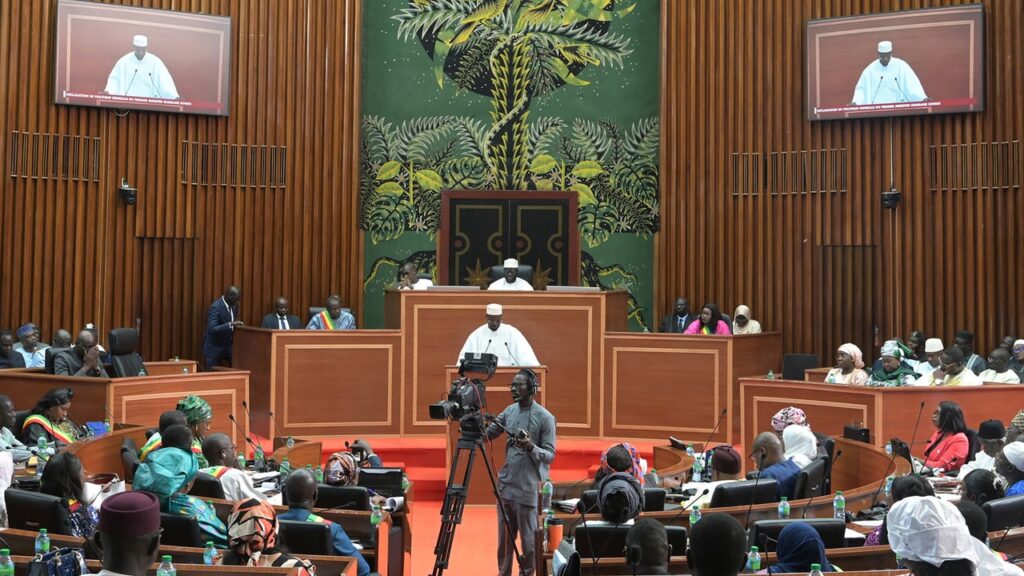
As the National Assembly prepares to deliberate on the proposed legislation, the debate underscores broader questions about governance, accountability, and the balance between security and transparency in Senegal’s democracy.
Public reaction and future implications
Reactions to the government’s announcement have been mixed. Civil society groups and transparency advocates have largely welcomed the initiative, while some political factions argue that dismantling the amnesty law could reignite old conflicts. The outcome of this legislative battle will likely influence Senegal’s trajectory in the coming years, particularly regarding its approach to political reconciliation and financial governance.
The stakes are high, and the government’s resolve will be tested as it navigates this delicate terrain. One thing is certain: the debate over special funds and their secrecy is far from settled.
You may also like
Will Senegal’s local elections break Bassirou Diomaye Faye’s presidency before it truly begins?
Senegal’s budget: can Ousmane Sonko afford to block Bassirou Diomaye Faye’s 2026 plan?
Senegal electoral reform: Khalidou dit Mbaye Sokoma’s full proportional representation push
Senegal’s local elections: Bassirou Diomaye Faye still won’t set a date
Alain-Georges Moukoko takes over Libreville prosecutor general’s office