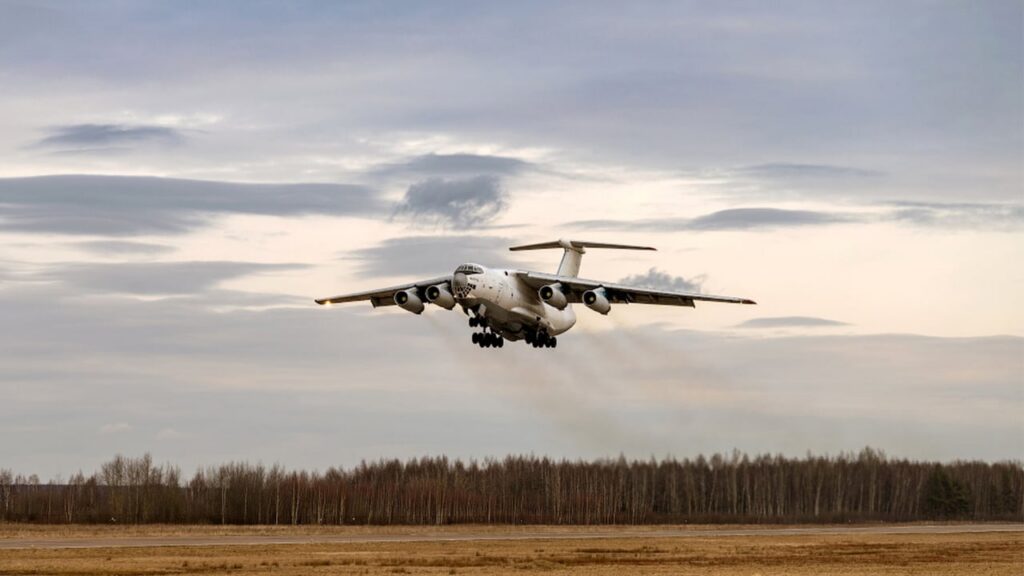

Uncovering the Africa Corps air bridge to the Sahel
The Africa Corps, Moscow’s latest military initiative in Africa, has quietly established an airborne lifeline connecting Russia to the Sahel region. This strategic air corridor, operated through a network of commercial airlines, plays a pivotal role in transporting troops, weapons, and logistical support across vast distances. At the heart of this operation lies a fleet of Russian-made IL-76 transport aircraft, known for their reliability and heavy-lift capabilities.
The backbone of this aerial supply chain is Zitotrans, a Russian cargo airline whose aircraft have been spotted ferrying cargo to key Sahelian destinations. These flights, often shrouded in opacity, follow a well-defined network of routes that bypass traditional air corridors monitored by Western aviation authorities. The destinations include military outposts in Mali, Niger, and Burkina Faso, where Russian military advisors and private contractors—once associated with the Wagner Group—are actively engaged.
How the Africa Corps leverages air transport for Sahel operations
The Africa Corps’ air bridge operates with precision, capitalizing on the vast operational experience Moscow has accumulated in transporting military personnel and equipment over long distances. The IL-76, a four-engine turboprop, serves as the workhorse of this fleet, capable of carrying up to 50 tons of cargo or 140 paratroopers. Its range of 5,000 kilometers allows direct flights from Russian airbases to Sahelian destinations without the need for intermediate refueling stops.
The cargo typically includes small arms, ammunition, communications equipment, and medical supplies. In addition, the Africa Corps has been linked to the movement of private military contractors, whose presence has become increasingly visible in the Sahel since the withdrawal of Western forces. These contractors often operate under the guise of security advisors, providing training and tactical support to local armed forces.
The Africa Corps’ air operations are not conducted in a vacuum. They are part of a broader strategy to strengthen Russia’s influence in the Sahel, where Moscow seeks to counterbalance the presence of former colonial powers and expand its geopolitical footprint. The Alliance of Sahel States, formed by Mali, Niger, and Burkina Faso, has emerged as a key partner in this endeavor, welcoming Russian military assistance in exchange for political and economic concessions.
Challenges and implications of Russia’s Sahel air bridge
The Africa Corps’ air bridge faces several challenges, not least of which is the scrutiny it attracts from international observers. Satellite imagery and open-source intelligence have revealed the frequency and scale of these flights, raising concerns among Western governments about the proliferation of Russian military influence in the region. The lack of transparency surrounding these operations further complicates efforts to monitor compliance with international arms embargoes.
Another challenge is logistical. The Sahel’s harsh environmental conditions—extreme heat, dust storms, and limited infrastructure—pose significant operational hurdles. Airfields in remote locations often lack the necessary facilities for large cargo aircraft, requiring careful planning and coordination to ensure smooth operations. Despite these obstacles, the Africa Corps has demonstrated a remarkable ability to adapt, leveraging local partnerships to overcome logistical bottlenecks.
The implications of Russia’s Sahel air bridge extend beyond military logistics. Economically, Moscow has secured lucrative contracts for resource extraction, including gold and uranium mining, in exchange for military support. Politically, the Africa Corps’ presence has emboldened Sahelian governments to resist Western pressure and pursue independent foreign policies. This shift aligns with the broader trend of African nations seeking to diversify their international alliances.
What’s next for Russia’s Sahel strategy?
The Africa Corps’ air bridge is more than just a logistical marvel—it is a symbol of Russia’s evolving strategy in Africa. As Moscow deepens its engagement in the Sahel, the role of aerial transport will remain critical in sustaining its military and political ambitions. The coming months will likely see an increase in both the frequency and scope of these flights, as Russia seeks to consolidate its position in a region rich in strategic resources.
For Sahelian nations, the Africa Corps offers a pragmatic alternative to Western security partnerships. However, the long-term consequences of this alliance remain uncertain. Will it bring stability and development, or will it further entrench regional conflicts? Only time will tell how this air bridge shapes the future of the Sahel.
You may also like
Gabon’s poultry import ban: inside the 2027 sovereignty gamble
Mali’s 66th independence anniversary: a national celebration with implications for the AES
Mali: assimi goïta’s army confronts repeated battlefield losses
Niger : l’écart entre le discours sécuritaire du CNSP et la réalité des zones exposées
Niger: the double silence at the heart of power