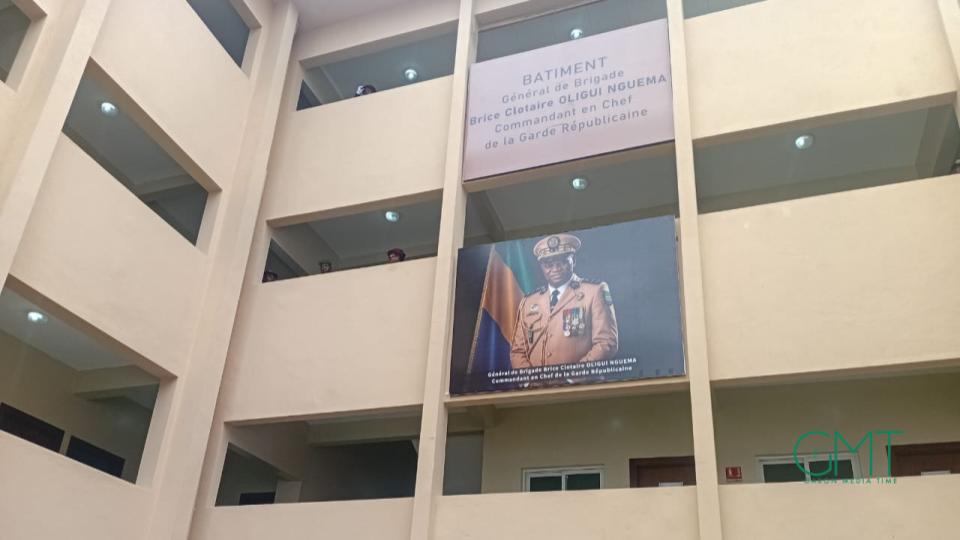
Gabon’s President, Brice Clotaire Oligui Nguema, has officially inaugurated a new annex building for the headquarters of the Penitentiary Security Command in Libreville. The three-story structure, named the General Brigade Building Brice Clotaire Oligui Nguema, Commander-in-Chief of the Republican Guard, features 38 offices and is designed to support the modernization of the country’s penitentiary administration. The move has been met with praise from Justice Minister Augustin Emane, who acknowledged the progress while emphasizing the need for further action to address persistent challenges in Gabon’s prison system.
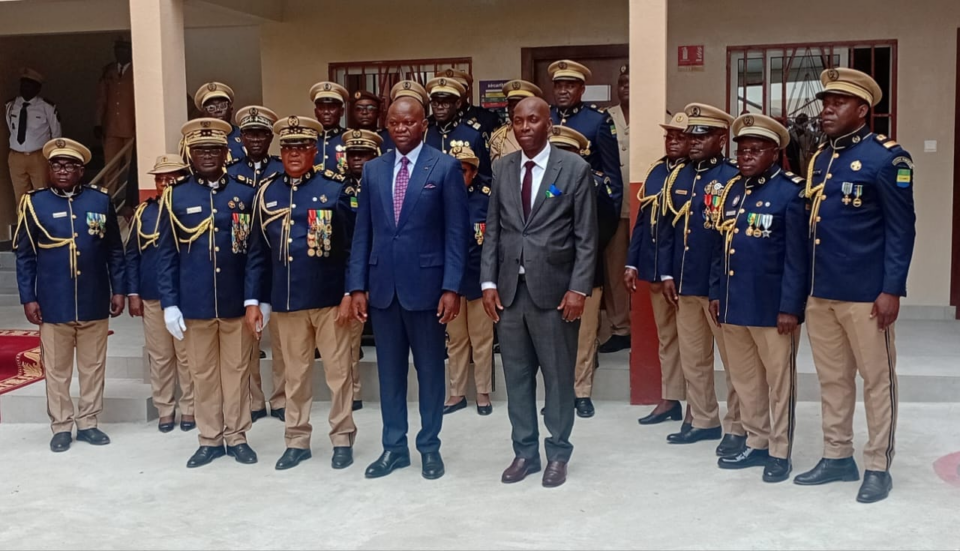
The ceremony, attended by government officials, military leadership, and other dignitaries, included a symbolic ribbon-cutting to mark the building’s official opening. As Supreme Head of the Defense and Security Forces, President Oligui Nguema presided over the event, underscoring the government’s commitment to judicial and penitentiary reform.
The new facility includes 38 offices along with operational, supervision, and conference rooms, all aimed at enhancing the working conditions for staff responsible for penitentiary security management.
Modernization as part of broader judicial reform
Justice Minister Augustin Emane described the new building as a “decisive step in the modernization of Gabon’s judicial and penitentiary institutions.” The infrastructure is expected to support the reorganization of the Autonomous Penitentiary Security Corps, a key component of the government’s reform agenda. Emane also highlighted the project’s role in restoring state authority while upholding the dignity of those under its care.
The new building will be placed under the command of General Jean Germain Effayong Onong, and Emane praised the general’s leadership in bringing the project to fruition.
From administrative upgrades to prison conditions
Despite the progress, Minister Emane made it clear that administrative modernization alone cannot resolve the deeper challenges facing Gabon’s prison system. He called for a closer look at the reality of the country’s detention facilities, noting that critical needs remain—particularly in housing, surveillance technology, and security equipment.
The government’s reform efforts must now extend beyond office buildings to directly improve conditions for both prison staff and inmates. While modernizing the command center is a significant administrative achievement, the next critical phase will involve transforming the actual detention environments.
Balancing security with human dignity
Emane reiterated the government’s goal of balancing strict enforcement of sentences with the fundamental humanity owed to detainees. This includes ensuring that prisons meet international legal standards while maintaining safety and order. A modern penitentiary system, he argued, must do more than prevent escapes or tighten surveillance—it must safeguard the dignity of those incarcerated, protect staff, and prepare inmates for eventual reintegration.
Following a military chaplain’s inaugural prayer led by Reverend Serge Obame Mihindou, President Oligui Nguema toured the facility. Ali Adiahéno, representing the construction firm Abnia Gabon, expressed gratitude for the government’s trust in their work.
With this new administrative hub now operational, the Penitentiary Security Command has gained a modernized tool for oversight. Yet, as Emane himself stressed, the most critical challenge lies ahead: ensuring that the benefits of reform extend into the prison cells themselves, improving conditions for both those who work and those who are detained.
You may also like
As donor fatigue spreads, can Benin’s €544,042 UNAIDS pledge keep the HIV response on track?
Who pays the price when Burkina Faso’s public payroll contracts? Households weigh the cost of 1,917 fewer agents
Libya pushes for direct Tripoli-Yaoundé flights as Cameroon sets up working groups
JNIM seizes three Burkinabè positions in a single day as Traoré’s security record faces hard questions
Chad condemns Ennedi-East airstrikes at un general assembly, warns of retaliation