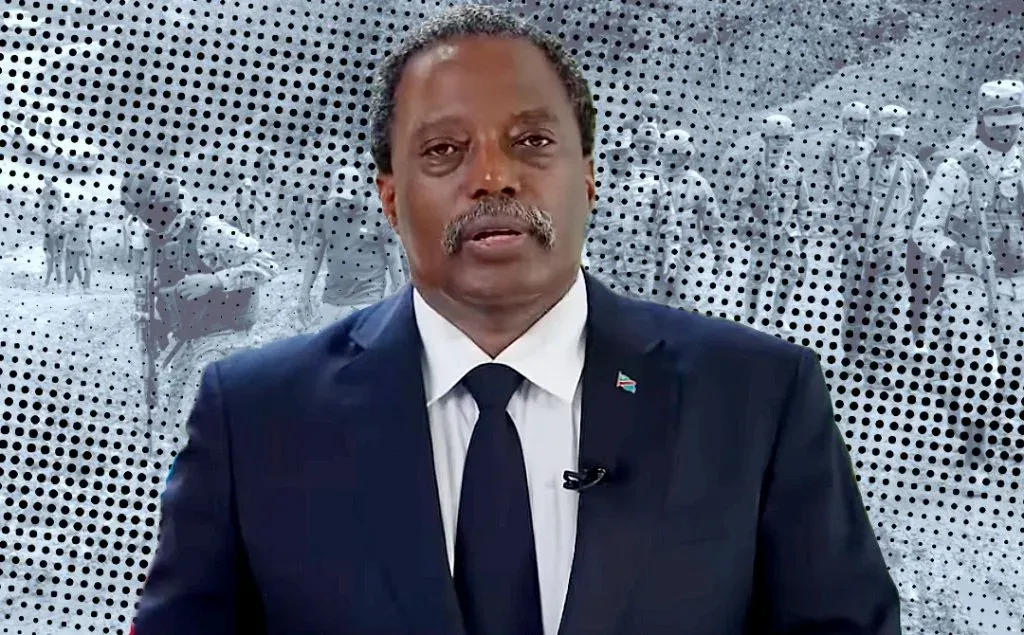
The Democratic Republic of the Congo (DRC) faces a pivotal moment as Joseph Kabila, the country’s former president, assumes leadership of a newly formed politico-military alliance, the Front for the Refoundation of the Nation (FRN). Officially launched on October 12 in Goma, this development intensifies the power struggle gripping the nation and jeopardizes the fragile stability painstakingly built in its eastern provinces.
How the FRN reshapes Congo’s political battlefields
The FRN brings together key opposition factions, including the Alliance of the Congo River (AFC) and the March 23 Movement (M23), both known for their armed resistance against President Félix Tshisekedi’s administration. During its inaugural address, delivered by advisor Claude Ibalanky, the coalition framed its mission as a crusade against what it describes as an “oppressive regime,” vowing to confront it through “any necessary means,” including armed struggle. Though the declaration lacks a clear roadmap or timeline, its bold rhetoric signals a direct provocation to Kinshasa’s sovereignty.
Leadership dynamics: blending politics and firepower
Kabila’s presidency of the FRN consolidates a leadership team that merges political and military influence. Cornelie Nangaa, former leader of the Independent National Electoral Commission and AFC figurehead, and Bertrand Bisimwa, a senior M23 political leader, have been named vice presidents. Meanwhile, General Sultani Makenga, renowned for orchestrating multiple M23 offensives, commands the newly established Revolutionary Congolese Army’s general staff. The alliance’s secretary-general role has been assigned to Freddy Rukema Kaniki, completing a leadership structure that fuses political ambition with military command.
A notable aspect of the FRN’s formation is the dissolution of the AFC, which it now replaces. However, the status of the M23 within this coalition remains ambiguous, raising critical questions about its future involvement and the cohesion of the alliance.
The timing: conflict escalation and stalled peace efforts
The FRN’s emergence aligns with a surge in violence across eastern DRC, where M23 and its allies, including the AFC, have seized control of strategically vital regions, including Goma, following a major offensive in 2025. International observers, including the United Nations, have repeatedly pointed to evidence suggesting Rwanda’s support for the M23, a claim Rwanda consistently denies.
This move also arrives at a critical juncture in peace negotiations, with recent talks in Doha and ongoing discussions between Kinshasa and Kigali aiming to forge a durable resolution. The FRN, however, accuses the government of failing to honor ceasefire terms and prisoner exchange agreements, basing its claims on its own evaluations of the situation.
Political consequences: Kabila’s strategy and Kinshasa’s response
Joseph Kabila, who governed the DRC from 2001 to 2019, has faced accusations from Congolese authorities of supporting the AFC and M23 rebellions. In 2025, a military tribunal sentenced him in absentia to death for treason, war crimes, and related charges linked to his alleged ties with armed factions. Kabila dismisses these allegations as politically driven and denies any direct involvement with the M23.
As of now, President Tshisekedi’s government has not publicly responded to the FRN’s formation. The coalition’s declaration to pursue its objectives “by any means necessary”—potentially including force—introduces unpredictability into Congo’s conflict and raises pressing concerns about the future of peace talks and regional stability.
Critical questions surrounding the FRN
- What will be the M23’s precise role within the FRN, and will it relinquish some of its independence?
- Does the coalition possess a concrete military strategy, or is it primarily a tactical political alliance?
- How will neighboring states, especially Rwanda, react to this new coalition?
- What implications does this hold for the success of ongoing peace negotiations?
Eastern Congo’s path forward amid uncertainty
The establishment of the FRN may represent a watershed moment in the DRC’s prolonged crisis. With Kabila at its helm, the coalition merges political clout with military capacity, amplifying its challenge to the Tshisekedi government. Whether this bold move will unify opposition forces or provoke a resolute government response remains unclear. One thing is certain: the stakes for Congo’s stability—and the broader Great Lakes region—have never been greater.