Paul Biya’s absence fuels power debate in Cameroon
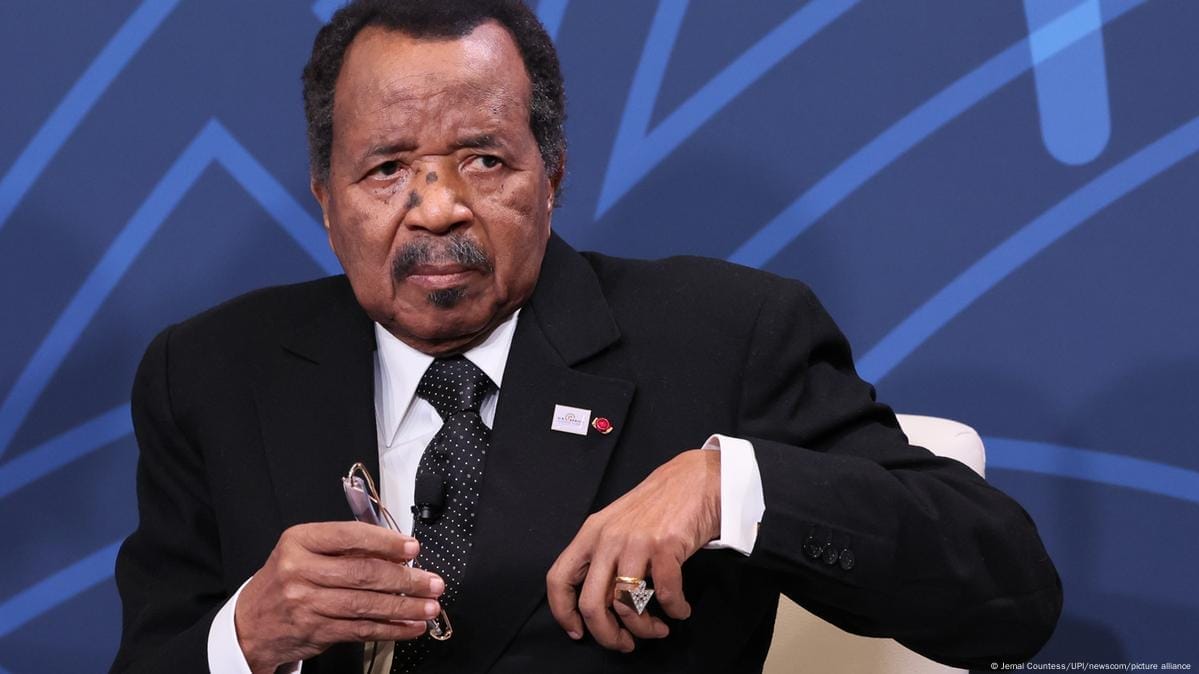
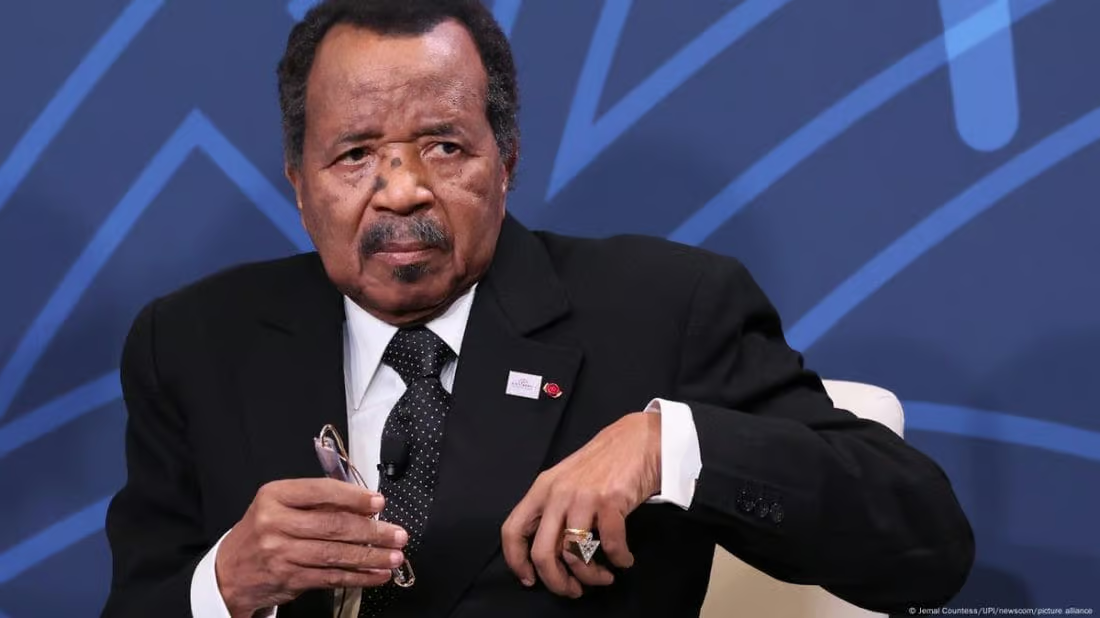 Paul Biya, Cameroon’s senior statesman © Jemal Countess/UPI/newscom/picture alliance
The prolonged absence of Cameroon’s president Paul Biya continues to fuel public debate. Departing on June 7, 2026, for what was described as a ‘short private stay in Europe’ alongside his spouse, the 93-year-old head of state has yet to return to Cameroon—now 44 days later.
This extended silence has sparked widespread speculation about his health status, dominating conversations in media outlets and across social media platforms.
Government moves to quell concerns
In response to persistent rumors, the ruling Rassemblement démocratique du peuple camerounais (RDPC) has sought to reassure the public. In an editorial published July 15 in L’Action, the party’s director of propaganda, Christophe Mien Zok, emphasized that institutions are functioning normally.
« The reins of power are firmly in place. The Lion has not left his post », he declared, dismissing claims that the country is being governed remotely or left in an operational vacuum.
Meanwhile, official presidential channels have continued to release messages attributed to Biya, including congratulatory notes to foreign leaders such as French President Emmanuel Macron on Bastille Day and to the President of Montenegro. However, no public appearances or detailed updates on the president’s activities have been disclosed.
Opposition demands clarity on presidential absence
The situation has prompted renewed calls from opposition figures for official explanations. Legislator Jean-Michel Nintcheu has formally petitioned the Constitutional Council to assess whether the president’s prolonged absence constitutes a potential power vacuum.
The Union démocratique du Cameroun (UDC) has refrained from speculating on Biya’s personal situation but stresses that institutional stability cannot rely on unofficial information and conjecture. The party argues that while a temporary absence from national territory does not automatically equate to presidential vacancy, it raises critical questions about the continuity of state functions, the effective exercise of presidential powers, and the mechanisms for addressing temporary impediments.
Constitutional experts highlight legal gaps
Legal scholars point out that once the symbolic 45-day threshold is crossed, the Constitutional Council may need to examine the situation. However, Cameroon’s legal framework currently lacks a clear maximum duration for presidential absences from national territory.
The UDC has also highlighted the absence of a vice-president since the constitutional revision of April 2026—a reform that, according to the party, underscores the urgent need for institutional clarity. It advocates for the adoption of precise rules governing long-term presidential absences to ensure state continuity and prevent institutional uncertainty.
As the days of Biya’s absence continue to accumulate, the debate remains sharply divided. While authorities insist that institutions are operating normally, critics are pushing for greater transparency regarding the president’s condition and the establishment of a clear legal framework to manage such situations.