The invisible threads of security pacts — When Algeria and Niger formalized their military cooperation in October 2026, the announcement carried weighty significance for the Sahel. Yet, beneath the official rhetoric of unity and shared purpose, critical questions persist about the accord’s true substance. What lies beyond the ceremonial handshakes and signed documents? This exploration peels back the layers of a military pact shrouded in ambiguity, revealing the unspoken dynamics shaping regional security.
Behind the signing: what the public isn’t being told
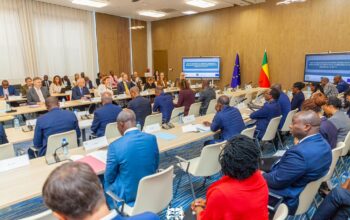
On October 21, 2026, Algeria’s top military brass and Niger’s defense leadership gathered in Algiers to cement what they called a “strategic framework” for bilateral cooperation. General Saïd Chanegriha of Algeria’s Armée Nationale Populaire and Niger’s State Minister for National Defense, Salifou Modi, finalized the agreement in a high-profile ceremony attended by President Abdelmadjid Tebboune. The optics suggested solid commitment — but the text’s actual provisions remain elusive.
Public statements emphasized strengthening military ties and enhancing collective defense. However, no clarity has emerged on the concrete measures under this framework. Are joint training programs planned for Nigerien troops? Will there be structured intelligence sharing protocols or synchronized border surveillance initiatives? Without transparency on these operational details, the accord risks resembling a diplomatic gesture rather than a tangible security partnership.
Key silence: where transparency stops
Military agreements often include classified clauses for valid security reasons. Yet the absence of even a high-level summary leaves analysts and regional stakeholders in the dark. How can neighboring nations—or even citizens of Algeria and Niger—evaluate the pact’s real impact when its core mechanisms are obscured?
This disconnect between rhetoric and specificity raises a fundamental question: in an era where regional security threats demand rapid, coordinated responses, can such vague commitments genuinely shift the balance on the ground?
The Sahel’s shifting puzzle: why this deal matters
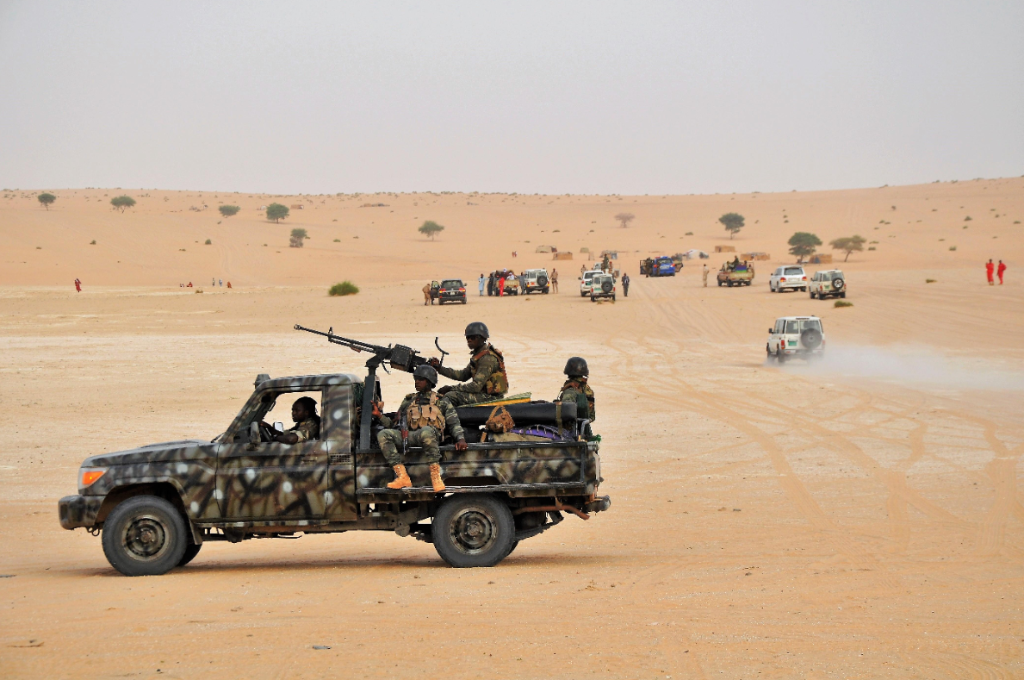
The Nigerien military continues to grapple with armed insurgencies stretching from the western border with Mali and Burkina Faso to the volatile Lake Chad Basin. Algeria, meanwhile, has long prioritized securing its southern frontiers and neutralizing trans-Saharan threats. These overlapping security challenges form the backdrop of the new defense cooperation accord.
In theory, a strengthened military partnership between Algiers and Niamey could translate into improved intelligence exchanges, joint counter-terrorism drills, and coordinated border patrols. But there’s a fine line between aspirational statements and agreed-upon action. Thus far, no public evidence supports claims of planned military operations, troop deployments, or joint defense pacts — distinctions critical to understanding the accord’s scope.
Funding, oversight, and execution: the missing blueprint
A military cooperation framework without financial transparency or accountability measures risks being little more than a symbolic gesture. Which entity will fund the initiatives outlined? Is there a roadmap for implementation? Will a joint commission be established to monitor progress and address obstacles?
These operational questions are not peripheral — they are central to determining whether this agreement will evolve into a workable security mechanism or remain a framework in name only. Without clear metrics, timelines, and oversight, even the most well-intentioned pact may fail to deliver meaningful change on the ground.
Regional ripple effects: alignment or detachment?
The timing of this accord coincides with significant shifts in Sahelian geopolitics. Niger, alongside Mali and Burkina Faso, is part of the Alliance of Sahel States (AES), a bloc that has reshaped regional security cooperation dynamics. Algeria, though not a member, maintains its own bilateral engagements and strategic objectives in the Sahel.
Could this new military cooperation serve as a bridge between the AES and Algeria, fostering broader regional security coordination? Or is it a strictly bilateral initiative, intentionally kept separate from multi-state alliances? With no official clarification, such interpretations remain speculative. Yet the geopolitical implications cannot be ignored — especially in a region where alliances often carry unintended consequences.
A call for clarity: transparency as the foundation
The crux of the issue is not the agreement itself, but the lack of accessible information about its contents. Full disclosure of objectives, operational domains, and oversight mechanisms — while protecting sensitive operational data — would allow for a more accurate assessment of the pact’s potential.
Such transparency would also help distinguish between immediate, actionable commitments and long-term cooperation goals. Until then, the Algeria-Niger military accord remains a declaration of intent — promising in principle, but unproven in practice.
One reality stands clear: in a Sahel region gripped by instability and redefining its security alliances, the true value of military cooperation cannot be measured by signatures alone. It must be judged by the actions, resources, and outcomes that follow. Only with greater openness can Algeria and Niger ensure their partnership translates into tangible progress — not just perception.