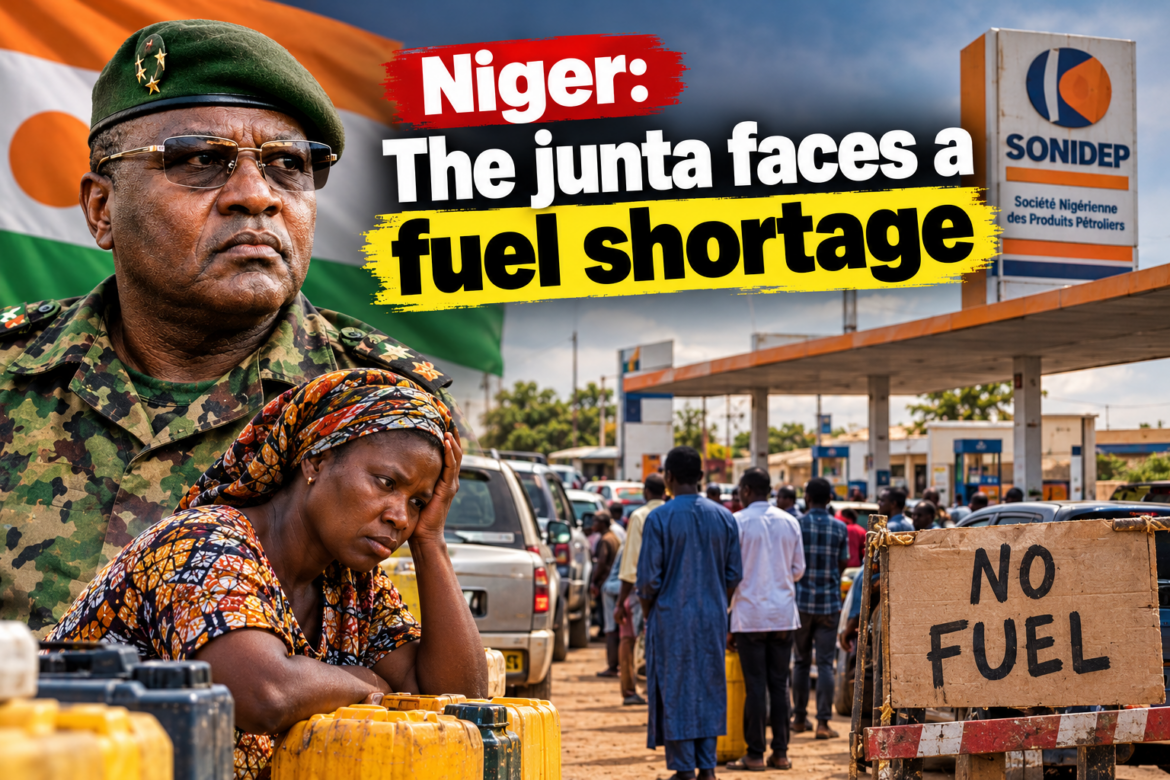
In Niamey, fuel shortages are no longer a temporary inconvenience they are a growing crisis reshaping daily life, undermining economic activity, and deepening public frustration. The question looms larger than ever: how can a nation with proven oil reserves struggle so visibly to keep its fuel pumps operational?
The Hidden Engine of a Nation’s Woes
Fuel scarcity in Niger is not just about long lines at gas stations. It’s a silent crisis that stalls taxis, disrupts supply chains, and slows commerce across Niamey and beyond. For families already stretched thin by economic hardship, the inability to access gasoline or diesel is more than an inconvenience it’s a barrier to survival, mobility, and opportunity.
Transportation networks falter as drivers face erratic fuel supplies, merchants watch their goods stagnate due to delayed deliveries, and small business owners bear the brunt of rising transport costs. When fuel becomes unpredictable, the ripple effects extend from the market stall to the family dinner table, eroding both income and purchasing power.
Oil in the Ground, But Not in the Fuel Tank
The paradox is stark: Niger is an oil-producing nation, yet its citizens face critical fuel shortages. The issue lies not in the absence of crude, but in the complex chain that turns raw petroleum into accessible energy. Production, refining, storage, transport, and distribution each stage is a potential bottleneck. Even with domestic oil output, if any link in this chain breaks down, the impact on consumers is immediate and tangible.
Contributing factors may include:
Logistical bottlenecks in fuel transport from refineries to depots and stations
Distribution inefficiencies due to aging or inadequate infrastructure
Supply-demand mismatches, where demand outstrips available stocks
Market imbalances caused by export priorities, pricing policies, or regulatory hurdles
Without transparent data on stock levels, distribution volumes, and demand forecasts, pinpointing the exact cause remains a challenge but the consequences are felt by all.
Military Governance Under the Microscope
The timing of this crisis is no coincidence. Since assuming power in July 2023, the military junta has staked its legitimacy on promises of restored sovereignty, economic revival, and accountable governance. At the heart of this narrative lies the nation’s natural resources oil included as symbols of self-determination and national progress.
Yet sovereignty is not declared it is demonstrated daily through action. Citizens do not measure independence by press releases or hydrocarbon reserves alone, but by whether essential services like fuel supply remain reliable and affordable. When fuel lines grow longer and prices fluctuate unpredictably, public trust erodes.
The junta now faces a defining test: can it translate resource wealth into tangible benefits for the people? The inability to stabilize fuel supply suggests deeper structural issues ones that cannot be resolved by rhetoric alone. Clear explanations, publicly available data, and concrete action plans are now expected not requested.
Beyond Rhetoric: The Cost of Empty Promises
Fuel shortage is more than an economic symptom it is a political flashpoint. In a nation where overland mobility is essential to trade, agriculture, and employment, disrupted fuel access directly threatens livelihoods. From farmers transporting harvests to market to traders moving goods across regions, the absence of fuel is a chokehold on daily life.
Moreover, rising transport costs triggered by scarcity push prices upward across the board, accelerating inflation and squeezing household budgets. For wage earners and informal workers, these pressures are especially acute, turning a supply-side problem into a humanitarian concern.
The regime’s challenge is not merely logistical it is symbolic. Every unfilled tank, every delayed shipment, every price hike erodes confidence in the junta’s ability to govern effectively. The promise of economic sovereignty rings hollow when citizens cannot reliably fill their gas tanks or operate their businesses. In this context, silence or vague assurances are insufficient; actionable transparency is required.
Path Forward: Transparency and Immediate Action
To restore stability, authorities must go beyond statements. The path forward begins with clarity:
First, publish real-time data on national fuel reserves, daily production, distribution volumes, and refinery throughput. Transparency builds trust and allows citizens to assess the scale of the problem.
Second, audit the distribution network). Identify bottlenecks in transport routes, storage facilities, and retail operations. Whether due to aging pipelines, underinvestment, or inefficiencies, these issues must be addressed methodically.
Finally, prioritize domestic supply over export commitments when necessary. While regional trade plays a role, the primary responsibility of the state is to ensure energy security for its people. This may require rebalancing export quotas, adjusting pricing mechanisms, or accelerating fuel import arrangements during peak shortages.
The Nigerien paradox rich in oil yet poor in reliable fuel access demands urgent resolution. The junta’s ability to navigate this crisis will define not only its political future but the economic welfare of millions of citizens who see oil as both promise and frustration. The clock is ticking, and the pumps are empty.
By Claire Mvondo — Journalist