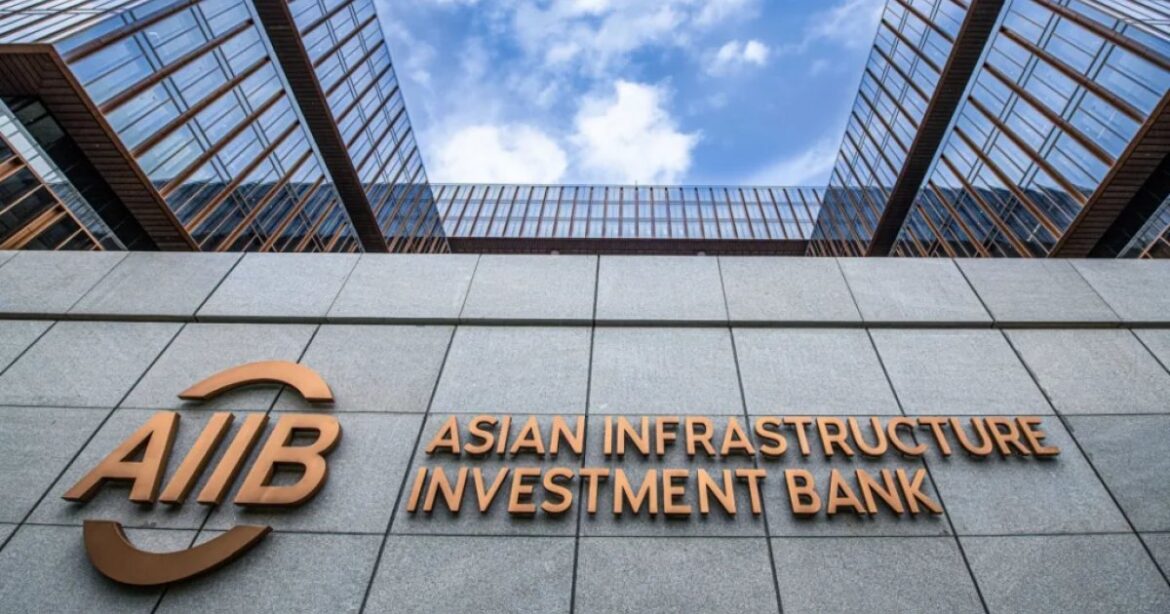
Benin secures $730 million AIIB funding pipeline: the untold strategic rationale
The government of Benin and the Asian Infrastructure Investment Bank (AIIB) have finalized a provisional investment pipeline worth $730 million for 2027-2028, with public policy reforms, energy security, and climate resilience at the heart of the strategy. Behind this headline figure lies a deeper calculus: how these funds will be deployed not just as capital injections, but as catalysts for structural transformation across key sectors.
Crucially, the AIIB emphasizes that this $730 million does not represent fully committed financing. Instead, it serves as a strategic framework under which individual projects will undergo rigorous preparation, due diligence, and approval processes before any disbursement occurs. The pipeline is designed to align Benin’s long-term development goals—embodied in Vision Bénin 2060—with targeted investment in infrastructure that supports sustainable growth and climate adaptation.
This approach reflects a shift in development financing: from reactive capital allocation to proactive, programmatic investment that integrates economic, social, and environmental objectives. Benin’s engagement with the AIIB is not just financial—it is strategic, signaling a new phase in the country’s infrastructure financing partnerships.
How $250 million in public policy financing fits into the strategy
Of the $730 million total, $250 million is earmarked for public policy financing—a flexible instrument that supports macroeconomic reforms, institutional capacity building, and sectoral policy alignment. This component is particularly significant because it targets systemic change rather than isolated infrastructure projects.
Rajat Misra, AIIB’s Managing Director for Public Sector Clients, Region 1, explained during the signing ceremony that this financing mechanism is designed to leverage policy reforms into tangible development outcomes. By tying financial support to governance improvements and sectoral reforms, the AIIB is ensuring that the investment pipeline delivers more than just physical infrastructure—it is building the institutional capacity needed to sustain long-term growth.
The policy-linked funds will support Benin’s Vision Bénin 2060—the country’s long-term development blueprint—by reinforcing sectors such as energy transition, food security, and climate resilience. This reflects a growing trend in development finance: using funding not just to build roads or power plants, but to strengthen the policy and regulatory environments that make infrastructure investments effective and sustainable.
Why this AIIB pipeline matters for Africa’s infrastructure landscape
This is not just another financing agreement—it is the AIIB’s first multi-year investment pipeline in Africa, and it comes at a pivotal moment. Benin’s partnership with the AIIB is already bearing fruit in the transport sector, notably through a $200 million loan signed in late 2025 for the Grand Nokoué Sustainable Urban Mobility Project, part of a broader $500 million initiative co-financed with other partners.
What makes this pipeline distinct is its structured, phased approach. Unlike one-off project financing, this pipeline allows for coordinated planning across sectors over multiple years, enabling Benin to align infrastructure investments with national development priorities. It also positions the AIIB as a key player in Africa’s infrastructure financing ecosystem, complementing traditional partners like the World Bank and African Development Bank.
The strategic logic is clear: by investing in Benin’s energy, transport, and climate resilience now, the AIIB is helping to create an enabling environment for private investment, job creation, and long-term economic stability. For a country aiming to become an economic hub in West Africa, this pipeline is not just about funding—it is about building the foundations for future prosperity.
The role of policy in turning funding into lasting impact
While the $730 million figure captures attention, the real story lies in how Benin plans to use these funds. The inclusion of $250 million for public policy financing signals a commitment to reform—not just in infrastructure, but in the governance systems that will govern how that infrastructure is built and operated.
By aligning financial support with policy reforms, the AIIB is ensuring that Benin’s infrastructure investments are not isolated transactions, but part of a broader, integrated development strategy. This reflects a broader shift in development finance: from project-based lending to programmatic, results-oriented financing that ties capital to measurable outcomes.
A new model for infrastructure financing in West Africa
Benin’s AIIB pipeline is more than a financing deal—it is a signal. It shows that African countries are increasingly turning to non-traditional partners for infrastructure finance, seeking not just capital, but strategic alignment and long-term partnership. For the AIIB, this pipeline demonstrates its ability to design flexible, multi-year financing frameworks that respond to country priorities while maintaining rigorous standards of due diligence and accountability.
As Benin prepares to implement this pipeline over the coming years, the real test will be whether these investments translate into tangible improvements in living standards, economic growth, and climate resilience. But one thing is certain: this is not just about spending money—it is about building a future.