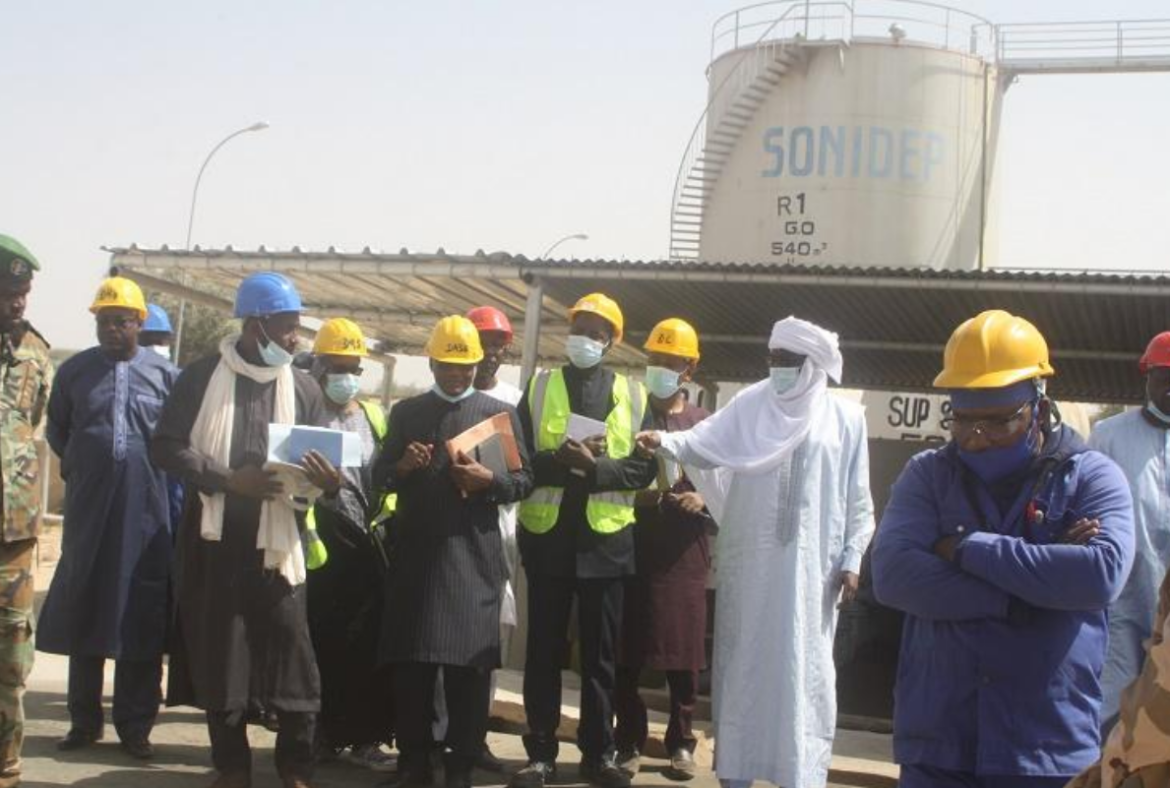
The case surrounding Niger’s State-owned oil company, SONIDEP, is exposing far more than just financial discrepancies—it is revealing the deep-rooted patronage systems and political maneuvering that have long shielded the sector from scrutiny. With nearly 7 billion FCFA in irregularities already surfaced from just two initial audits—and over a hundred more files awaiting review—the pressure to halt investigations points to a troubled system where accountability is a privilege, not a principle.
Inside Niger’s oil scandal: how 7 billion FCFA exposes institutional fragility
What began as a straightforward financial audit of SONIDEP has morphed into a high-stakes investigation whose very existence is now under threat. According to well-placed insiders, the examination of two administrative files alone uncovered financial discrepancies totaling 7 billion FCFA—an amount so significant that its disclosure has sent shockwaves through government corridors. Yet this figure represents only a fraction of the potential misconduct: more than a hundred additional cases remain unexamined, each with the potential to further destabilize the country’s already fragile governance framework.
This discrepancy becomes even more troubling when one considers the legal weight of such findings. At current conversion rates, 7 billion FCFA is equivalent to approximately $11.5 million—funds that were allegedly siphoned through irregular procurement, inflated contracts, or misappropriated allocations within a strategic national asset. The fact that such revelations surfaced in the first phase of auditing raises urgent questions: if two random files contain such malfeasance, what do the remaining one hundred hold—and who is desperate enough to silence the investigation before those answers emerge?
Power, patronage, and the abrupt halt of SONIDEP’s audit
The mission of the Inspection Générale d’État (IGE), initiated under the stewardship of General Salifou Mody to enforce transparency in public finance, encountered an unexpected obstacle: political interference. As the audit teams zeroed in on sensitive connections—allegedly involving top government affiliates—the operation was suddenly halted. The order came directly from the highest level: President Abdourahamane Tiani instructed the suspension of all SONIDEP-related inspections, citing the need to “protect reputations”—a phrase widely interpreted as shielding individuals linked to the ruling circle from further exposure.
This intercession underscores a critical paradox in Niger’s governance narrative: while authorities publicly champion anti-corruption reforms, behind closed doors, systemic resistance persists. The abrupt termination of the IGE’s work raises immediate concerns. If financial irregularities of such magnitude are confirmed, why would the state leadership deliberately curtail the very process meant to identify and correct them? The answer, insiders suggest, lies not in bureaucracy, but in bureaucratic capture—where institutional functions are repurposed to serve private interests rather than public welfare.
The firewalls of influence: who really benefits from stalled investigations?
Among the high-profile figures now indirectly tied to the scandal is Issaka Gado, former chairman of the SORAZ board and brother to former Prime Minister Ali Mahamane Lamine Zeine. Months after his controversial diplomatic appointment to Djibouti as Niger’s permanent representative to the United Nations, questions linger about timing and motive. Was this a routine posting—or a strategic repositioning to distance a key player from unfolding legal scrutiny?
Gado’s connection to the sector is undeniable. During his tenure at SORAZ, he initiated internal audits into SONIDEP’s financial relationships—efforts that reportedly triggered severe retaliation. Records indicate that under former Oil Minister Barké, both Gado and the minister faced detention: one year for Barké, four months for Gado. The episode, though shrouded in procedural ambiguity, serves as a stark precedent: in Niger’s oil sector, transparency is not just discouraged—it is punishable.
The revolving door of audits: from SORAZ to SONIDEP, no case is ever closed
This saga has already seen multiple attempts to expose misconduct—each launched with public commitment, each abandoned without resolution. Dr. Sahabi Oumarou, another former oil minister, announced a renewed audit of SORAZ-SONIDEP ties, only to be removed from office shortly thereafter, according to confidential reports. Another initiative, this time under Minister Tini, proposed outsourcing the audit to Mazars, an international consultancy, to ensure neutrality and credibility. Yet despite a jointly signed protocol in April 2026, no action has followed—leaving the project indefinitely shelved.
The pattern is unmistakable: every time a probe threatens to reveal uncomfortable truths, it is deferred, dismantled, or derailed. The recurring theme is not incompetence, but intent. Each failed audit becomes a new layer of opacity—a deliberate smokescreen to prevent the public from seeing how deeply entrenched corruption has become in Niger’s most lucrative industry.
The United Nations as a sanctuary for officials in the crosshairs
Minister Aliou Daouda’s public comments about covert lobbying within UN corridors have taken on new meaning in light of Issaka Gado’s diplomatic reassignment. Could international postings serve as a quiet refuge for officials entangled in domestic corruption investigations? While no direct link has been established, the timing fuels speculation: as domestic pressure mounts, some actors may be steered toward positions where judicial oversight—and public scrutiny—are structurally limited.
These diplomatic maneuvers, though framed as routine personnel decisions, add another dimension to the crisis. They suggest that power networks do not respect national boundaries; instead, they leverage international platforms to perpetuate influence and evade accountability. In a country where oil revenues should fund development, the system appears designed to fund survival—of individuals, not institutions.
Beyond the billions: why the SONIDEP scandal is a crisis of legitimacy
The 7 billion FCFA figure is not the scandal—it is merely the visible tip of an iceberg. The real emergency lies in the erosion of public trust. Niger’s citizens, already grappling with economic hardship, are being denied the most basic right: transparency in the management of their natural resources.
The SONIDEP and SORAZ are not private ventures—they are national institutions tasked with managing a finite and strategically vital asset. When oversight is weaponized, audits are weaponized, and appointments are weaponized, the entire concept of public service is corrupted. The message is clear: accountability is reserved for the weak, while the powerful enjoy impunity protected by layers of patronage.
For the administration, the challenge is no longer financial—it is existential. To restore credibility, the president must either resume the IGE’s audit without interference, release the full findings from all investigated files, and allow Mazars to proceed with an independent review—or publicly acknowledge that the fight against corruption is not a national priority, but a selective culling of opponents.
The questions Nigerians deserve answered
Why were audits repeatedly launched yet never completed?
Who ordered the suspension of the IGE’s SONIDEP mission—and on whose behalf?
How many millions more have been lost to undetected fraud in the remaining one hundred files?
And perhaps most critically: which political networks are shielding these losses, and what price is the nation paying for their protection?
The answers will not come from press releases or diplomatic appointments. They will come only when the flow of influence is reversed—that is, when institutions serve the people, not the people serve the institutions.
A matter of national survival: the stakes behind Niger’s oil secrecy
Niger’s future depends on more than uranium or grain harvests—it depends on oil. As West Africa’s second-largest producer, its energy sector shapes fiscal policy, regional diplomacy, and public welfare. Yet instead of fueling development, it appears to be fueling a parallel governance system—one where contracts are negotiated in shadows, payments vanish into offshore accounts, and ministers are rotated not for competence, but for compliance.
This is not just a financial scandal. It is a constitutional crisis disguised as an audit glitch. The 7 billion FCFA already exposed should concern every citizen. But the silence that follows—across ministries, courts, and international missions—should terrify them. In a democracy, the strongest check on power is the law. In Niger, it seems, the law is only as strong as the network that chooses to obey—or ignore—it.
Until that changes, the real price of secrecy will not be measured in millions, but in trust. And once that is lost, it may never be restored.