Unpacking Benin’s strategic climate fund: what’s driving the shift in nine vulnerable communes
The launch of Benin’s Integrated Project for Climate Resilience in Vulnerable Borderline Communities (PIRRCF) marks a deeper transformation than budget announcements suggest. Underneath the 7.15 billion FCFA allocation lies a deliberate rethinking of how rural agriculture, water security, and local economies can function amid climate volatility. This approach isn’t just about survival—it’s about reshaping the groundwork for rural life in nine high-risk municipalities.
Inside the 7.15 billion FCFA climate resilience initiative: where the money goes and why
The PIRRCF isn’t just another climate adaptation fund. Its structure is designed to break the cycle of reactive interventions that have left farmers exposed to droughts, floods, and erratic rainfall. Rather than patchwork solutions, the project integrates four pillars: climate-smart agriculture, renewable energy, digital innovation, and local material valorization. This convergence targets the economic roots of vulnerability, not just the symptoms.
The financial breakdown reveals more than numbers—it reveals priorities. Of the total envelope, the largest share finances water infrastructure: three reservoirs, two valley floor rehabilitations, five drip irrigation systems, and twelve pastoral boreholes. These investments aren’t just about turning taps on—they’re about reducing dependency on seasonal rains, a source of chronic uncertainty for smallholders.
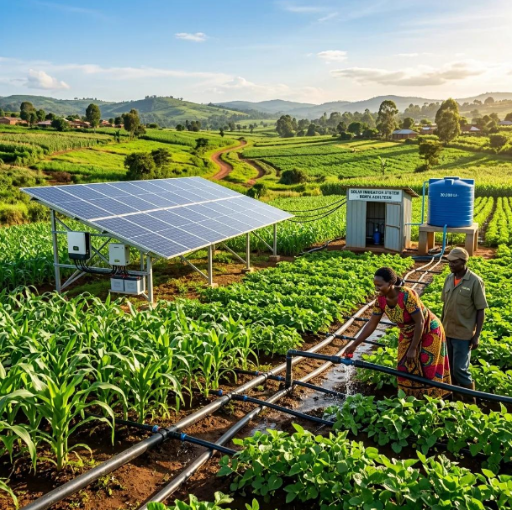
The remaining funds flow into renewable energy, digital tools for farmers, and training programs. Solar-powered pumping systems, mobile apps for climate forecasts, and capacity-building in climate adaptation are all part of a broader effort to make rural livelihoods resilient, not just resistant.
The nine communes at the heart of the transformation
Sèmè-Kpodji, Sakété, Kétou, Savalou, Dassa-Zoumè, Djougou, Copargo, Ouaké, and Malanville weren’t chosen randomly. Each sits in a zone where climate shocks repeatedly disrupt agricultural cycles, degrade soil quality, and strain water access. The result? Shrinking yields, dwindling household incomes, and heightened food insecurity—especially for women and youth who form the backbone of local agri-food systems.
In these municipalities, agriculture isn’t just a way of life—it’s an economic engine. Over 31,000 people, including more than 12,300 women, are expected to benefit directly. But the ripple effects could reach 1.5 million residents, as improved productivity and local job creation stimulate entire territories.
- Water security: Climate variability doesn’t respect calendar cycles. The reservoirs and drip systems aim to stabilize production cycles, cutting losses in staples like maize and groundnut.
- Energy transition: Solar-powered pumps replace diesel generators, lowering costs and reducing emissions while ensuring water access even during blackouts.
- Digital empowerment: Farmers gain real-time weather and market data, enabling smarter planting, harvesting, and sales decisions.
- Local construction: Stabilized earth blocks and compressed bricks reduce reliance on imported materials, cutting costs and creating jobs in the building sector.
More than aid: building an economy that survives the climate era
The PIRRCF is not a welfare program. It’s a rural development blueprint disguised as climate action. By 2031, the project targets:
- Training and supporting 20,000 people in climate adaptation strategies.
- Boosting agricultural productivity by 20% across participating communes.
- Increasing incomes for 10,000 households by 30%.
- Creating 5,000 direct jobs and 15,000 indirect ones across agriculture, pastoralism, renewable energy, and digital services.
These targets reflect a strategic pivot: climate resilience is no longer seen as a cost, but as an economic opportunity. For women and young entrepreneurs, the focus on local materials and renewable energy opens new markets. For farmers, stable yields mean marketable surpluses. For the government, it’s a pathway to reduce rural-urban migration and food imports.
Partnerships that move from promise to impact
The 15.5 million USD funding pool brings together Benin’s government, the UN Development Programme (UNDP), Switzerland, and Belgium. But money alone won’t deliver results. Efficient implementation hinges on three pillars:
Local ownership as a success driver
Municipal authorities aren’t just recipients—they’re co-managers. Their role in overseeing construction, allocating resources, and ensuring community uptake will determine whether infrastructure becomes a lasting asset or a white elephant.
Transparency in action
Transparent procurement, clear reporting, and measurable milestones are essential. Without them, funds risk disappearing into mismanagement. Civil society and farmer associations must be integrated into monitoring to safeguard accountability.
Pacing delivery to avoid disruption
Infrastructure rollout must align with farming cycles. Irrigation systems built during dry seasons will be tested by rains; training sessions held before planting seasons will maximize adoption. Timing isn’t just logistics—it’s economics.
What success will look like in 2031
Years from now, observers won’t measure the PIRRCF by the number of boreholes drilled or workshops held. They’ll ask: Are farmers able to plant with confidence? Have household incomes grown? Are women gaining economic agency? Is food security inching forward?
The real test will be whether this project doesn’t just protect communities from climate shocks—but helps them thrive within them. If the numbers hold, Benin’s rural heartland could emerge not just resilient, but regenerative.
For now, the groundwork is laid. The question remains: Can Benin turn climate crisis into rural renaissance?