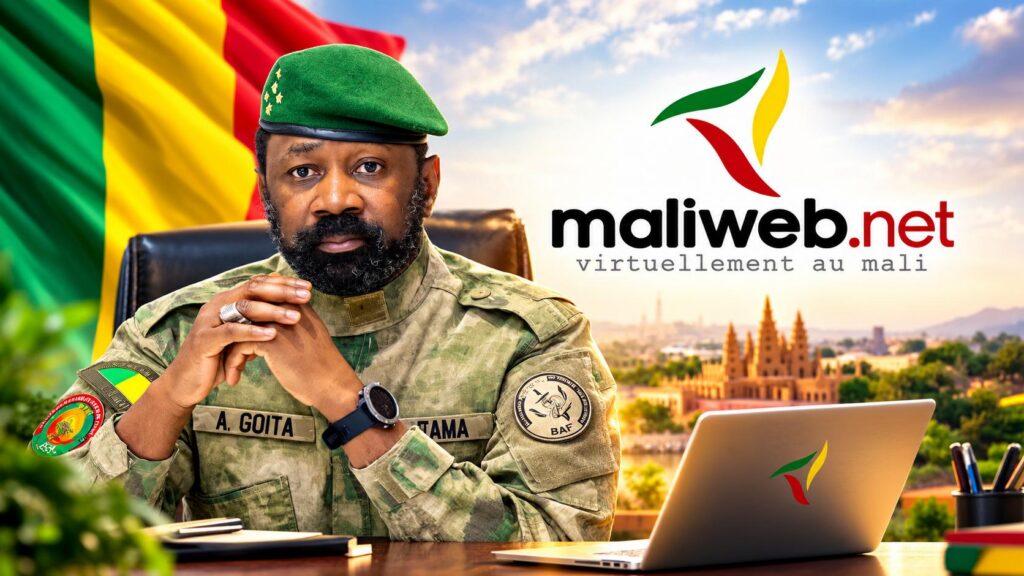
In Mali’s highly tense media environment, the boundary between factual news and wartime communication has not merely blurred — it has been deliberately erased. At the heart of this system, the portal Maliweb.net, once a showcase for the diversity of online press, has gradually transformed into a central conduit for the official line, even distorting realities on the security front.
From news reporting to tailor-made narrative
The recent events of September 15, 2026, provide a striking example. While multiple converging sources and field observations reported deadly clashes that resulted in the deaths and capture of more than 150 Malian soldiers in the Dioura and Mondoro areas, the website’s coverage offered a radically different version.
By reproducing without filter or independent verification the communiqués from the Army General Staff, the outlet downplayed the casualty toll under the guise of a glorious counterattack. The narrative presented to readers depicted a heroic pursuit and the methodical destruction of terrorist bases, deliberately obscuring the human toll paid by the armed forces.
The mechanics of systemic manipulation
This asymmetric treatment of security news relies on well-established mechanisms:
- Exclusive relay of institutional versions: By publishing almost exclusively DIRPA communiqués or state press articles without prior cross-checking, the portal unilaterally validates the government’s communication strategy.
- Invisibility of losses and setbacks: Human tolls on the Malian Armed Forces (FAMa) side are systematically downplayed or silenced, aiming to maintain a sense of military infallibility among the public.
- Disqualification of dissenting voices: Any attempt at independent verification or mention of operational difficulties is indirectly marginalized, labeled as disinformation or detrimental to troop morale.
The Malian citizen and the trap of information asphyxiation
This drift raises a major democratic question. By abandoning its duty of reserve, verification, and balance, Maliweb.net does more than relay communiqués: it actively participates in constructing a distorted narrative of the war.
For citizens and observers, the quest for objective information becomes an obstacle course. By turning a space for information into an ideological echo chamber, aligned media actors erode public trust in the local press and deprive society of a clear view of the country’s real security situation.
You may also like
Cotonou forum pushes West Africa to turn idle savings into financial power
Benin and Spain: a cultural pact built on art and diplomacy
Niger: Tiani’s post-coup purge strips 25 citizens of nationality
Benin and Cuba restart trade partnership through Cotonou chamber talks
Togo: one year since Marguerite Gnakadé’s arrest, the mechanics of silence remain