Senegal plans 60,000 hectares of oil palm with Indonesian support to curb imports
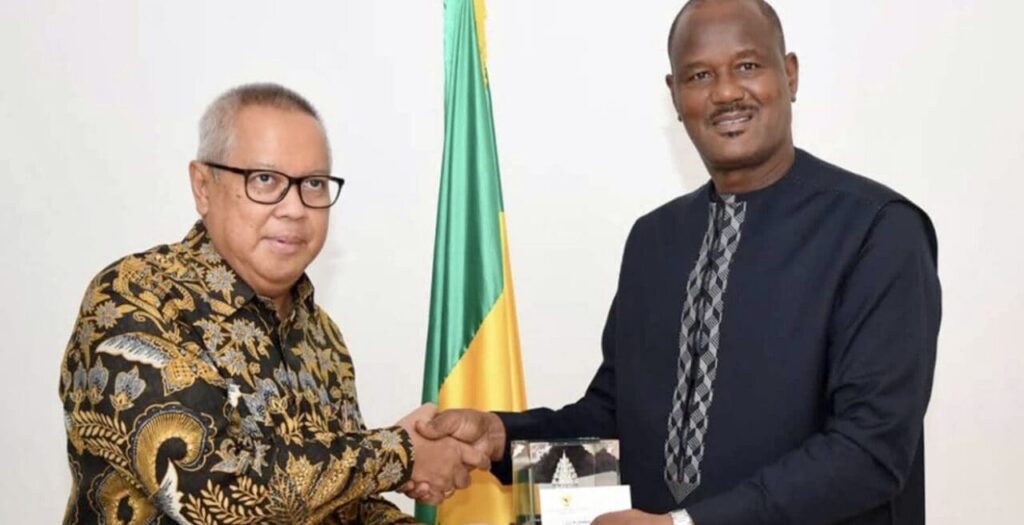
Senegal is set to expand its oil palm sector through a partnership with Indonesia, aiming to develop 60,000 hectares of plantations in the central and southern regions. The initiative, discussed in a meeting on September 11 in Dakar between the Senegalese Ministry of Agriculture, Food Sovereignty and Livestock (MASAE) and the Indonesian ambassador, seeks to revitalize a sector that has stagnated for a decade. Currently, oil palm plantations cover less than 12,000 hectares, so this project would multiply the cultivated area fivefold.
The two parties are working to establish a joint technical working group to oversee the project. However, details regarding the timeline and financing remain undisclosed. The move is part of Senegal’s broader strategy to reduce its dependence on imported palm oil, which has cost the country an average of $108 million annually over the past decade.
A sector hampered by years of stagnation
Data from the FAO reveals that between 2015 and 2024, Senegal’s oil palm cultivation area never exceeded 12,000 hectares, hovering around 11,800 hectares. Industrial palm oil production remained flat at approximately 14,000 tonnes during the same period. Consequently, Senegal has had to rely heavily on imports to meet domestic demand, purchasing an average of 148,100 tonnes of palm oil annually, with a peak of 195,937 tonnes in 2017. The import bill averaged nearly $108 million per year, reaching $172 million in 2020. This costly dependency is what Dakar now aims to address through its food sovereignty strategy.
Indonesia: a global palm oil leader
Indonesia’s selection as a partner is strategic. According to the USDA, Indonesia is projected to produce 46.7 million tonnes of palm oil in the 2025/2026 season, making it the world’s largest producer and exporter. Its dominance is built on decades of expertise in varietal selection, plantation management, and industrial processing. For Senegal, the goal is not just to expand cultivated areas but to acquire this know-how through technology transfer and local capacity building, essential for developing a productive and well-structured industry.
Precedents in Africa
Senegal is not the first African country to partner with Indonesia on palm oil. In 2025, Tanzania signed a cooperation agreement with the Indonesian Palm Oil Association (GAPKI) focusing on training, technical support, and skills transfer. Similarly, Nigeria, Africa’s largest palm oil producer, entered a memorandum of understanding in 2024 with GAPKI to share knowledge and technology to boost productivity. It remains to be seen whether Senegal can successfully follow suit.
You may also like
Burkina Faso’s military academy opens as 221,000 citizens flee abroad in 2025
Gabon opens EU fisheries talks after scrapping old pact
S&P holds Cameroon at B-/B, warning that political succession is now the main risk
Senegal’s 2026 revised finance bill: national assembly confirms receipt after three-day delay
Mali: JNIM’s Dioura attack shatters army’s official narrative