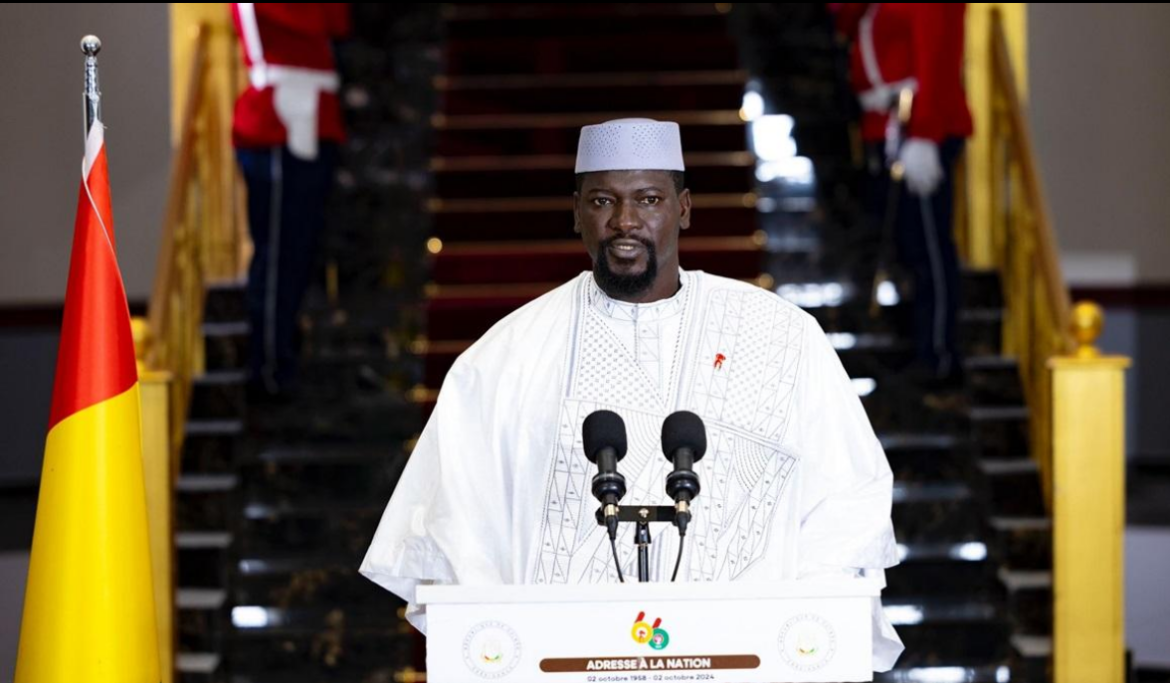
In an unprecedented display of administrative firmness, Guinea’s president Mamadi Doumbouya has taken decisive action against illegal gold mining by dismissing 22 senior officials, including military and territorial administrators. This sweeping purge, announced on national television, follows the inauguration of Nimba Gold Refinery, signalling a dual strategy: cracking down on illicit operations while boosting the nation’s gold processing capacity.
Why targeted officials face suspension — and what it reveals
At the heart of the sanctions lies the alleged complicity of local administrators in enabling illegal gold panning and environmental destruction. Among those removed is Colonel Fayimba Mara, prefect of Siguiri — a region long at the centre of Guinea’s gold rush. His removal, alongside other high-ranking security and administrative personnel, points to a systemic issue: the blurring of legal boundaries between state oversight and illicit enrichment.
The 22 officials, hailing from multiple districts in Upper Guinea’s gold belt, are accused not only of participating in clandestine mining but also of failing to regulate it. Under their watch, agricultural lands have been devastated, river systems polluted, and ecosystems degraded. These consequences extend beyond environmental damage: they threaten food security, public health, and the livelihoods of rural communities.
Who was removed: a breakdown by role and location
The disciplinary measures targeted a cross-section of governance and security leaders operating in Siguiri and surrounding zones. Key figures include:
- Captain Mohamed Lamine Keita, acting prefect of Kintinian
- Captain Sory Camara, acting prefect of Siguirini
- Commandant Fodé Isaac Camara, sub-prefect of Niagassola
- Lieutenant-Colonel Pépé Doualamou, sub-prefect of Bankon
- Naman Kourouma, sub-prefect of Kiniébakoura
- Abou Kanté, sub-prefect of Norassoba
- Richard Yaradouno, sub-prefect of Naboun
These personnel operated across a network of gold-rich localities where artisanal mining sustains local economies — yet where unregulated practices often fuel environmental degradation and criminal networks.
The institutional response: how multiple ministries will enforce the decree
The presidential directive assigns responsibility for oversight to a coalition of seven ministries, including Territorial Administration, Defence, Justice, and Environmental Protection. This multi-agency approach reflects the scale and complexity of the illicit mining economy — one that transcends simple administrative failure and implicates security lapses, judicial inaction, and economic mismanagement.
The decree underscores a broader policy shift: officials are now directly accountable for ensuring compliance with mining laws. It sends a clear message — the era of tacit endorsement of illegal extraction is over.
A strategic pivot: refining gold at home
Two days before the sanctions announcement, President Doumbouya inaugurated Nimba Gold Refinery in Conakry, marking a milestone in Guinea’s drive to capture more value from its mineral wealth. Located in the Cité de l’Air district, the facility aims to process raw gold locally, reducing reliance on raw exports and increasing national revenue from artisanal and industrial mining.
The refinery’s launch aligns with the Simandou 2040 development plan, which seeks to industrialise Guinea’s mining sector, create jobs, and improve equity in resource revenue distribution. By transforming gold before export, the state hopes to boost economic sovereignty and reduce the incentives for smuggling and under-declaration.
The hidden cost of inaction: environmental and social fallout
While the dismissal of officials signals a hardline stance, the environmental damage they are accused of enabling is already visible. Mercury and cyanide used in unregulated mining have poisoned water supplies, while excavation has turned farmland into wasteland. These challenges disproportionately affect rural communities, many of whom once relied on agriculture and fishing.
The state’s response must now extend beyond punishment. It requires sustained monitoring of mining sites, transparent certification of gold trade, and rehabilitation of affected ecosystems. Without these steps, even the most sweeping administrative reforms will fail to restore balance between economic growth and environmental stewardship.
What’s next: balancing discipline with development
The road ahead demands more than symbolic actions. The authorities face three critical tests:
- Effective enforcement: ensuring that mining operations adhere to legal and environmental standards
- Community engagement: involving local populations in monitoring and rehabilitation efforts
- Judicial follow-up: pursuing criminal charges where evidence supports them
As Nimba Gold Refinery begins processing its first consignments, the nation watches closely — not only to see whether gold output rises, but whether governance and ecology can be restored in tandem. The president’s twin moves — dismissing corrupt officials and launching a new refinery — represent a pivotal gambit. Its success will determine whether Guinea’s gold can be a blessing for its people, or remains a source of conflict, crime, and environmental ruin.