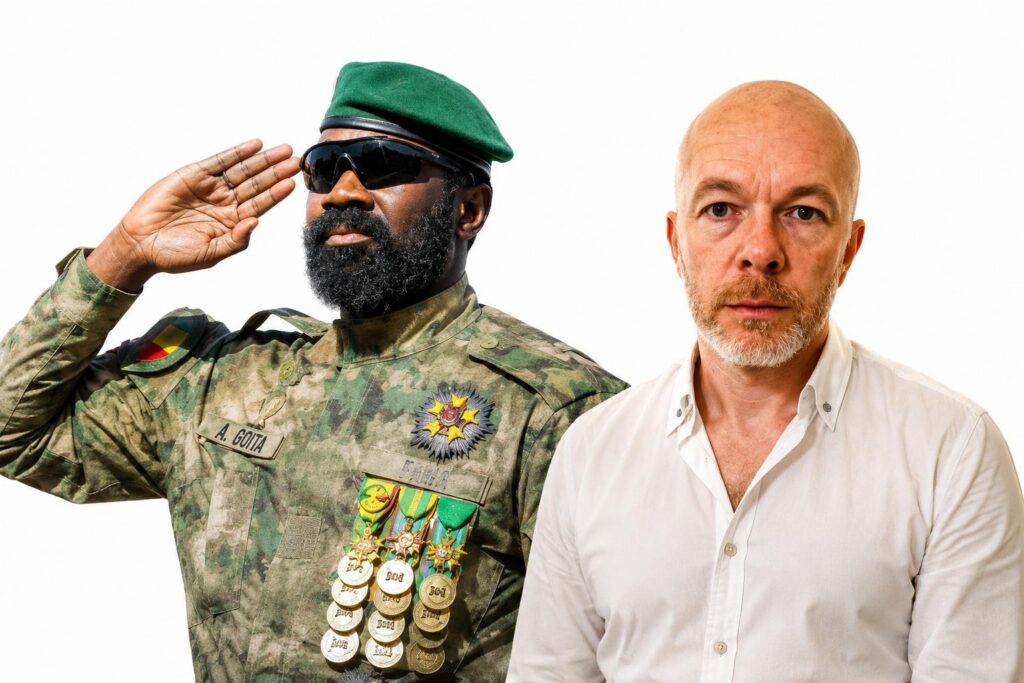
In a move wrapped in the customary pomp of state sovereignty, Malian authorities have granted presidential clemency to Yann Vézilier, a French intelligence officer detained in Bamako exactly one year prior. After being handed a staggering 20-year prison sentence on June 5 for alleged “attempted destabilization,” the undercover diplomat is now set to return to French soil. While Malian officials frame this outcome as an act of magnanimity and national forgiveness, a closer examination reveals a far more calculated narrative.
The invocation of presidential clemency is not the spontaneous gesture it appears to be, nor is it a routine judicial measure. Instead, it represents the final act of a meticulously staged performance—one designed not to resolve a legal dispute, but to serve as a political tool wielded with precision.
Behind the curtain: Direct talks and financial exchanges
While the official rhetoric champions the regime’s moral high ground, behind-the-scenes security realities paint a far more complex picture. Despite Bamako’s insistence on full territorial and security control, Malian armed forces have not engaged these insurgent groups—namely the Coordination des Mouvements de l’Azawad (CMA) and the Jama’at Nusrat al-Islam wal Muslimin (JNIM)—on the battlefield. Contrary to public claims, Russian-linked Africa Corps instructors and mercenaries remained operationally inactive during critical engagements.
To secure the release of Malian soldiers captured in prior clashes, Malian authorities pursued covert, direct negotiations with CMA and JNIM commanders. Far from a display of military resolve, these exchanges reportedly involved substantial financial transfers to armed factions. Thus, beneath the veneer of an unyielding judiciary and the orchestrated drama of a “state pardon,” the Malian government prioritizes financial transaction and tactical compromise to address its on-the-ground vulnerabilities.
An indictment crafted for domestic consumption
From the moment of Yann Vézilier’s arrest in August 2025, his fate was never destined to follow ordinary legal channels. As an accredited agent, his presence was known to Malian security apparatus. The abrupt revocation of his status and subsequent portrayal as a “plotter” served a pressing strategic need: to identify an external enemy and consolidate national unity under military rule.
The severity of the June sentence—20 years in prison—served a dual purpose. It projected an image of judicial firmness against the former colonial power, while simultaneously establishing a high-value diplomatic bargaining chip. The trial was never about evidence or due process; it was a carefully constructed spectacle.
The mechanics of a propaganda trial
Legal and diplomatic observers agree: the trial’s swiftness and procedural conduct left no doubt as to its political nature. The absence of publicly disclosed material evidence and the hasty labeling of the charges as an attack on state security reflect a long-practiced method:
“Judicial condemnation to severe penalties sets the narrative of aggression. The subsequent clemency then allows the regime to parade as the gracious victor. This is the essence of state hostage diplomacy.”
The diplomatic veneer of clemency
Presenting the release as an act of presidential forgiveness is a semantic façade. Repatriations of intelligence officers are not born of constitutional benevolence; they emerge from discreet negotiations, indirect concessions, and security arrangements kept far from public scrutiny. By invoking clemency, Bamako secures total symbolic gain: it reasserts the supremacy of executive authority and preserves the political capital of the original trial. The case of Yann Vézilier will not be remembered as an example of judicial mercy, but as a chilling demonstration of how justice can be molded—from sentencing to pardon—as a strategic communications instrument.
You may also like
Niger’s junta reaches breaking point as Barmou’s arrest shifts the balance of power
Niamey mutiny exposes deep rifts in Niger’s military leadership
At the un headquarters in Niamey, the sovereignist bluff meets the reality of foreign aid
In Bamako, the prosecution of journalist Abdrahamane Keïta signals a tightening grip on free speech
RDC-Israël : un rapprochement aux enjeux multiples