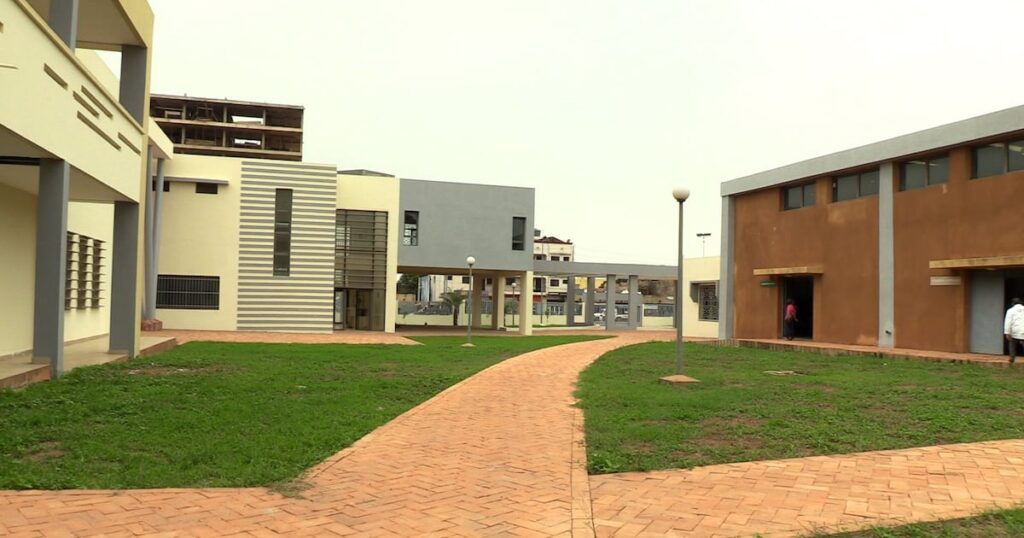
Spanning 5,200 square meters in Bamako, the Mohammed VI Vocational Training Center stands as a modern hub for professional development, designed to bridge Mali’s workforce gaps with industry-aligned skills.
The center’s establishment marks a milestone in Mali’s strategy to cultivate local talent across critical sectors, directly addressing the nation’s evolving economic priorities. «This collaboration between Mali and Morocco underscores the deep bonds between our nations,» noted Mamary Diarra, Mali’s National Director of Tourism. «His Majesty Mohammed VI’s generosity has gifted Malians a world-class facility right here in Bamako,» he added, emphasizing that the center’s infrastructure—including classrooms, demonstration restaurants, and training hotels—positions the state as a leader in vocational education.
Cutting travel costs and training local talent
Mamadou Minkoro Traoré, President of Mali’s Permanent Assembly of Chambers of Crafts (APCMM), highlighted the center’s role in reducing dependence on overseas training. «Previously, Malians aspiring to master trades like haute couture or hospitality had to fly to Morocco,» he explained. «The operationalization of this center eliminates those burdens—both financial and logistical—while ensuring high-quality education at home.»
Local entrepreneur and fashion designer Mamadou Traoré, a graduate of Moroccan haute couture programs, echoed this perspective. «This center arrives at the perfect moment,» he said. «It equips young Malians with market-ready skills, steering them away from uncertainty and directly tackling youth unemployment.» Traoré’s Balimaya brand, which specializes in tailored Malian fashion, reflects the kind of industry growth the center aims to foster.
A gateway to 21 career paths
With capacity for 1,000 trainees annually, the Mohammed VI Vocational Training Center offers 21 specialized programs. Twelve tracks focus on construction and public works (BTP), while nine align with tourism, hospitality, and culinary arts—sectors pivotal to Mali’s economic diversification and job creation.
When the center was handed over to Malian authorities in July, Oumou Sall Seck, Minister of National Entrepreneurship, Employment, and Vocational Training, called it a «strategic asset.» She stressed that the facility would strengthen human capital, a cornerstone of Mali’s sustainable development agenda.
Transforming Mali’s workforce landscape
The center’s launch reflects a broader shift in Mali’s approach to education and employment. By eliminating the need for costly international training, it empowers young people to build careers locally while reducing financial strain on families. Its blend of practical and theoretical learning ensures graduates are job-ready, meeting the demands of industries driving Mali’s growth.
As Mali continues to invest in vocational training, the Mohammed VI center serves as a model for how strategic partnerships and modern infrastructure can reshape a nation’s economic future—one trained professional at a time.
You may also like
South Africa’s mass shooting crisis: can Johannesburg and Cape Town ever feel safe again?
Senegal’s December 2, 2026: will Diomaye Faye dissolve parliament or play the long game?
Senegal’s 2026 budget revision: can Dakar still rescue its growth and investment agenda?
Senegal’s 2026 revised budget: a trap vote for Pastef or a necessary evil?
Burkina Faso’s armored vehicles: can Faso Armored’s 300-unit claim survive the scrutiny?