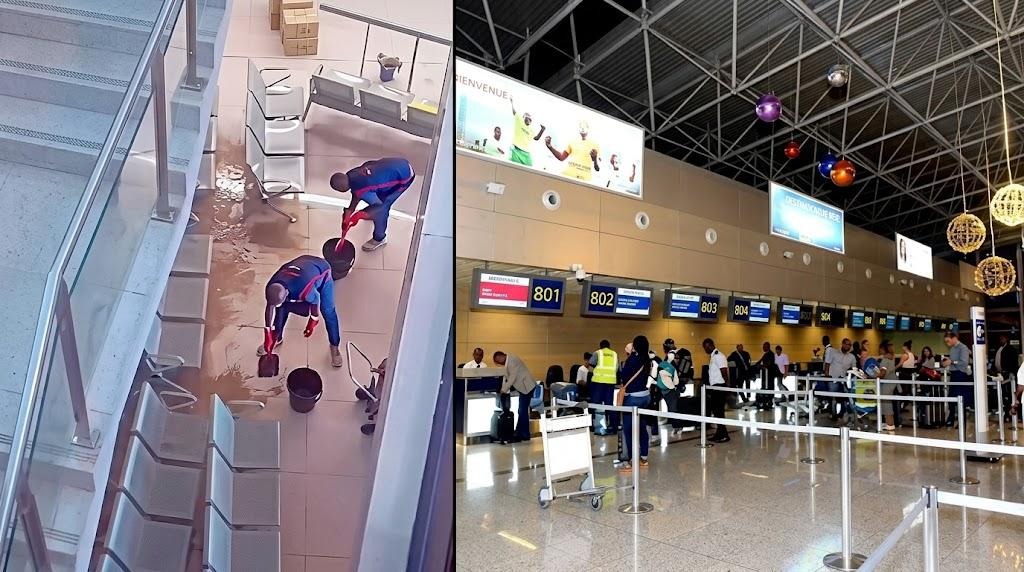
Behind the disaster: the neglected infrastructure that led to catastrophe
The bustling international terminal of Gnassingbé Eyadéma Airport in Lomé was designed to symbolize Togo’s progress and connectivity. Instead, it became the epicenter of a shocking sanitary and operational failure that exposed deeper systemic deficiencies in the country’s public infrastructure.
The incident unfolded without warning in the mid-afternoon. While passengers moved through check-in counters and transit lounges, a prolonged series of muffled explosions rocked the lower levels of the terminal. Within moments, the very systems meant to keep the airport clean and functional—its wastewater pipes—became instruments of destruction.
Witness accounts from airport staff and emergency responders now point to a cascade of failures rooted in decades of deferred maintenance. The main sewage conduit, a corroded relic running through the ceiling void, had been operating under extreme pressure for years. Engineers later confirmed that the pipe’s walls had thinned to the point of structural failure, exacerbated by a lack of routine inspections and chronic underinvestment in critical utilities.
Understanding the chain reaction:
- Accumulation of toxic gases: Years of organic waste buildup in the aging sewer line generated high concentrations of methane and hydrogen sulfide, creating a volatile environment.
- Hydraulic overload: Frequent blockages and reduced flow capacity forced stagnant sewage back into the system, increasing internal pressure beyond safe thresholds.
- Structural collapse: The final rupture occurred when the pipe’s weakened walls burst under combined gas and fluid pressure, sending a torrent of black effluent raining down on unsuspecting travelers below.
From panic to crisis: the human toll of infrastructure failure
What followed was not just a mechanical breakdown—it was a humanitarian emergency. Dozens of travelers, including families, business travelers, and tourists, were drenched in raw sewage. The emotional impact was immediate and profound, compounded by delays in emergency response.
One European passenger, still wrapped in a foil blanket hours later, recounted her ordeal: “We were waiting for our flight to Paris when we heard a deep explosion above us. Then, suddenly, the ceiling collapsed. A wave of dark, foul-smelling liquid engulfed us. It was in our eyes, on our clothes, in our hair.”
While such harrowing stories dominated social channels and local news, the physical aftermath was equally devastating. Passports were ruined, electronic devices rendered unusable, and cabin luggage contaminated beyond salvage. The psychological trauma—being humiliated in a transit environment meant to be safe and dignified—left an indelible mark on hundreds of people.
Adding to the distress, emergency services struggled to respond. The overwhelming stench and the sheer volume of waste overwhelmed sanitation crews. Rescuers initially delayed access to contaminated zones, leaving trapped passengers unassisted for critical minutes.
Health risks and operational paralysis: when sewage threatens lives
As the flood of effluent spread across floors and infiltrated ventilation ducts, public health authorities raised urgent alarms. In a climate-controlled terminal, stagnant sewage rapidly became a breeding ground for pathogens such as Escherichia coli, typhoid, and cholera bacteria.
Quick-response health teams, equipped with limited protective gear, attempted to decontaminate the worst-affected areas. But the infrastructure was ill-prepared for such a crisis. Ventilation systems, once a symbol of modern comfort, now acted as conduits for toxic fumes, spreading contamination throughout the terminal.
Meanwhile, sewage seeping into electrical conduits caused cascading power failures. Critical systems—baggage handling, security scanners, and flight coordination servers—were disabled. Within hours, the Togolese Civil Aviation Authority faced an impossible choice: suspend all operations or risk a catastrophic safety breach.The decision was swift and irreversible: Lomé’s airport was shut down. All incoming flights were diverted to neighboring hubs in Cotonou and Accra, disrupting regional travel and straining airlines already reeling from logistical chaos.
The crisis of accountability: who ignored the warnings?
In the wake of the disaster, a wave of anger has swept across Togo and beyond. How could a major international airport, intended to uphold global hygiene and safety standards, collapse into such disgrace?
Internal technical reports, obtained confidentially, show a pattern of repeated alerts about the deteriorating condition of the sewer network. Engineers and maintenance staff had repeatedly flagged issues with the main sewage line, citing inadequate pumping capacity and corroded piping. These warnings, according to multiple sources, were repeatedly deferred due to budgetary constraints and bureaucratic inertia.
With the airport’s reputation in freefall, international airlines—especially those whose passengers were directly affected—are preparing legal action. Embassies of several European and African countries have demanded formal explanations and full compensation for their nationals.
Key questions raised:
- Why were repeated maintenance warnings ignored despite clear risk of failure?
- Was the airport’s maintenance budget sufficient and appropriately allocated?
- Who is ultimately responsible for ensuring compliance with international safety and hygiene protocols?
Beyond Lomé: what this disaster reveals about African infrastructure
This incident is not an isolated accident—it is a symptom of a broader crisis affecting public infrastructure across many African nations. In recent years, airports, hospitals, and transport networks have faced increasing scrutiny due to underfunding, delayed modernization, and insufficient regulatory oversight.
The Lomé airport sewage disaster exposes a painful truth: when critical infrastructure is neglected, the consequences extend far beyond inconvenience—they become threats to health, dignity, and economic stability.
For Togo, the moment demands urgent action—not only to restore the airport’s functionality, but to rebuild public trust. The government must launch a transparent investigation, implement far-reaching maintenance reforms, and ensure that future infrastructure projects adhere to international standards.
Without decisive change, Lomé’s airport may remain a symbol not of national progress, but of the high cost of neglect.