The silent battle behind Guinea-Bissau’s blocked return
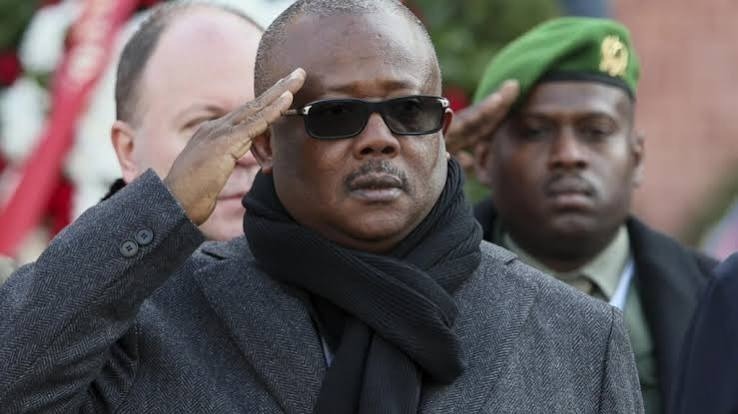
The political landscape of Guinea-Bissau is again under the spotlight as the military junta takes a firm stand against former president Umaro Sissoco Embaló’s bid to return home. This high-stakes confrontation is not merely a clash of personalities but a reflection of deeper institutional fractures that threaten to derail the country’s fragile transition to democracy.
The junta’s decision to bar Embaló’s return was not an impulsive move. It is the culmination of a series of events that have left Guinea-Bissau’s political class divided, and its institutional recovery in tatters. The capital, Bissau, remains a powder keg, with every new development amplifying tensions between exile voices and those who seized power in November 2025.
Understanding the roots of this standoff begins with a closer look at the events of November 23, 2025, when Guinea-Bissau’s presidential election sparked a crisis that no one anticipated.
Behind the November coup: what really happened?
The presidential vote was meant to be a milestone in Guinea-Bissau’s long struggle for stability. But as election officials tallied the final ballots, allegations of fraud began to surface. Amid mounting uncertainty, gunfire echoed through the streets of Bissau. Within hours, armed forces loyal to the self-styled “High Military Command for National Security Restoration” surrounded the presidential palace and detained Umaro Sissoco Embaló.
The junta claimed they were protecting the integrity of the vote, insisting they had intercepted a plot to manipulate the results. Yet skepticism quickly spread. International observers, diplomats, and opposition leaders questioned the legitimacy of the takeover. Critics argued that Embaló had either engineered his own downfall to avoid defeat or that the coup was a pretext to block a political rival’s victory.
Whatever the truth, the immediate consequence was clear: Guinea-Bissau was thrust back into crisis. Embaló was flown out of the country under tight security. His departure left the nation in legal and political limbo, with no clear path forward.
A president’s gambit: exile, alliances, and a return bid
Far from fading into the background, Embaló has emerged as a determined political force from exile. In a surprise announcement, he declared his intention to return to Guinea-Bissau to contest the upcoming presidential election, scheduled for later this year.
His move is not just symbolic. It is strategic. Embaló has rallied a broad coalition—dubbed the “Republican Platform”—comprising around a dozen political parties and civil society groups. The alliance aims to position him as the legitimate democratic candidate, despite his absence from the country.
He argues that the junta’s current leaders are ineligible to run due to constitutional restrictions, creating what he sees as an opening for his return. For Embaló, this is not just about regaining power—it is about reclaiming legitimacy and proving that his influence among the people remains strong, even after his removal.
His return announcement has sent shockwaves across the region, drawing attention to a crisis that risks spiraling out of control.
The junta’s iron fist: why Embaló must stay away
The military leadership has responded with uncompromising resolve. In a sharply worded statement, the junta declared Embaló persona non grata, citing his role in the political turmoil that led to the November crisis.
They warned that allowing him to return would destabilize the transition process and undermine national peace. “No individual who has compromised public order will be permitted to manipulate the transition for electoral purposes,” the statement read, leaving no room for negotiation.
For the junta, Embaló is not a democratic leader embarking on a comeback. He is a destabilizing force—a reminder of the instability that has plagued Guinea-Bissau for decades. By blocking his return, they aim to assert full control over the electoral calendar and determine who can and cannot participate in the vote.
At a crossroads: democracy hangs in the balance
This confrontation has exposed a fundamental divide in Guinea-Bissau. On one side, a military regime that claims to restore order through exclusion. On the other, an exiled leader who insists on inclusion and democratic participation. The stakes could not be higher.
The junta’s refusal to allow Embaló’s return risks deepening a cycle of exclusion. Opposition figures face exile or prosecution. Political space is shrinking. And international partners watch with growing concern as democracy teeters on the brink.
The question now is whether Guinea-Bissau can break free from its cycle of coups and exclusion—or whether the junta’s iron-fisted approach will push the country further into instability.
The answer may well be decided before the year is out.
Key takeaways
- The military junta has formally barred former president Umaro Sissoco Embaló from re-entering Guinea-Bissau.
- Embaló’s return bid is built on a broad opposition coalition calling for free and inclusive elections.
- The junta justifies its stance as a defense of national stability, but critics call it an authoritarian power grab.
- The standoff reflects deeper institutional fractures and raises doubts about Guinea-Bissau’s democratic trajectory.