Why the Paris Peace Forum 2026 became the stage for Africa’s bold diplomatic experiment
The ninth edition of the Paris Peace Forum, held on November 10-11, 2026, revealed a little-discussed reality: Africa is no longer content with mere representation at global decision-making tables. It is reshaping the rules of engagement. While the world focused on traditional power dynamics, Senegal and Benin arrived in Paris with a different agenda—one rooted in digital autonomy and geopolitical rebalancing. Their interventions at the forum exposed how African nations are systematically challenging outdated global governance models by leveraging technology, sovereignty, and strategic partnerships. The discussions weren’t just about diplomatic protocol; they were about dismantling the illusion that African voices only matter when they align with Western priorities.
Behind Dakar’s strategic push: sovereignty, security, and the Sahel equation
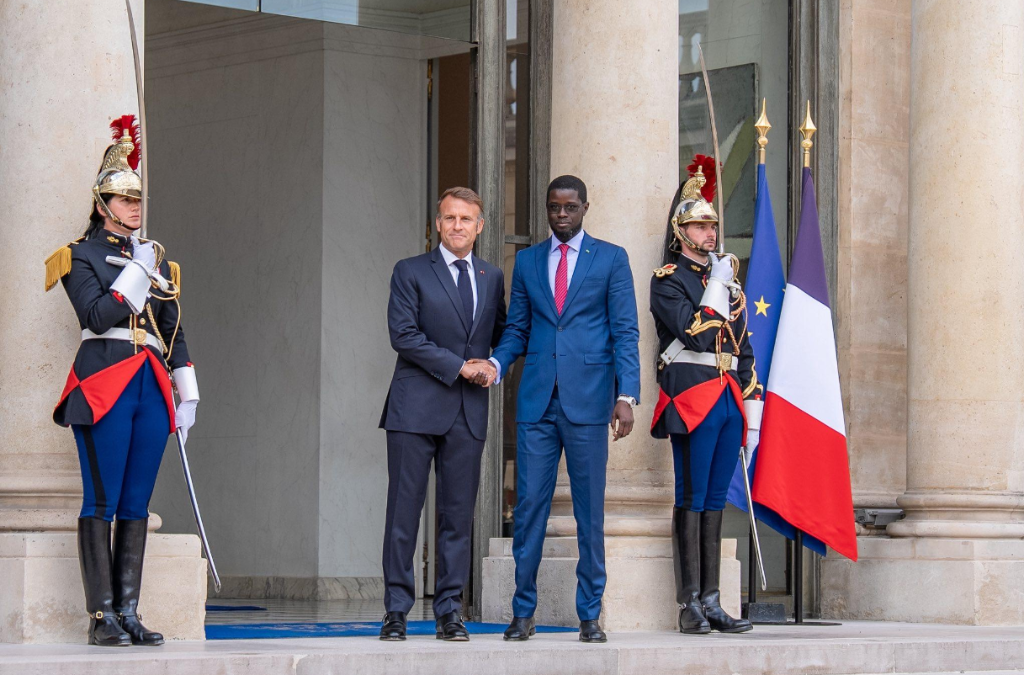
Senegal’s president, Bassirou Diomaye Faye, arrived in Paris fresh from a bilateral meeting with French president Emmanuel Macron. The encounter at the Élysée Palace wasn’t merely ceremonial—it marked a turning point in how Dakar views its relationship with former colonial powers. Unlike previous years, when African nations often hesitated to voice dissent, Faye’s participation signaled a new assertiveness. His agenda in Paris was clear: redefine Senegal’s role in international security frameworks, particularly in the Sahel, while asserting the country’s right to shape agendas on terrorism, climate finance, and global governance reform.
The Senegalese delegation didn’t just attend discussions—it came to lead them. Dakar’s diplomatic team pushed for the inclusion of African priorities in the forum’s final declarations, emphasizing three core demands:
- Ownership of security narratives: Senegal argued that counterterrorism strategies in the Sahel must be designed with local perspectives in mind, rather than imposed by external actors.
- African-led debt and development financing: The country called for restructuring global financial mechanisms to prioritize sustainable, locally tailored solutions over rigid, one-size-fits-all policies.
- Representation in global governance: Dakar insisted that African nations must have a permanent seat at decision-making tables where economic and security policies affecting the continent are crafted.
This agenda wasn’t born out of idealism—it was born out of necessity. Senegal, like many African nations, faces compounded pressures from climate change, jihadist insurgencies, and economic dependency. By staking its claim at the Paris Peace Forum, Dakar sent a message: Africa’s stability cannot be achieved through foreign intervention alone, but through genuine partnership and shared sovereignty.
Cotonou’s digital blueprint: how Benin is rewriting the rules of technological dependency
While Senegal focused on geopolitical influence, Benin took a radically different approach—one centered on technological sovereignty. Mahuna Akplogan, Benin’s minister of Digital Transformation and Innovation, brought to Paris a vision rarely seen in continental diplomacy: the idea that Africa’s future depends on its ability to control its own digital destiny. Benin’s delegation wasn’t just about talk; it was about action. The country has already launched a national AI strategy and is investing in digital infrastructure to reduce reliance on external tech giants.
At the forum, Akplogan highlighted a critical paradox: the same technologies driving global progress—AI, cloud computing, cybersecurity—are often controlled by a handful of countries that dictate the rules for everyone else. Benin’s solution? Build alternative pathways. The delegation presented case studies of how Benin is:
- Developing local AI models trained on African datasets to avoid algorithmic bias and foreign surveillance.
- Creating national data hubs to ensure critical information stays within national borders.
- Partnering with African tech hubs instead of relying solely on Silicon Valley or Beijing for digital solutions.
Benin’s strategy reflects a growing continental trend: African nations are realizing that digital sovereignty is not a luxury—it’s a prerequisite for survival in a world where data is the new oil. By bringing this conversation to Paris, Benin forced global leaders to confront an uncomfortable truth: in the 21st century, power isn’t just held by those with the biggest armies—it’s held by those who control the digital infrastructure. And Africa is no longer willing to be a passive user of foreign systems.
The hidden factor uniting Senegal and Benin: Africa’s untapped potential as a global rulemaker
The dual presence of Senegal and Benin at the Paris Peace Forum wasn’t coincidental—it was strategic. Both countries arrived with a shared conviction: Africa must move from being a subject of global debates to an architect of them. Their approaches differed—one focused on traditional diplomacy, the other on technological innovation—but their goals were aligned. They wanted to reshape the narrative around Africa from one of aid recipients to one of equal partners. And they succeeded in making their voices heard.
What made their interventions particularly effective was their reliance on three unspoken truths about Africa in 2026:
- A demographic dividend: With over 60% of the population under 25, Africa holds the youngest workforce in the world—a potential that can destabilize or stabilize global markets depending on how it’s harnessed.
- Resource richness: From rare earth minerals to renewable energy potential, Africa’s natural wealth is critical to the green transition—but only if Africans control its extraction and distribution.
- Geopolitical leverage: As Western nations lose their monopoly on global influence, African states are becoming kingmakers in international alliances, particularly in climate negotiations and technology standards.
By combining Senegal’s diplomatic pressure with Benin’s technological foresight, Africa sent a clear message: the continent is no longer satisfied with being invited to the table—it wants to set the menu.
From Paris to the world: what happens next?
The Paris Peace Forum doesn’t produce binding agreements. Its power lies in the ideas it plants and the networks it forges. For Senegal and Benin, the real work begins now. The next 12 months will reveal whether their diplomatic maneuvers translate into tangible outcomes—or if they remain symbolic victories in a world still dominated by entrenched power structures.
Several indicators will shape the narrative:
- Will African demands for governance reform be included in the next G20 or UN declarations?
- Can Benin’s digital sovereignty model be scaled across other African nations, especially in francophone West Africa?
- Will the EU and US acknowledge Africa’s new assertiveness in their foreign policy strategies, or will they revert to business-as-usual?
One thing is certain: the Paris Peace Forum 2026 exposed a tectonic shift in global diplomacy. Africa is no longer waiting for permission to influence the world. It’s taking the initiative—one bold move at a time.
Key takeaways for global observers
The experiment led by Senegal and Benin at the Paris Peace Forum offers three critical lessons for the international community:
- Diplomacy is evolving. Traditional power blocs are losing their grip on global governance. New voices—especially from Africa—are demanding equal footing in decisions that affect millions.
- Technology is the new frontier of sovereignty. Nations that fail to control their digital infrastructure risk becoming perpetual dependents. Benin’s approach shows that technological independence is achievable—and necessary.
- Africa’s rise is inevitable. Whether the world is ready or not, African nations are redefining the rules of engagement. The question is no longer if Africa will have a seat at the table, but whether existing powers will adapt—or be left behind.