Behind the diplomatic summoning: why Niamey challenged Brussels over Algeria’s military presence
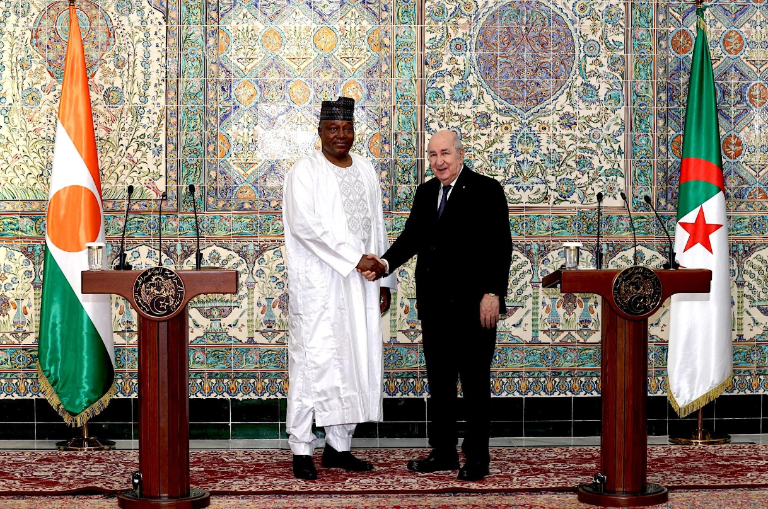
The decision of Niger’s transitional authorities to summon the European Union’s chargé d’affaires in Niamey has reignited a pivotal debate on the boundaries of sovereignty and diplomatic discourse. This move, rooted in reactions to a European spokesperson’s remarks about Algerian military deployment in Niger, spotlights not just a bilateral disagreement, but broader geopolitical dynamics reshaping Sahelian security cooperation.
Sovereignty as non-negotiable principle vs. the right to concern
Niger’s government made its stance clear: the summoning was not an attack on transparency, but a reaffirmation of sovereign autonomy in matters of national security. “The EU’s tone was condescending and unacceptable,” the Prime Minister’s office stated, underscoring that while international partners may observe, they cannot dictate terms of bilateral agreements. Yet, beneath this assertion lies a deeper truth: sovereignty is not a shield against scrutiny, nor is it a license to operate without accountability in a region facing escalating instability.
Legal and diplomatic frameworks: where the lines are drawn
International law, particularly Article 2(7) of the UN Charter, establishes a principle of non-interference in domestic affairs. However, this provision does not silence external reactions when a country’s actions could have regional implications. The EU’s request for clarification on the scope, objectives, and legal framework of Algeria’s military presence in Niger falls squarely within the realm of permissible diplomatic engagement—provided it avoids coercive measures. The core issue is not whether the EU can speak, but how and when it chooses to do so.
The crux of the matter lies in the concept of responsible communication. A state—or a regional bloc—can express concerns without asserting control. There is a fine line between a legitimate question and an implied claim of jurisdiction. In this case, the accusations of “condescension” from Niamey suggest that tone and framing matter as much as intent.
The context of Sahel insecurity
The timing of the EU’s comments was not arbitrary. The Sahel remains a flashpoint of insecurity, with armed groups traversing porous borders, regional cooperation mechanisms under strain, and the specter of conflict spillover looming large. In such an environment, any cross-border military deployment—especially between two major regional players—naturally raises questions about intentions, coordination, and long-term stability. The EU, deeply invested in regional security partnerships, is not overstepping by seeking transparency; it is fulfilling a role as a concerned observer and potential partner in crisis prevention.
Transparency as a bridge, not a bridge too far
The Nigerien government’s response frames transparency requests as potential infringements on sovereignty. Yet, transparency is not the antithesis of independence; it is a tool to strengthen it. By clarifying the legal basis, command structure, and operational scope of foreign military presence, Algeria and Niger could enhance their own credibility—not undermine it. The EU’s inquiries should be seen not as an attempt to police decisions, but as an invitation to clarity in a region where opacity fuels distrust.
Moreover, transparency serves a dual purpose: it reassures neighbors of peaceful intent while enabling partners like the EU to assess whether joint operations align with broader stabilization goals. The absence of such information can inadvertently fuel speculation, reduce trust, and even provoke external interventions—precisely the opposite of what sovereignty advocates seek to prevent.
From confrontation to dialogue: a path forward
Diplomatic exchanges, even tense ones, are not failures—they are opportunities to recalibrate expectations. The summoning of the EU envoy is a strong signal from Niamey that sovereign decisions are non-negotiable. But interpreting every inquiry as an act of defiance may be counterproductive. The EU’s concerns, however expressed, reflect legitimate interests in regional security and stability. Rather than viewing them as challenges to authority, Niger and Algeria could engage in structured dialogue—sharing information proactively, explaining their strategic choices, and demonstrating how cooperation serves long-term peace.
Ultimately, sovereignty and dialogue are not mutually exclusive. A state can assert its independence while welcoming constructive input. What this episode reveals is not a clash of rights, but a need for clearer communication. The challenge for both sides now is to transform confrontation into collaboration—to shift from defending positions to building mutual understanding. In the Sahel, where every decision resonates across borders, that shift may be the most sovereign act of all.