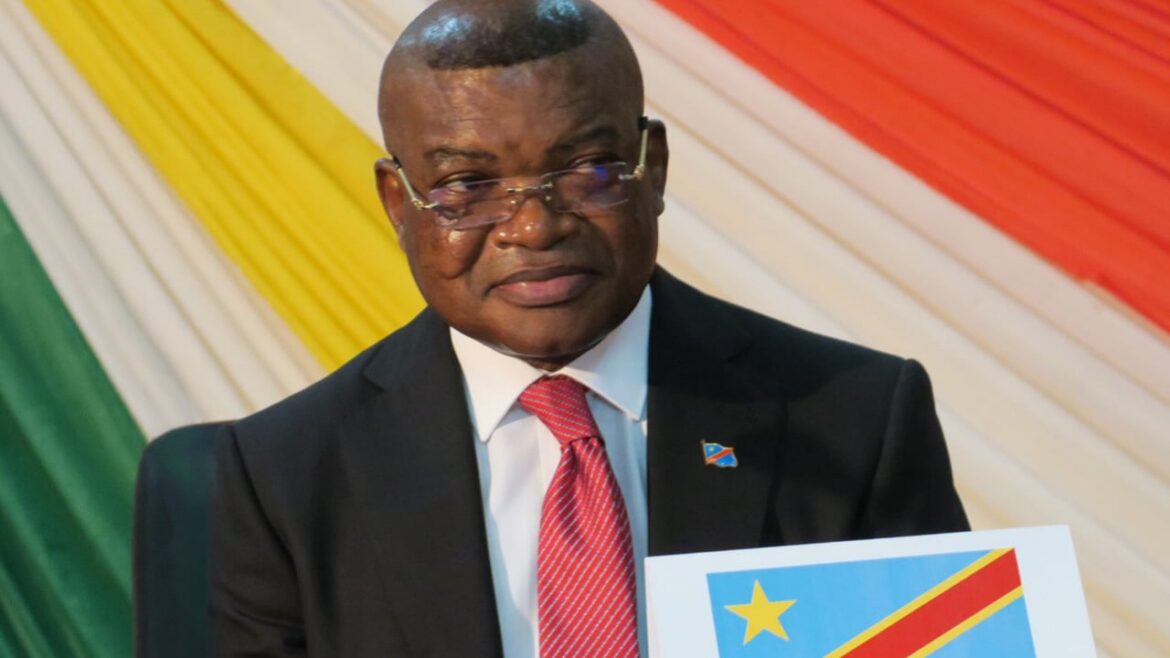

Kalev Mutond’s death isn’t just another headline—it peels back layers of Congo’s shadow networks. Behind the official narratives lies a complex web of power struggles, institutional cracks, and long-standing rivalries that shaped his tenure. Understanding his departure requires more than a glance at the obituary; it demands a look at the forces that molded—and ultimately broke—one of the most influential figures in DR Congo’s intelligence history.
How Mutond’s rise reflected Congo’s shifting power balances
Kalev Mutond didn’t ascend to the top of Congo’s intelligence apparatus by accident. His career trajectory mirrored the country’s turbulent political shifts, from the post-Mobutu transition into the era dominated by Joseph Kabila’s administration. Serving as head of the Agence Nationale de Renseignements (ANR) from 2013 to 2018, Mutond operated at the intersection of state security, political influence, and personal ambition.
During those years, the ANR wasn’t just a government agency—it became a parallel power center. Intelligence reports weren’t merely filed; they were wielded as bargaining chips. Diplomats, opposition figures, and business leaders all navigated a reality where information equaled leverage. Mutond’s role in this ecosystem positioned him as both an architect and a beneficiary of a system that thrived on opacity.
The tensions weren’t hypothetical. Internal ANR factions, military leadership, and civilian elites frequently clashed over control of security narratives. Mutond’s survival in such a volatile environment required more than competence—it demanded strategic alliances and ruthless pragmatism. His eventual removal in 2018 wasn’t just a personnel change; it signaled a broader recalibration of Congo’s security priorities.
The unseen cracks in Congo’s intelligence framework
Mutond’s career highlights structural weaknesses in Congo’s intelligence infrastructure that persist long after his departure. One persistent issue remains the agency’s fragmented nature. Despite nominal centralization under the ANR, regional intelligence units operated with significant autonomy—sometimes pursuing divergent agendas that undermined national cohesion.
Another critical flaw? The lack of institutional memory. High-profile dismissals and sudden leadership changes meant that decades of operational knowledge vanished overnight. Veteran agents, trained under Mobutu or Kabila’s early years, were replaced by younger, often inexperienced cadres. The result? A system that sometimes resembles a patchwork quilt—each piece stitched together hastily, with seams that threaten to fray under pressure.
Mutond’s departure exposed another vulnerability: the blurred line between intelligence work and political patronage. In Congo’s security apparatus, loyalty to individuals often supersedes allegiance to institutions. This personalization of power creates fragility. When key figures exit the stage—whether by design, natural causes, or external pressure—the entire structure risks toppling.
What Mutond’s legacy reveals about Congo’s future security landscape
His death arrives at a pivotal moment. Congo’s political climate today differs starkly from the Kabila era. President Félix Tshisekedi’s administration has pledged transparency, yet the intelligence sector remains plagued by the same old habits. Surveillance practices continue to draw criticism, while opposition figures and civil society activists report persistent harassment. The question now: Can Congo build a security apparatus that serves citizens rather than power brokers?
The challenges are daunting. Restructuring an agency synonymous with repression won’t happen overnight. Institutional reforms require more than legislative tweaks—they demand cultural shifts. New leadership must navigate entrenched interests while restoring public trust in intelligence agencies. Without this foundation, Congo risks repeating the cycles of the past: opacity, internal rivalries, and power concentrated in too few hands.
The forces that shaped Kalev Mutond’s career—factionalism, personalization of power, and the blurred boundaries between security and politics—still cast long shadows over Congo’s future. His death may close one chapter, but the deeper questions about Congo’s intelligence landscape remain unresolved.
Key takeaways from Mutond’s era and its lasting impact
- Parallel power centers: The ANR’s evolution under Mutond illustrates how intelligence agencies can become independent power hubs, serving narrow interests rather than national objectives.
- Institutional fragility: Frequent leadership changes erode institutional memory and continuity, leaving the system vulnerable to manipulation and inefficiency.
- Blurred boundaries: The fusion of intelligence work and political patronage creates fragile structures where personal loyalty matters more than institutional loyalty.
- Unfinished reform agenda: Congo’s intelligence sector needs more than new leaders—it requires a fundamental reimagining of its role, purpose, and accountability mechanisms.
The road ahead: reform, resistance, or repetition?
The death of Kalev Mutond forces a reckoning. Congo cannot afford to ignore the structural issues his career laid bare. Reform isn’t optional; it’s existential. Yet resistance from within the system is inevitable. The same actors who benefited from opacity will resist transparency. Meanwhile, citizens demand better governance, and neighboring countries watch closely as Congo’s stability remains precarious.
For intelligence reform to succeed, it must prioritize three pillars: professionalization, accountability, and public oversight. Professionalization means training agents not just in surveillance techniques, but in ethical intelligence practices. Accountability requires mechanisms to investigate abuses and sanction wrongdoers. Public oversight introduces checks that prevent intelligence agencies from becoming tools of repression.
The path forward is narrow, but the stakes couldn’t be higher. Congo’s intelligence apparatus either evolves into a modern, transparent guardian of national security—or it collapses under the weight of its own contradictions. Kalev Mutond’s legacy isn’t just a cautionary tale. It’s a roadmap—or a warning of what’s at risk if nothing changes.