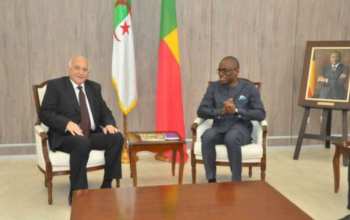
The strengthening of Benin-France ties took an unexpected turn last week as officials gathered at the Élysée Palace to formalize a financial agreement that transcended mere monetary value. Behind the headline figure of 65.5 billion CFA francs lies a carefully structured partnership designed to address systemic challenges in Benin’s most critical sectors: power infrastructure, agricultural productivity, and healthcare accessibility.
The strategic calculus behind the Élysée agreements
While the allure of billions in funding often dominates headlines, the real story of this partnership lies in its layered objectives. French and European investors didn’t simply write a blank check—they tied funding to measurable benchmarks across three key sectors that collectively form the backbone of Benin’s economic resilience. The agreements, finalized during a high-level ceremony, reflect a deliberate shift from traditional aid models toward outcome-driven collaboration.
This approach wasn’t born from spontaneous generosity. Years of policy analysis highlighted persistent bottlenecks in Benin’s electricity grid, stagnant agricultural yields despite fertile land, and underfunded healthcare facilities straining to serve a growing population. The 65.5 billion FCFA commitment represents a calculated response to these interconnected challenges, with each sector earmarked for targeted interventions rather than scattered investments.
Powering progress: the invisible force behind Benin’s economic expansion
Electricity isn’t just a utility in Benin—it’s the silent engine of progress. The funding allocated to this sector isn’t merely about keeping lights on; it’s about enabling industrial growth, stabilizing supply chains, and reducing reliance on costly diesel generators. Unlike previous piecemeal upgrades, the new financing targets systemic overhauls: expanding grid coverage in rural areas, modernizing transmission infrastructure, and integrating renewable energy sources to diversify energy supply.
The strategic importance becomes clearer when considering Benin’s broader economic ambitions. A stable, scalable power sector could attract manufacturers displaced from neighboring countries, create thousands of jobs in technical and maintenance fields, and even position Benin as a regional energy hub. While the financial injection is substantial, its true value lies in its potential to unlock previously untapped economic avenues.
Seeding transformation: how agricultural investments could redefine Benin’s food security
Benin’s agricultural sector employs over half the workforce, yet productivity lags due to outdated farming techniques, limited access to credit, and post-harvest losses exceeding 30%. The French-backed funding targets these pain points directly. Instead of focusing solely on subsistence farming, the agreements prioritize value-added agriculture, farmer training programs, and infrastructure improvements to connect rural producers with urban markets.
What sets this approach apart is its emphasis on sustainable intensification rather than exploitative expansion. By investing in climate-smart technologies, soil restoration, and efficient irrigation, the program aims to boost output without depleting natural resources—a delicate balance that previous agricultural initiatives struggled to achieve. The ripple effects could extend beyond food security, potentially positioning Benin as a net exporter of high-value crops like cashews and cotton.
Healthcare beyond hospitals: building systems to withstand future crises
The healthcare investments in this package extend far beyond constructing new clinics. The funding targets systemic weaknesses that became glaringly obvious during recent health crises: fragmented supply chains, under-staffed facilities, and insufficient emergency response capabilities. The focus is on digitalizing medical records, training frontline healthcare workers, and strengthening pharmaceutical distribution networks.
Unlike traditional brick-and-mortar projects, these interventions prioritize scalability and adaptability. By integrating mobile health platforms and telemedicine services, the program ensures that even remote communities gain access to specialized care. The long-term goal isn’t just to treat illnesses but to build a healthcare ecosystem capable of withstanding demographic pressures and emerging health threats.
The unspoken equation: why France’s involvement isn’t purely altruistic
Geopolitical analysts note that France’s engagement in Benin extends beyond development assistance. The West African nation sits at a critical crossroads of regional trade routes, hosts a French military base, and serves as a counterbalance to Chinese influence in the Gulf of Guinea. The funding package, while framed as a benevolent investment in development,also aligns with France’s broader strategic interests in maintaining influence across Francophone Africa.
Yet to dismiss the agreements as mere geopolitical maneuvering would overlook their potential real-world impact. The structured financing—tied to performance benchmarks and transparent reporting—represents a departure from opaque aid models. For Benin’s leadership, this partnership offers a rare opportunity to leapfrog development hurdles without repeating the mistakes of past over-reliance on external funding.
From paper pledges to tangible change: the road ahead
The 65.5 billion FCFA commitment marks a promising start, but history shows that financial pledges often fail to materialize into lasting change. Success here hinges on three critical factors: unwavering political commitment from Benin’s government, disciplined execution by implementing agencies, and transparent monitoring by independent auditors.
Early indicators suggest cautious optimism. Unlike previous agreements that dissolved into bureaucratic inefficiencies, this package includes built-in review mechanisms at six-month intervals. These checkpoints will allow both parties to recalibrate strategies based on real-time data rather than theoretical projections.
The ultimate measure of this partnership’s success won’t be the ceremonial photo ops at the Élysée, nor even the percentage of funds disbursed. Instead, it will be judged by measurable improvements in electricity availability, agricultural productivity, and healthcare outcomes across Benin’s 12 departments. If executed with the rigor implied by these agreements, this funding could mark the beginning of a new chapter—not just for Benin’s development, but for how African nations negotiate partnerships with their former colonial powers.