The hidden currents shaping Senegal-France security cooperation
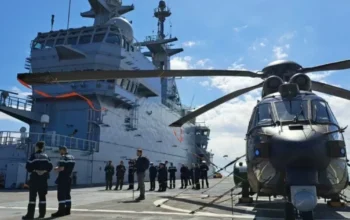
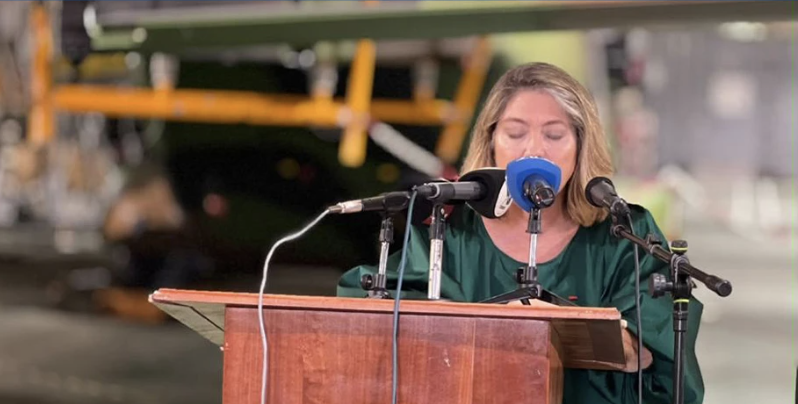
The arrival of France’s amphibious assault ship Mistral in Dakar wasn’t just a naval stopover—it was a carefully calibrated signal. Speaking outside the port gates on 2 October 2026, French Ambassador Christine Fages framed the vessel’s presence as more than a logistical visit; it was a statement of intent. Behind the ceremonial parade and flag protocols lay the unspoken question that analysts in both capitals were quietly weighing: what exactly is being renewed?
From symbolic gesture to strategic recalibration
What looks like routine cooperation on the surface is, in reality, the visible tip of a deeper recalibration. Fages used the word “renovated” not as diplomatic ornamentation, but as a deliberate pivot away from the transactional postures that have dominated Sahel defense relations in recent years. She underscored that the ship itself—the Mistral’s ability to launch helicopters, host special forces, and stage humanitarian drills—was not just a platform, but a blueprint for the kind of hybrid missions Senegal and France now envision together.
What she did not say outright, but what naval officers and defense planners in both Ministries of Defense have confirmed off the record, is that the visit was timed to coincide with an internal review of Senegal’s 2027-32 defense white paper. The document, still in draft, is expected to formalize a shift from reliance on external peacekeeping contributions to self-sustaining expeditionary capacity—exactly the niche the Mistral’s capabilities fill. In essence, Dakar wants the ability to project power across its maritime domain, while Paris wants a stable African partner that can shoulder more of its own security burden.
Capacity gaps the Mistral is quietly filling
French military planners have long fretted over two vulnerabilities in the Senegalese armed forces: air-to-ground projection and maritime intelligence, surveillance, and reconnaissance. The Mistral brings both in a single hull. During the 48-hour port call, French and Senegalese teams ran tabletop drills simulating a counter-piracy operation off the coast of Saint-Louis. According to one officer who requested anonymity, the scenario was deliberately chosen to highlight the Senegalese navy’s still-nascent airborne early-warning capacity—something the Mistral’s NH90 Caiman helicopters could augment during full-scale exercises scheduled for Q1 2027.
The drilling was not for show. Senegal’s long Atlantic coastline—2,000 km of it—has become a corridor for arms trafficking bound for the Sahel interior. Port authorities in Dakar have intercepted three such shipments already this year, but without dedicated maritime patrol aircraft, interdiction remains a gamble rather than a strategy. The Mistral’s embarked helicopters can extend the reach of Senegal’s lone ATR 72-600 maritime surveillance aircraft by up to 300 nautical miles, effectively doubling the surveillance bubble around key choke points.
What Dakar gains—and what it may yet surrender
For Senegal, the calculus is partly economic. A French defense loan package announced alongside the Mistral’s visit—terms undisclosed but rumored to carry low interest—will partly finance the acquisition of two additional OPV-58 offshore patrol vessels from a French shipyard. These ships, due for delivery in 2028, will give Dakar the capacity to conduct independent patrols as far south as the border with Guinea-Bissau, a region presently policed only by international task forces.
Yet the quid pro quo is not lost on Senegalese policymakers. A confidential briefing slide, leaked to regional correspondents but never published, outlines three areas where Paris is seeking reciprocal access: intelligence-sharing hubs, rotational basing rights for French special forces, and co-development of coastal radar networks. None of these were mentioned in Fages’ public remarks, but three separate sources inside the Senegalese Ministry of Armed Forces confirmed their existence.
The optics versus the obligations
Publicly, the narrative is one of equality: “a partnership of peers,” as the ambassador put it. Behind closed doors, however, the optics mask a transaction. West African defense analysts are already referring to the arrangement as “tactical guardianship with Senegalese characteristics”—a phrase borrowed from Ghanaian defense literature. The implication is that Dakar is trading partial operational autonomy for immediate capacity gains, betting that the benefits of deterrence will outweigh the loss of strategic flexibility in the long run.
Fages’ carefully chosen language—“renovated” rather than “new”—hints at this tension. The French government is not offering a blank check; it is proposing a refurbished model of cooperation, one that preserves French influence while acknowledging Senegal’s rising regional ambitions. Whether that model will survive the first real test—an actual crisis requiring joint boots on the ground—remains the question that neither side is yet willing to answer in public.
Beyond the harbor: how Senegal’s neighbors are watching
The Mistral’s silhouette in Dakar harbor was noticed far beyond Senegal’s borders. In Abidjan, Bamako, and Nouakchott, officials are recalculating their own timelines for military refresh. Côte d’Ivoire has already approached France for a similar package covering coastal radar integration, while Mali—despite its junta’s rhetoric—has quietly requested a technical assessment of the Mistral’s amphibious assault modules. The message is clear: if Dakar can secure capacity through a renovated partnership, others may follow.
For the moment, however, the transaction remains bilateral. Fages’ words and the Mistral’s hull are only the first visible acts in what will likely be a multi-year drama of capability swaps, political trade-offs, and unspoken red lines. What began as a high-profile port call may end up rewriting the rules of military engagement across the western Sahel.