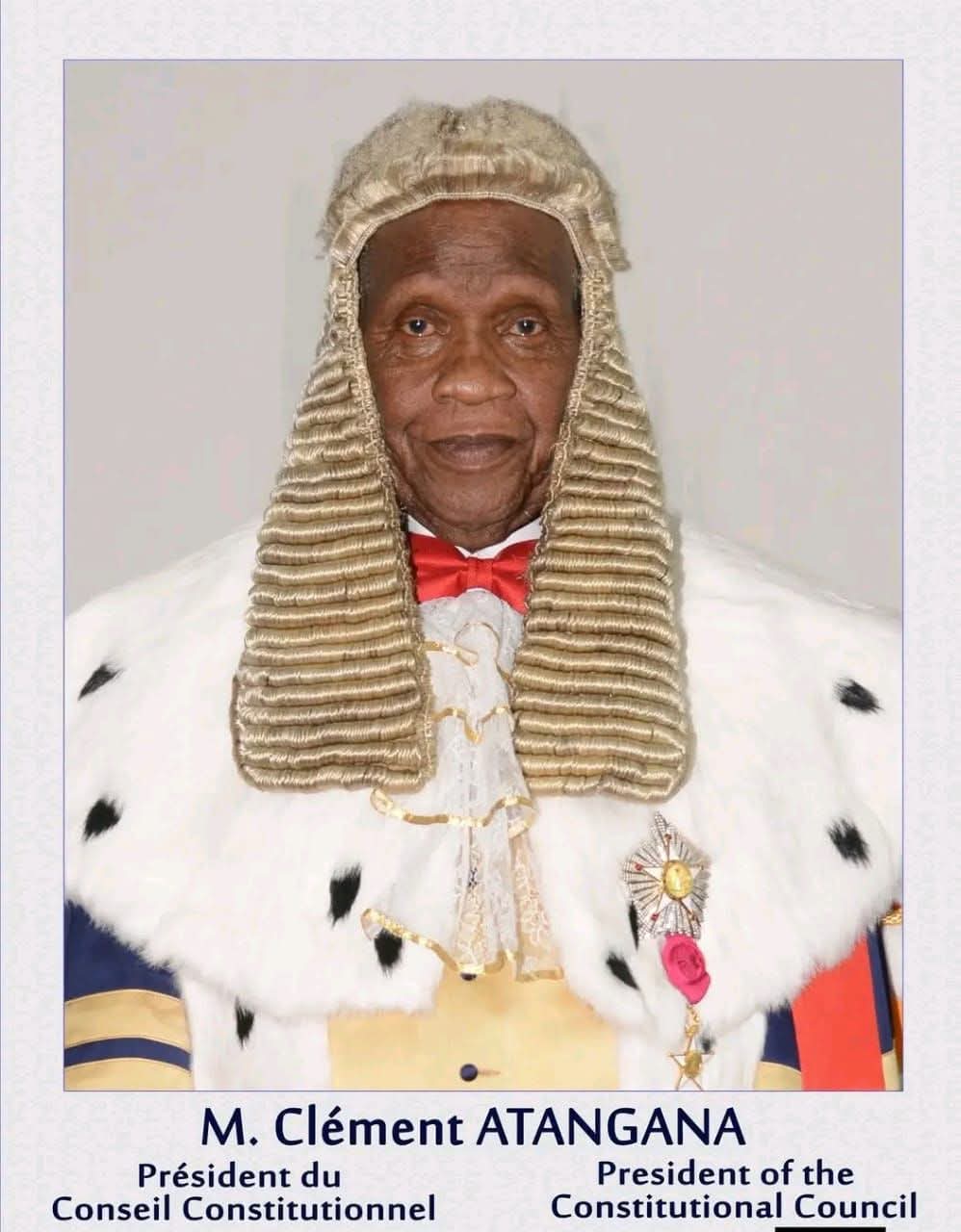
The sudden death of Clément Atangana, president of Cameroon’s Constitutional Council, in Paris has sent shockwaves through the nation’s political landscape. The 85-year-old jurist, who had been evacuated to France for medical treatment, passed away before receiving advanced care. His death at this critical juncture raises immediate questions about institutional stability and the future of electoral justice in the country.
From Ngomedzap to the Constitutional Council: a career marked by controversy
Clément Atangana hailed from Ngomedzap, in the Nyong-et-So’o department, and built a career as an independent judicial figure who nonetheless became a symbol of contested electoral processes. His appointment as president of the Constitutional Council in 2018 coincided with a period of intense scrutiny over electoral outcomes. Under his leadership, the council gained notoriety for systematically dismissing petitions against electoral results, earning it the nickname “irrecevable” (dismissed) in public discourse. The council’s repeated rejections of opposition appeals during the 2018 presidential election solidified perceptions of institutional bias toward the ruling Cameroon People’s Democratic Movement (CPDM).
The 2018 presidential election: a turning point in public trust
The council’s handling of the 2018 presidential election remains one of the most contentious chapters in its history. Following the announcement of Paul Biya’s victory, a widely circulated video showed Clément Atangana celebrating with family members, declaring Biya “your candidate”—a moment that many interpreted as an overt display of partisan alignment. This incident, compounded by subsequent revelations of the council’s systemic dismissal of opposition petitions, eroded public confidence in its independence.
Critics argue that these actions undermined the council’s credibility as an impartial arbiter of electoral disputes, transforming it into a perceived extension of executive power rather than a guardian of constitutional integrity. The “irrecevable” label, once a technical term in legal jargon, became shorthand for perceived institutional corruption.
Public appearances and political entanglements
Atangana’s public engagements often blurred the lines between judicial neutrality and political allegiance. In 2025, he attended a development committee meeting in Nyong-et-So’o that culminated in a resolution endorsing Paul Biya’s bid for re-election—a move that further fueled suspicions of partisan involvement. Though Atangana later claimed the event was apolitical, the optics of a constitutional council president endorsing a sitting president raised serious concerns about the institution’s impartiality.
The incident highlighted how institutional figures, regardless of their official roles, can inadvertently compromise the perception of judicial independence. For many opposition figures and civil society observers, Atangana’s actions were emblematic of a broader trend in which electoral institutions appeared subordinate to ruling-party interests.
Legacy of a contested tenure
Clément Atangana’s death closes a chapter marked by tension between constitutional mandates and political realities. His tenure was defined by two opposing narratives: as a guardian of institutional continuity and as a symbol of judicial overreach. While supporters lauded his commitment to legal stability, critics viewed his leadership as a vehicle for electoral manipulation, particularly during contentious political transitions.
The question now facing Cameroon is whether his successor can restore public trust in the council’s independence. The institution’s reputation, already fragile, faces an existential test as political actors and citizens alike demand greater transparency in electoral processes.
What lies ahead for Cameroon’s electoral justice?
The vacuum left by Atangana’s death presents both risks and opportunities for Cameroon’s political future. Without a credible and independent constitutional council, the integrity of future elections could come under even greater scrutiny. The international community and domestic stakeholders will be watching closely to determine whether the council can shed its controversial past and embrace a new era of neutrality.
For now, the death of Clément Atangana serves as a stark reminder of how institutional figures shape—and sometimes distort—the foundations of democratic governance. As Cameroon navigates this pivotal moment, the choices made in the coming weeks will determine whether the council can reclaim its role as a neutral arbiter or succumb to the same forces of partisanship that defined Atangana’s tenure.