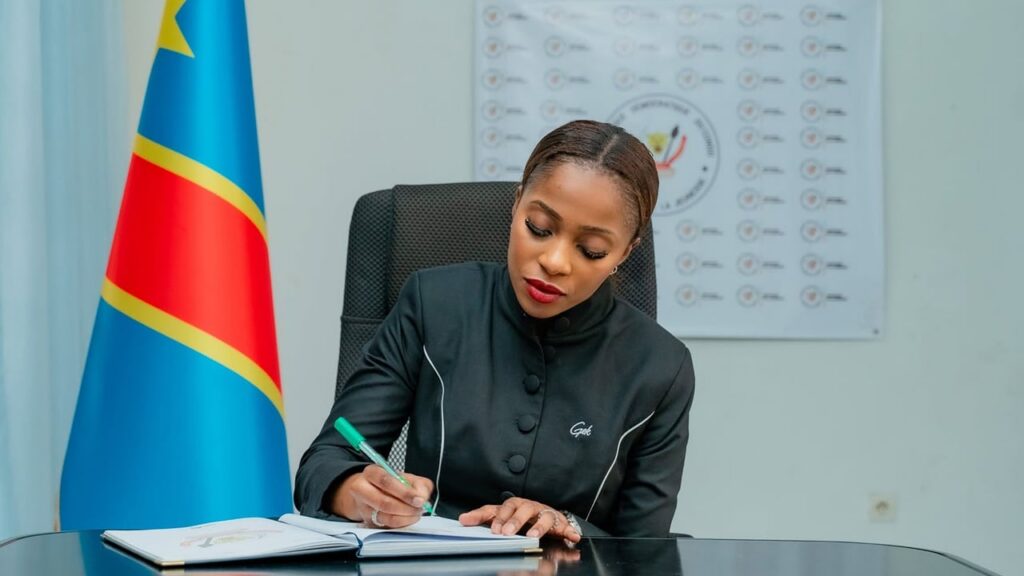
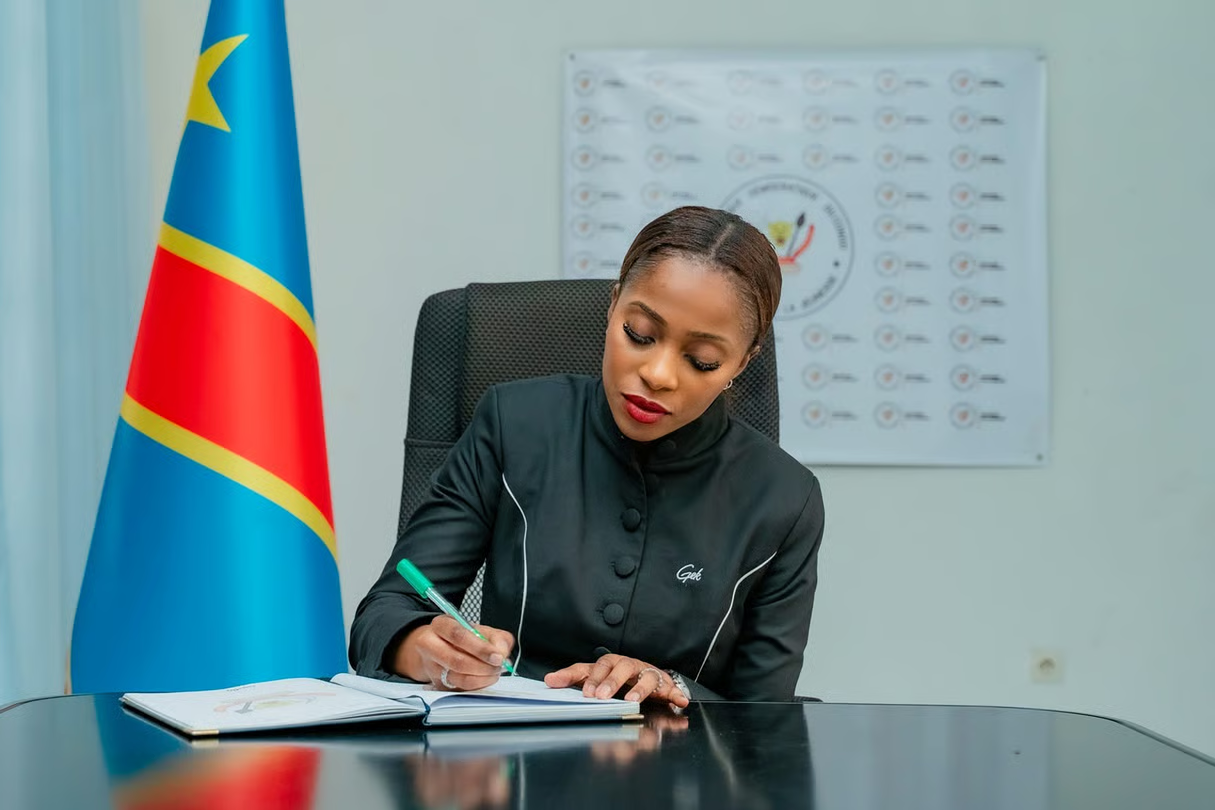
The Democratic Republic of the Congo (DRC) is currently immersed in a heated constitutional debate, with Minister Grace Kutino emerging as a key voice in the discussions. Her recent statements have sparked intense speculation about the government’s official position on proposed constitutional amendments.
Who is Grâce Kutino, and why does her opinion matter?
Grâce Kutino serves as the Minister of Youth and Patriotic Awakening in the DRC government. Her portfolio places her at the intersection of national policy and public engagement, making her remarks particularly influential. During a recent press briefing, she delivered a statement that has since become a focal point of national discourse:
“Yes, I do support it.”
This concise yet powerful response has left many wondering whether her endorsement reflects the broader stance of the government or represents a personal viewpoint.
What does the constitutional amendment propose?
The ongoing constitutional review aims to address several critical aspects of governance, including the structure of executive power, the electoral process, and decentralization efforts. Proponents argue that these changes are necessary to modernize the country’s legal framework and enhance democratic stability. Opponents, however, express concerns about potential power centralization and the erosion of regional autonomy.
Reactions to Kutino’s statement
Kutino’s declaration has triggered a spectrum of reactions across political and social circles. Supporters of the amendments view her words as a tacit endorsement from the administration, reinforcing their confidence in the proposed reforms. Critics, on the other hand, are questioning whether her position aligns with the broader public interest or serves narrower political agendas.
Political analysts suggest that her statement could signal a strategic shift in the government’s communication strategy, particularly as public skepticism about the amendments grows. By having a high-profile minister publicly support the changes, the administration may be attempting to legitimize the reforms in the eyes of the populace.
What happens next?
The coming weeks will be crucial in determining the trajectory of the constitutional debate. Parliament is expected to reconvene to deliberate on the proposed amendments, with Kutino’s statement likely to feature prominently in the discussions. Meanwhile, civil society groups and opposition factions are mobilizing to voice their concerns, setting the stage for a potentially contentious legislative session.
The government’s next moves will be closely scrutinized, as citizens and political observers alike seek clarity on whether Kutino’s endorsement is an isolated event or part of a coordinated effort to push the amendments through.
As the debate intensifies, one thing remains certain: the outcome of this constitutional review will have far-reaching implications for the future of the DRC.
You may also like
Will Senegal’s local elections break Bassirou Diomaye Faye’s presidency before it truly begins?
Senegal’s budget: can Ousmane Sonko afford to block Bassirou Diomaye Faye’s 2026 plan?
Senegal electoral reform: Khalidou dit Mbaye Sokoma’s full proportional representation push
Senegal’s local elections: Bassirou Diomaye Faye still won’t set a date
Alain-Georges Moukoko takes over Libreville prosecutor general’s office