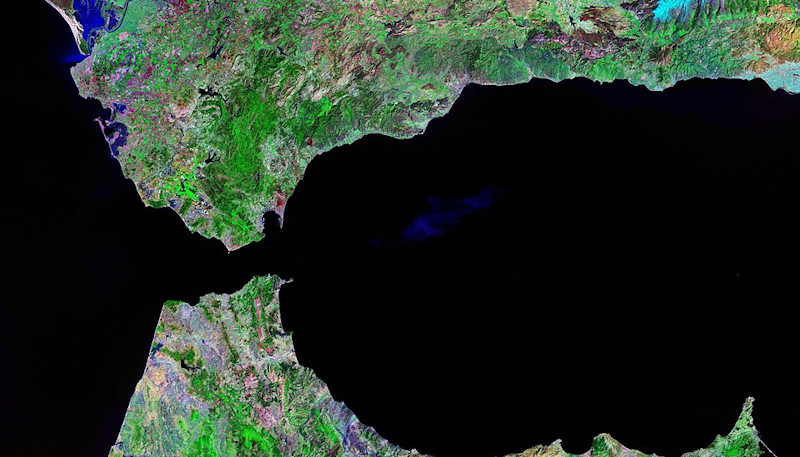
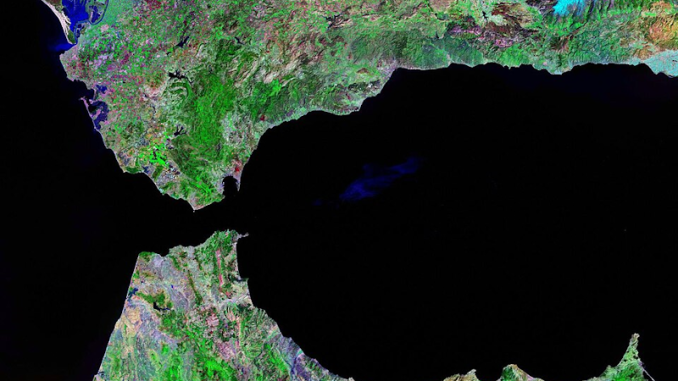
Washington’s evolving stance toward Rabat is reshaping regional dynamics, with recent developments signaling a potential shift in how the United States views Morocco’s territorial claims in Ceuta and the Western Sahara.
Since late July, a flurry of high-level exchanges between US and Moroccan officials has underscored a deepening strategic partnership. From economic investments to regional security cooperation, the two nations appear to be aligning on multiple fronts, including longstanding territorial disputes that have long defined their relations with neighboring Spain.
The timing of this rapprochement coincides with a dramatic surge in migration toward Ceuta, where tens of thousands crossed into the Spanish enclave within a single day, straining Madrid’s resources and triggering urgent discussions in Brussels.
Western Sahara remains a cornerstone of Morocco’s diplomacy
Morocco’s push for international recognition of its autonomy plan for Western Sahara reached a milestone in 2020 when the previous US administration formally endorsed Rabat’s position. Today, the Kingdom is working to ensure this support endures under current leadership.
Symbolic gestures, such as naming a major highway in Western Sahara after former US President Donald J. Trump, reflect Rabat’s broader strategy to secure continued American backing. Analysts note that maintaining US support through the current negotiations is a top priority for Morocco, particularly as international talks on the future of Western Sahara intensify.
« The Moroccan government is leaving nothing to chance in its efforts to lock in US support before a final resolution is reached, » said a regional analyst. « Every diplomatic and economic move is calculated to reinforce Washington’s alignment with Rabat’s vision. »
Economic incentives drive deeper US-Morocco collaboration
Beyond politics, economic ties are strengthening the alliance. In late July, the US Ambassador to Morocco traveled to Laâyoune, in the heart of Western Sahara, to finalize an agreement for American funding of a major hydrogen and ammonia production facility. The project not only advances Morocco’s energy ambitions but also aligns with US economic interests in the region.
« This is a win-win scenario, » explained the analyst. « The US gains access to lucrative contracts while Morocco secures critical investments that bolster its autonomy plan. » The partnership now spans political support, economic cooperation, and shared security objectives, including coordination on Israel-related initiatives.
Polisario faces growing pressure in Washington
A troubling development for the Polisario Front has emerged in the US Congress, where two lawmakers have proposed classifying the movement as a foreign terrorist organization. The proposal also calls for an investigation into alleged ties between Polisario and Iran, framing the issue within Washington’s broader campaign against Tehran’s regional influence.
While no evidence has been presented to substantiate claims of collaboration between Polisario and Iranian-backed groups, Moroccan officials have seized on the geopolitical climate to reframe the Western Sahara conflict in terms aligned with US priorities.
« Rabat is skillfully exploiting the current US-Iran tensions to present its dispute with Polisario as part of a broader struggle against Iranian proxies, » noted the analyst. « It’s a strategic narrative designed to resonate in Washington. »
Ceuta and Melilla emerge as new flashpoints
The most significant shift may be in Washington’s stance on Ceuta and Melilla. Traditionally viewed as Spanish territories, recent signals from US officials suggest a subtle but meaningful departure from this position. Observers interpret these statements as tacit support for Morocco’s longstanding claims to the enclaves, which Rabat considers occupied territories.
« US statements have increasingly blurred the lines on Ceuta and Melilla, » said the analyst. « While not an outright endorsement, the language used by American diplomats reflects a growing willingness to engage with Morocco’s narrative. »
If confirmed, this shift could strain US-Spain relations and introduce new uncertainty into regional security arrangements that have long relied on transatlantic consensus.
Ceuta’s migration crisis: intentional or opportunistic?
The timing of the Ceuta migration surge—with over 50,000 people arriving in 24 hours—has raised questions about whether it was orchestrated or merely exploited by Morocco. While an entirely manufactured crisis is unlikely, analysts believe Rabat allowed the situation to unfold before capitalizing on it politically.
« The crisis was largely spontaneous, but Morocco seized the moment to send a clear message: Ceuta remains a contentious issue, » explained the analyst. « It was a calculated reminder to both Madrid and its international partners. »
Spain navigates uncharted diplomatic waters
In response, Spanish Prime Minister Pedro Sánchez traveled to Algeria, a key Polisario ally, to strengthen energy ties. While this move may raise eyebrows in Rabat, analysts suggest it does not signal a fundamental shift in Spain’s position on Western Sahara, where Madrid continues to support Morocco’s autonomy plan.
« Spain’s engagement with Algiers is pragmatic rather than adversarial, » said the analyst. « Madrid understands the need to diversify its partnerships while maintaining its core interests intact. » The Ceuta crisis, however, is rooted in a different dynamic—territorial sovereignty and Morocco’s long-standing grievances.
Could US neutrality on Ceuta and Melilla falter?
For Spain, the stakes are high. The country has long relied on its alliances with the US and NATO to safeguard its strategic interests. A shift in Washington’s position on Ceuta and Melilla could undermine this security framework, introducing a new layer of uncertainty into an already complex regional landscape.
« The question of Spanish sovereignty over Ceuta and Melilla may not be resolved immediately, but the current trajectory suggests it could resurface in future negotiations, » warned the analyst. « The US has traditionally been a stabilizing force in the region, and any deviation from this role would have far-reaching consequences. »
A strategic triangle under pressure
The evolving US-Morocco-Spain dynamic is redefining power structures in North Africa. Morocco seeks to lock in Washington’s support for its positions on both Western Sahara and Ceuta, while the US appears focused on strategic and economic gains. Spain, meanwhile, must adapt to a less predictable transatlantic partnership.
« Rabat sees an opportunity to consolidate its gains, while Madrid faces an unprecedented strategic challenge, » said the analyst. « Western Sahara and Ceuta, once separate issues, are now converging in a high-stakes diplomatic battle over influence in the Maghreb and the Western Mediterranean. »
You may also like
South Africa’s mass shooting crisis: can Johannesburg and Cape Town ever feel safe again?
Senegal’s December 2, 2026: will Diomaye Faye dissolve parliament or play the long game?
Senegal’s 2026 budget revision: can Dakar still rescue its growth and investment agenda?
Senegal’s 2026 revised budget: a trap vote for Pastef or a necessary evil?
Burkina Faso’s armored vehicles: can Faso Armored’s 300-unit claim survive the scrutiny?