
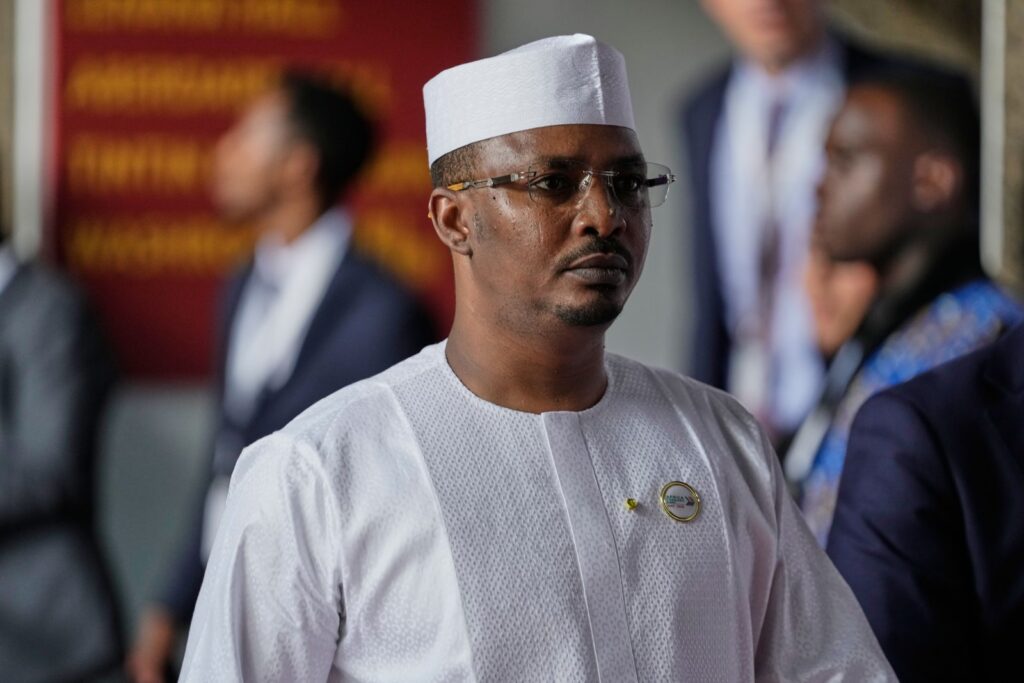
Chad withdraws from international criminal court amid tensions
N’Djamena cites the court’s uneven and limited efficiency after renewed pressure from Washington.

The government of Chad has officially declared its withdrawal from the International Criminal Court (ICC), citing its inconsistent and restricted effectiveness as the primary reason. The announcement, disclosed via a government spokesperson’s statement, follows a thorough evaluation of the court’s operations since its establishment in 2002.
«This decision reflects our assessment of the ICC’s performance over the years, which has shown limited and uneven progress,» the spokesperson stated. The government also expressed frustration over the court’s perceived overemphasis on African nations, noting that out of the thirteen investigations initiated since 2002, nine have targeted African countries—with only four addressing situations elsewhere and yielding minimal tangible results.
«As of now, the ICC holds only seven detainees, six of whom are connected to African cases,» the spokesperson added, underscoring the disparity. The statement did not mince words in criticizing the court’s geographical imbalance in pursuing justice.
U.S. influence behind the withdrawal
The decision comes shortly after a high-level discussion between the U.S. and Chad. On Thursday, a senior U.S. State Department official urged N’Djamena to reconsider its membership in the ICC during a phone call with Chad’s foreign minister. The American delegation highlighted concerns about the court’s functionality and called for a reassessment of Chad’s adherence to the Rome Statute.
However, Chad’s Foreign Minister, Abdoulaye Sabre Fadoul, swiftly clarified that the withdrawal was not a direct response to Washington’s appeal. «This is not a decision made at the request of the Americans,» he asserted in an official response.
Sudan conflict casts a shadow
The timing of Chad’s withdrawal raises critical questions, particularly given the country’s alleged involvement in Sudan’s ongoing civil war. Chad has been accused by Sudan’s military leadership and multiple human rights organizations of facilitating arms shipments from the United Arab Emirates to the paramilitary Rapid Support Forces (RSF), which have been engaged in a deadly conflict with Sudan’s army since April 2023.
French lawyer Vincent Brengarth, representing several NGOs, condemned the move, stating that it «undermines international justice efforts» and «sends a dangerous signal that perpetrators of grave crimes may evade accountability.» He referenced a 2025 complaint filed by NGOs regarding alleged international crimes linked to arms trafficking from the UAE to the RSF.
Both warring factions in Sudan have faced widespread condemnation for widespread human rights violations, including deliberate attacks on civilians and indiscriminate bombings of populated areas.
The withdrawal of Chad follows a similar announcement by Venezuela, which also cited the ICC’s geographical bias as a key factor in its decision.