How Algeria’s military pivot in Niger is disrupting Moscow’s Sahel ambitions
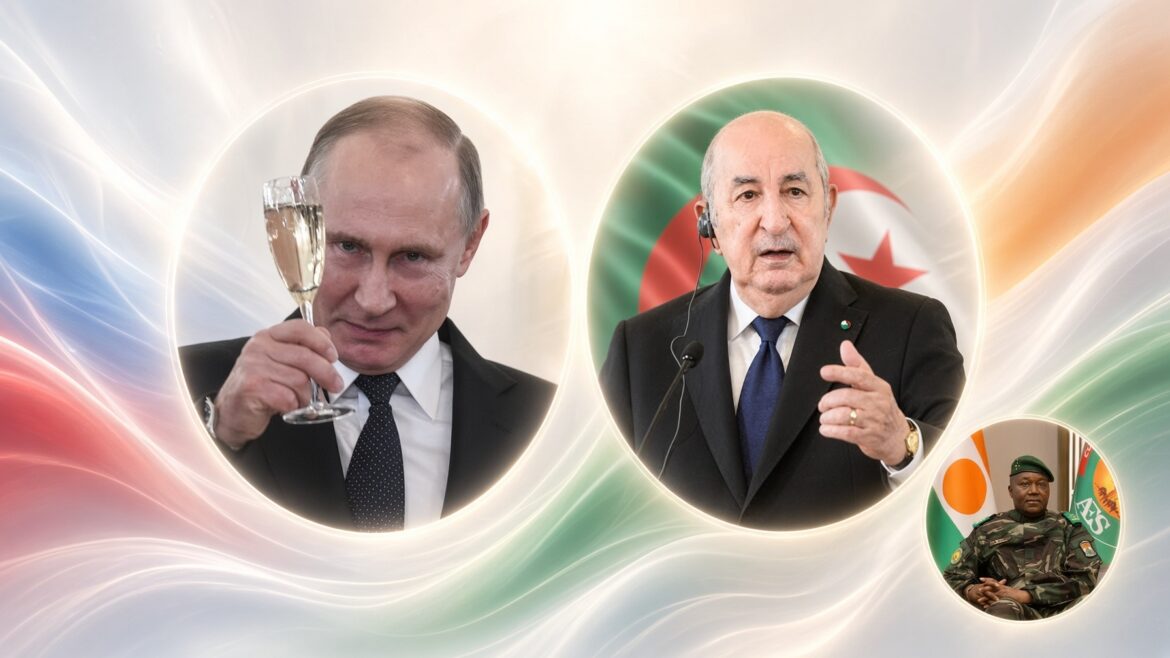
The assumption that Russia had firmly cemented its military dominance across the Sahel region following the withdrawal of Western forces has been decisively shattered. Against all expectations, Algeria’s Parliament has approved a historic troop deployment to Niger — a move unseen in the past five decades. This strategic decision does more than just break Russia’s perceived exclusive control over Sahelian security; it marks the beginning of a new, covert geopolitical battle between Algiers and Moscow on Nigerien soil.
Unravelling Moscow’s financial and military grip on Niamey
Following the political transition in Niamey, Russia swiftly positioned itself as the primary supplier of advanced military hardware to Niger. The scale of these transactions — including state-of-the-art air defense systems, tactical drones, attack helicopters, and the paid deployment of Africa Corps instructors — has already reached hundreds of millions of dollars, complemented by long-term mining and oil concessions. Yet, with Algeria’s official deployment of regular armed forces, Russia’s once-unassailable model faces an existential threat.
The presence of Algeria’s well-equipped and structured National People’s Army introduces multiple vulnerabilities to Moscow’s strategy:
- Erosion of Russian exclusivity: Algeria’s offer of high-standard security cooperation provides Niger with a credible alternative, reducing the need for continued, high-cost procurement of Russian military equipment.
- Challenge to extractive leverage: The arrival of Algerian troops undermines the indirect monetization model Russia relies on, which uses military support as a gateway to secure mining and oil licenses.
- Technical overpowering: Given Algeria’s widespread use of Soviet and Russian-origin equipment (including Su-30 jets, armored vehicles, and artillery), it now has the technical expertise to maintain Niger’s military fleet independently, cutting off lucrative maintenance contracts for Russian state-linked companies.
Energy corridors and economic survival: why Algeria cannot tolerate Russian mercenaries near its borders
For Algiers, the core motivation behind this military move is strategic security. The rise of armed Russian paramilitary groups along the southern border is perceived as a direct risk to Algeria’s vital economic interests in Niger, particularly in the oil and gas sector.
The country’s stakes are immense:
- Kafra oil field: Operated by Algeria’s state-owned Sonatrach through its subsidiary SIPEX, this high-yield oil block holds reserves estimated in the tens of millions of barrels and is central to the industrial and energy cooperation between Algiers and Niamey.
- Trans-Saharan Gas Pipeline (TSGP): A continent-spanning megaproject designed to transport over 30 billion cubic meters of Nigerian gas annually to Europe via Niger and Algeria. Ensuring the security of this corridor is non-negotiable for Algeria and incompatible with the presence of non-state armed actors.
By deploying troops, Algeria is not only protecting its energy investments but sending a clear message to Moscow: the Sahara is no longer a playground for mercenary interests. The energy lifelines connecting Africa to Europe will remain under sovereign control — and Algerian control in particular.
From supplier to rival: Algeria’s weaponization of its own military strength
Once Russia’s leading customer in Africa, Algeria is now turning its military and industrial capabilities against the very supplier it once depended on. The National People’s Army is reshaping the balance in the Sahel, compelling Niamey’s leadership to reconsider its alignment with the Kremlin.
For Moscow, which had confidently assumed control over the Alliance of Sahel States (AES), the realization is now sinking in: its security expansion in West Africa is colliding head-on with Algeria’s financial and geopolitical imperatives. The Sahara is no longer a one-sided theater. It has become a silent battleground where yesterday’s arms deals no longer guarantee today’s economic or military dominance.
The deployment of Algerian troops to Niger is not just a military maneuver — it is a declaration. It signals the definitive end of Russia’s exclusive Sahelian narrative and heralds a future of tense but necessary cohabitation where power is measured in both firepower and resource leverage.
What this silent war means for the Sahel’s future
The Algerian intervention in Niger is reshaping the geopolitical landscape of the Sahara. Far from being a routine military deployment, it represents a tectonic shift with far-reaching consequences for regional alliances, energy politics, and the balance of power between regional powers and external actors.
For the Nigerien junta, Algeria’s boots on the ground offer a rare opportunity to renegotiate its security and economic dependence on Russia. For Algeria, it reinforces its role as the indispensable guardian of Sahelian stability — and for Russia, it is a wake-up call: the era of unchallenged dominance in the Sahel is over.