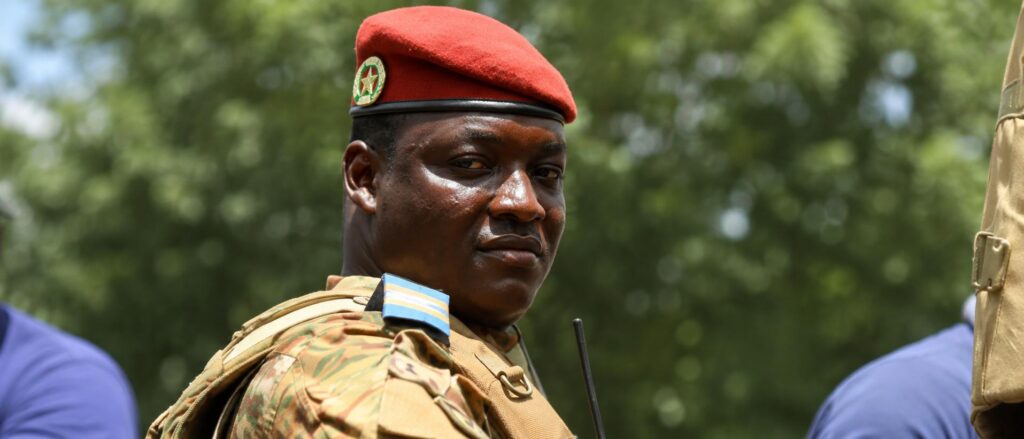
With official figures suggesting Burkina Faso now controls nearly three-quarters of its national territory (74.53%), the transitional government is pushing a narrative of successful military reconquest. Yet, when weighed against independent assessments, humanitarian reports, and the lived experiences of local communities, this proclaimed victory rings hollow—more a calculated political maneuver than an accurate reflection of battlefield realities.
When “control” means little more than fleeting presence
The government’s ambitious statistic hinges on an elastic interpretation of territorial dominance. Under this framework, even brief military patrols, escorted convoys, or the deployment of volunteer defense militias (VDP) are sufficient to classify a zone as “secured.” True territorial governance, however, demands far more: unbroken state authority, functional public services, unhindered civilian movement, and absolute safety from ambushes or militant intimidation.
In practice, armed extremist factions—particularly the Jama’at Nusrat al-Islam wal Muslimin (JNIM)—continue to dictate terms through asymmetric warfare. They routinely sever critical supply routes, besiege strategic towns the moment military convoys pull back, and enforce shadow governance over vast swaths of land.
Information blackout obscures the truth
The chasm between official claims and ground conditions stems from a deliberate clampdown on transparency. Independent security analysts, local NGOs, and media outlets face severe restrictions when attempting to publish contradictory data, often facing accusations of undermining troop morale.
Crucially, no third-party or international body has been granted access to validate the Defense Ministry’s sweeping territorial maps. Meanwhile, conflict-tracking platforms consistently highlight a surge in violent incidents across Burkina Faso, further debunking the government’s optimistic narrative.
Humanitarian collapse contradicts state triumph
If the government’s figures bore any truth, one would expect a sharp decline in displacement and emergency aid dependency. Instead, the opposite is unfolding:
- Displacement crisis deepens: Returns to home villages remain sporadic and perilous, with internally displaced persons (IDPs) still numbering in the hundreds of thousands and reliant on humanitarian aid for survival.
- Public services in disarray: Schools shuttered, health workers refusing deployment without ironclad security guarantees, and civil administrations struggling to operate beyond heavily fortified regional capitals.
Political motives behind the numbers
This triumphalist rhetoric serves domestic political agendas far more than military truths:
- Legitimizing the transition: A narrative of territorial recovery helps justify the prolonged transitional period and the heavy burdens—financial and social—placed on citizens through new taxes and conscription drives.
- Concealing tactical setbacks: Focusing on aggregate percentages distracts from the relentless attacks on isolated military units and local militias, particularly in the North, East, and the Boucle du Mouhoun region.