What’s behind Burkina Faso’s sudden clampdown on dissenting students?
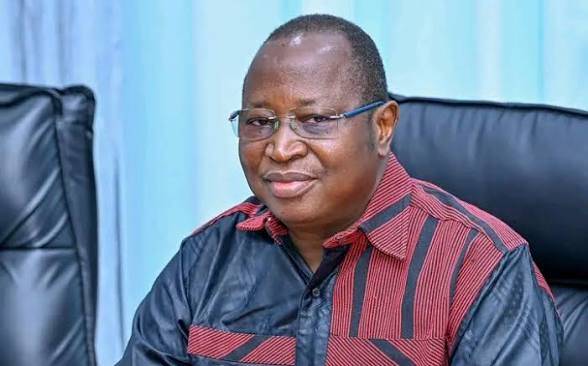
The recent outburst by Burkina Faso’s minister of Higher Education, Professor Adjima Thiombiano, reveals far more than a single verbal skirmish. It exposes a deliberate strategy of ideological enforcement in academia, where criticism is rebranded as national betrayal and critical thinking is recast as insubordination. At a flag-raising ceremony at the Ministry of Education, Thiombiano didn’t merely respond to student dissent—he declared war on it, telling diaspora students that if Burkina Faso didn’t suit them, they could “go back where they came from.”
From rhetorical attack to institutional threat: the making of a climate of fear
Thiombiano’s language wasn’t offhand. He labeled students as “lost children” and promised they would “meet all Burkinabè” who oppose their views. In doing so, he turned academic debate into a matter of ideological policing. Under this regime, student voices are no longer part of nation-building—they are framed as threats to stability. The minister’s call for education officials to “stand as bulwarks” against even “near-rebellion” behaviors effectively invites spying within universities and the systematic profiling of dissenting students.
How citizenship became conditional overnight
The minister’s directive raises a troubling question: Is Burkinabè citizenship now a privilege, granted only to those who echo official narratives without question? Diaspora students—often educated abroad and returning with diverse perspectives—are being told that loyalty is the price of belonging. This isn’t integration; it’s exclusion disguised as patriotism. By rejecting those who speak up, the government signals that it views intellectual curiosity as dangerous and independent thought as disloyalty.
This policy contradicts years of efforts to attract skilled returnees. It treats their experiences abroad—not as assets—but as liabilities. In essence, Burkina Faso is not just turning away talent; it’s declaring a zero-tolerance policy for critical minds.
The NEKRÉ Pact: education or ideological recruitment?
All this unfolds against the backdrop of the so-called Pacte NEKRÉ, a national initiative meant to “rebuild” Burkina Faso’s education system from preschool to university. But rebuilding implies renewal, evaluation, and innovation—none of which thrive in a climate of fear. When lectures become ideological boot camps and campuses resemble barracks, education ceases to be about inquiry and becomes about indoctrination.
The university, long a space for robust debate and intellectual pluralism, is being refashioned into a fortress of conformity. This isn’t education—it’s the ritualization of unquestioning allegiance. The message is clear: dissent will not be tolerated, and students who challenge the status quo will be pushed out. This isn’t a “rebirth” of education. It’s an interment of academic freedom.
What’s next for Burkina Faso’s students at home and abroad?
The minister’s ultimatum isn’t just a threat—it’s a blueprint. Students are now weighing silence against exile. Those in the diaspora face a harsh choice: conform or leave. Those studying in-country live under surveillance. The brain drain isn’t a future risk—it’s a present reality.
As universities become extensions of state doctrine, the country risks losing not just its brightest minds—but its capacity to evolve. A system that fears its students cannot build a future. Burkina Faso’s higher education isn’t in crisis. It’s being dismantled—brick by brick, voice by voice—under the banner of national pride.