The Sahel is burning, but the spotlight on Russia’s military role in Africa may be misleading. Behind the headlines of Moscow’s expanding influence lies a quieter reality: American and Chinese arms suppliers are now leading the continent’s counterterrorism supply chain, reshaping every deal, every contract, and every strategic alliance along the way.
Data reveals the shifting power behind Africa’s arms race
It’s easy to assume that Russia has become Africa’s top military partner—especially with its visible presence in Mali, Burkina Faso, and Niger. But when we look beyond the optics, the numbers tell a different story. According to the latest Stockholm International Peace Research Institute (SIPRI) data, released in early 2026 and covering 2021–2025, the U.S. now accounts for 19% of Africa’s major arms imports—outpacing China’s 17% and Russia’s 15%. France trails with just 8.3%. The shift is even more pronounced in Sub-Saharan Africa, where China leads with 22%, followed by Russia at 12% and Turkey at 11%.
These figures expose a critical truth: Africa’s military supply chain is not a monolith—and Moscow is no longer the dominant force it once appeared to be.
China’s quiet surge: from drones to defense systems
Beijing has transformed from a secondary arms player into a strategic defense partner for African governments fighting insurgents and terror groups. Its offerings run the gamut: armored personnel carriers, surveillance and attack drones, anti-aircraft systems, radars, artillery, and transport aircraft. Each category provides a direct answer to the operational gaps African armies face on the front lines.
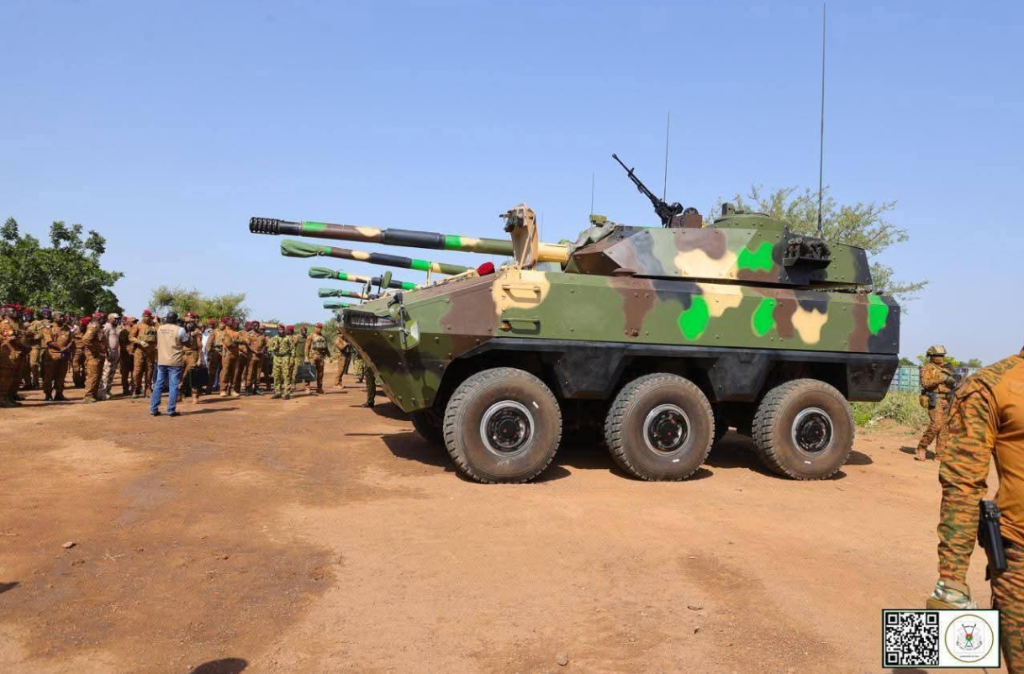
Take Burkina Faso, for example. In 2024 alone, the country received 116 Chinese-made infantry transport vehicles and six assault vehicles, marking a significant increase in mobility and protection for its forces. Meanwhile, Mali has deepened ties with Chinese state-owned NORINCO, securing not just weapons but joint training and technology transfer agreements—an approach that goes beyond arms sales to build long-term defense capabilities.
The strategic value isn’t just in firepower. Chinese-supplied drones, for instance, enhance real-time intelligence and early threat detection, while armored vehicles improve survivability and rapid response in high-risk zones. China is not merely selling weapons—it’s offering an integrated security ecosystem that includes maintenance, training, and even knowledge-sharing.
Russia’s paradox: high visibility, low market share
Despite its high-profile deployments—especially in the Central African Republic and Mali, through reorganized Wagner structures like the Africa Corps—Russia’s commercial footprint is shrinking. Global arms exports from Moscow have plummeted by 64% between 2016–2020 and 2021–2025. Sanctions, the war in Ukraine, and Russia’s internal rearmament needs have constrained its export capacity, leaving fewer weapons available for African buyers.
Yet Russia’s influence persists in a different form. Through direct military advisory, combat support, and political alliances, Moscow remains a visible security actor. This dual approach—limited arms exports but strong operational presence—creates an image of strength that belies its actual market position.
The local impact: what security really demands
For African nations, the question is no longer which foreign power sells the most guns. It’s which partnership delivers sustainable security. Terrorism doesn’t only require rifles and tanks—it demands credible intelligence, air mobility, cross-border coordination, state presence in remote zones, and well-trained forces.
New suppliers like China and the U.S. offer fresh options, but they also introduce new challenges: technological dependency, maintenance costs, spare part availability, and risks of weapon proliferation. Diversification is strategic, but it must be balanced against long-term stability.
In the end, Africa’s defense equation is being recalculated—not behind closed doors, but across negotiation tables from Nouakchott to N’Djamena. And in this new calculus, Beijing and Washington are not just participants—they are reshaping the very rules of the game.
Who really holds the future of Africa’s military alliances?
The era of a single dominant arms supplier in Africa is over. While Russia remains a visible player, its commercial lead has evaporated. Meanwhile, China’s industrial momentum, coupled with U.S. strategic allocation, has created a dynamic marketplace where no nation can dictate terms unilaterally.
African governments now have choices—and with choice comes leverage. But the true test of these partnerships will not be measured in shipment volumes or media headlines. It will be judged in the fields of the Sahel, the forests of Congo, and the streets of Mogadishu: where the fight for stability is still being waged.