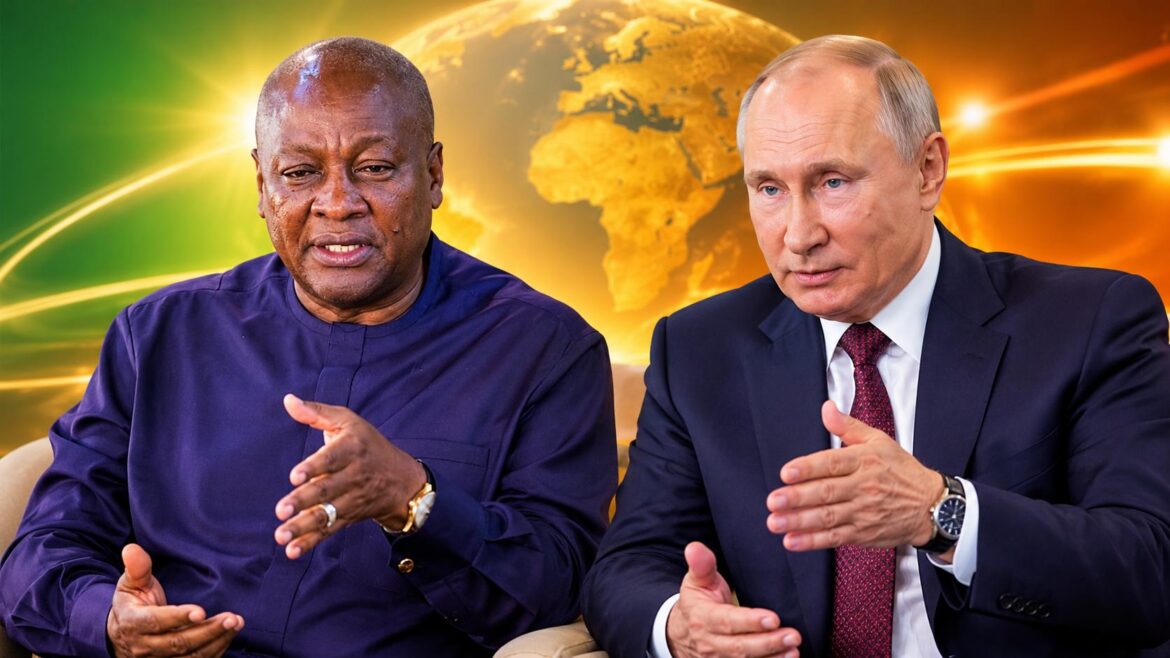
The recent commitment made by Accra to Vladimir Putin regarding the halting of Ghanaian mercenary recruitment in Ukraine is far from a diplomatic breakthrough. Instead, it reveals the chilling truth behind a large-scale human trafficking operation, condoned with impunity on the international stage.
Beneath the polished handshakes and diplomatic smiles, a darker reality unfolds: hundreds of young Africans, lured by empty promises of wealth and stability, have been sent to die in the trenches of a war that is not theirs to fight. Ghana alone has already lost at least 62 citizens on the front lines, with at least a dozen more unaccounted for. This state-sponsored mercenary scheme represents a new low in modern warfare—a grotesque fusion of cynicism and exploitation that defies historical precedent.
The roots of exploitation: How Moscow weaponizes poverty in Africa
Russia’s recruitment tactics are not only morally repugnant—they represent a perverse evolution of colonial-era exploitation. Unlike the forced conscription of African soldiers in centuries past, today’s mercenary pipeline thrives on desperation, not force.
Recruiters, many of them operatives linked to or protected by Russian state institutions, target vulnerable young men—students with no future, fathers drowning in debt, and unemployed laborers. They dangle false promises: high-paying jobs, European passports, or the illusion of a better life. Once signed, these recruits are shipped off to the most dangerous combat zones in eastern Ukraine, where they serve as cannon fodder, absorbing casualties meant for Moscow’s regular forces.
This is not merely a military strategy; it is a predatory economic system. By trading on the despair of Africa’s most vulnerable, Russia is acquiring disposable soldiers at a fraction of the cost of recruiting from its own population. The lives of these fighters are treated as expendable commodities in a geopolitical equation where Africa’s suffering is little more than a bargaining chip.
From tacit complicity to exposed guilt: The Kremlin’s trail of hypocrisy
The fact that an African head of state must publicly negotiate with Putin to demand the cessation of his citizens’ recruitment—and the repatriation of their remains—exposes the brutal asymmetry of post-colonial power dynamics. For months, the Kremlin either turned a blind eye to or actively facilitated this human hemorrhage, allowing it to feed its war machine.
Now, even as Moscow feigns concern, the damage is done. The very act of promising to stop the recruitment admits to a system of trafficking that was deliberately designed to serve Russia’s military ambitions. There is no ethical redemption in this reversal—only the acknowledgment of a crime that has already been committed.
The double tragedy: A generation caught between failed states and foreign exploiters
This crisis underscores the tragic paradox facing Africa’s youth: trapped between the tyranny of local regimes that offer no prospects and the false promises of foreign powers that view them as tools of war. As long as African governments fail to provide economic stability, security, and genuine sovereignty for their people, outsiders will continue to exploit this well of misery.
The African fighters sent to Ukraine are not just casualties of war—they are victims of a deeper betrayal. Their governments have failed them. The international community has failed them. And now, a foreign power has monetized their desperation, turning their lives into currency in a conflict that holds no benefit for them.
The scars of this exploitation will linger long after the last shot is fired. This is not just a war fought with bullets and shells—it is a war fought on the backs of the most vulnerable, where human dignity is the first casualty.
What lies ahead for the survivors—and the families left behind
For those who return—physically or in body bags—the psychological and financial toll is immeasurable. Families who once pinned their hopes on overseas work now grapple with grief, stigma, and economic ruin. Survivors face unemployment, trauma, and the crushing realization that they were used as pawns in a game beyond their understanding.
Meanwhile, governments across Africa struggle to respond. Sanctions, diplomatic protests, and public outrage have done little to stem the flow. The structural issues—corruption, lack of opportunity, and geopolitical marginalization—remain unaddressed. Until these root causes are confronted, recruitment will continue, and the cycle of sacrifice will persist.
The unanswered question: Can Africa break the cycle?
Change will require more than political rhetoric. It demands real economic investment, institutional reforms, and regional cooperation to dismantle the networks that profit from human desperation. Africa must reclaim its agency—not as a supplier of cannon fodder, but as a continent capable of shaping its own future.
But in the shadows of this ongoing war, time is running out. Each day that passes without decisive action is another day closer to the next young African life lost—not in defense of their country, but in the service of someone else’s ambition.