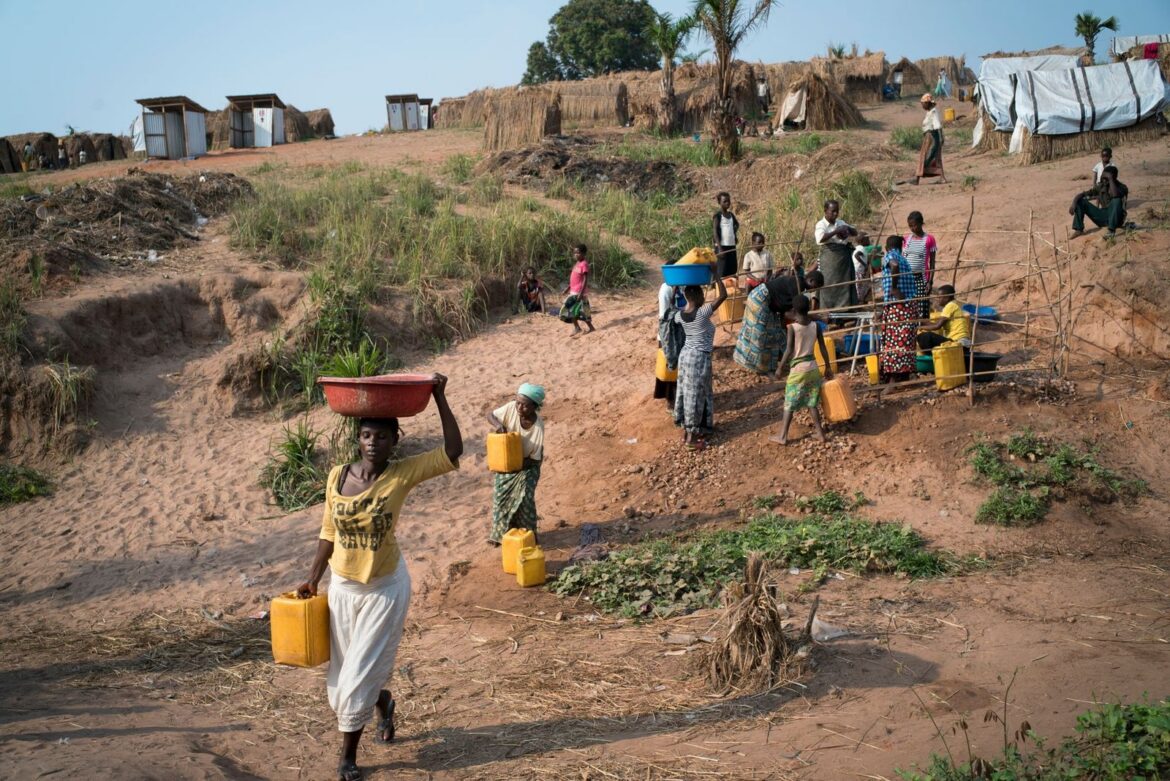
What began as a supposed anti-rebel operation has evolved into a disturbing pattern of violence against civilians in eastern Democratic Republic of Congo. A newly released United Nations report dismantles the narrative of the Alliance Fleuve Congo/Mouvement du 23 Mars (AFC/M23), exposing a systematic campaign of repression disguised as military necessity. The findings paint a stark picture of displaced communities, destroyed homes, and a fragile humanitarian landscape where the line between combatant and civilian has been deliberately blurred.
The UN’s meticulous documentation of civilian targeting
Instead of focusing narrowly on military engagements with the FDLR, investigators uncovered a far more insidious strategy. Villages perceived as sympathetic to the FDLR—or even those simply inhabited by Congolese Hutu civilians—have become primary targets. The report catalogues executions, mass displacements, and the deliberate torching of homes, actions that cannot be justified as collateral damage. These documented atrocities reflect a calculated approach to territorial control rather than a defensive war against foreign fighters.
Perhaps most alarming is the UN’s observation that distinguishing between FDLR combatants and local civilians has become nearly impossible. This ambiguity has fueled retaliatory violence against entire communities, creating a feedback loop of collective punishment that resists humanitarian intervention. Aid workers in Goma and Bukavu report a steady stream of displaced persons, their movements restricted by active combat zones and arbitrary roadblocks imposed by armed groups.
The limits of Kinshasa’s disarmament strategy
The Congolese government has long promoted a policy of voluntary disarmament for the FDLR, presenting it as the sustainable solution to the presence of Rwandan armed groups on Congolese soil. Officials point to past cantonment programs and ongoing repatriation negotiations with MONUSCO and regional partners as proof of progress. Yet this narrative is increasingly disputed by neighboring governments, particularly Rwanda, which views the FDLR as an existential threat.
Kigali’s insistence on the danger posed by the FDLR has led to accusations—substantiated by multiple prior UN expert reports—of tacit support for AFC/M23’s campaigns. While the latest UN findings do not fundamentally alter the geopolitical calculus in the Great Lakes region, they shift the debate toward the devastating human cost borne by Congolese civilians. The report forces a difficult reckoning: can military solutions ever justify the scale of civilian suffering now unfolding?
Regional diplomacy at a crossroads
The timing of the UN report coincides with critical regional peace initiatives. The Luanda Process, led by Angola, and the Nairobi Process, sponsored by the East African Community, aim to establish ceasefires, secure foreign troop withdrawals, and neutralize armed factions. However, the damning evidence against AFC/M23 complicates prospects for the group’s eventual political integration—a scenario some mediators had not yet ruled out.
The consequences extend beyond eastern DRC’s borders. International mining corporations, particularly in the coltan, cobalt, and tin sectors, face growing scrutiny over supply chains tainted by conflict financing. The EU’s proposed traceability mechanisms and corporate accountability standards now collide with the reality of a war economy where armed groups control key trade routes. Detailed documentation of human rights abuses could intensify pressure on Western buyers and transit states complicit in cross-border trade.
Yet justice remains elusive. Previous UN expert panels have rarely translated into prosecutions, despite the International Criminal Court’s ongoing examination of the Congolese situation. Human rights organizations urge that the latest evidence be channeled into concrete legal proceedings, both domestically and before the ICC. Insiders indicate the report will be reviewed by relevant UN Security Council bodies in the coming weeks, potentially setting the stage for targeted sanctions or enforcement actions.