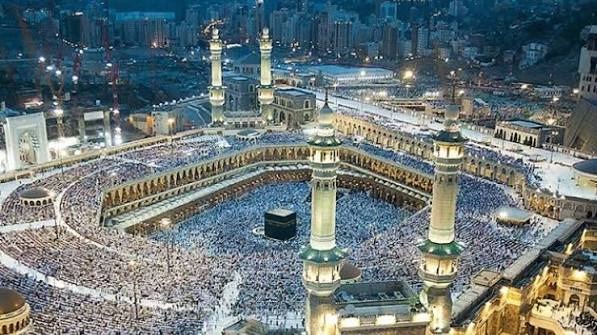
The night air over Mecca’s Grand Mosque carried more than just the scent of incense last Thursday. For millions of Muslims performing tawaf around the Kaaba, a single erratic moment nearly unraveled centuries of spiritual reverence into chaos. What began as an ordinary circuit of devotion ended with the entire Islamic world holding its breath.
The spark that lit the fuse of global alarm
Around 11:00 PM, the rhythmic flow of pilgrims circling the Kaaba came to an abrupt halt. A disturbance erupted near the main access corridor to the central plaza. Armed security personnel and plainclothes agents converged within seconds, detaining an agitated man whose erratic behavior triggered an immediate lockdown. The unfolding scene was captured in real time by pilgrims on upper-level balconies, where suddenly, phones began streaming live footage of panicked worshippers retreating in waves.
As screens across the globe lit up with viral snippets, unverified reports raced ahead of facts. Multiple regional and international news outlets published breaking alerts: an attempted suicide bombing had just been thwarted inside Islam’s most sacred sanctuary. The suspect, according to early speculation, had allegedly carried an explosive vest within meters of the Kaaba before his device malfunctioned at the critical moment.
Why panic spread faster than the truth
Even without a bomb going off, the mere suggestion that violence could intrude upon the Kaaba sent shockwaves across the Muslim world and beyond. For hours, fear gripped hearts: the sanctuary that witnessed the birth of Islam itself could have become the stage for unthinkable bloodshed. The idea that explosives might have breached such a meticulously guarded site shattered the illusion of absolute safety.
By dawn, official voices intervened to douse the flames of fear. Saudi Interior Ministry spokespeople firmly dismissed all claims of explosives, suicide vests, or bomb threats. According to their account, the intervention targeted an individual whose violent outbursts, aggressive shouting, and physical harassment of worshippers had created a dangerous disruption. Security footage reviewed by authorities confirmed no explosive devices were present, and the suspect was taken into custody without delay.
Security in the age of viral misinformation
This episode laid bare a new kind of vulnerability—not in the physical defenses of Masjid al-Haram, but in its digital periphery. In regions where geopolitical tensions already simmer, manipulated video clips and clipped security footage can generate full-blown crisis narratives within minutes. For Riyadh, the real battle is no longer just over physical threats, but over narrative control. Preventing a panic is now as vital as preventing an attack.
The fortress of faith: a look inside Mecca’s unseen shield
Masjid al-Haram stands as a testament to modern surveillance and rapid response. Beneath its golden domes and marble floors lies one of the most advanced security architectures on Earth:
- Omnipresent digital oversight: Over 10,000 high-definition cameras blanket every corner of the mosque and its surrounding plazas, feeding into an intelligence hub that uses facial recognition and behavioral algorithms to flag anomalies in real time.
- Layered human security: Thousands of National Guard, traffic police, and special forces personnel maintain a constant presence inside and outside the sanctuary, ensuring rapid containment of any disturbance.
- Rigorous access control: Entry points to Mecca and the mosque itself undergo multiple tiers of inspection, designed to intercept weapons, hazardous materials, or unauthorized individuals long before they reach the Kaaba.
A storied past of threats and resilience
The Grand Mosque’s history is punctuated by both triumph and tragedy. The 1979 siege by extremist militants led by Juhayman al-Otaybi left dozens dead and shook the foundations of Saudi legitimacy. Decades later, intelligence agencies continue to thwart planned attacks targeting the sanctuary, each thwarted plot reinforcing the monarchy’s role as the “Custodian of the Two Holy Mosques.” Security isn’t just policy—it’s theology in action.
Calm restored, but lessons linger
By sunrise, the marble floors of the mosque once again echoed with the measured footsteps of pilgrims from every continent. Sweeping crews erased all traces of the night’s chaos. The kaaba, draped in its black kiswa, stood untouched, its holiness undiminished.
Yet beneath the restored serenity lies a sobering truth: in a hyperconnected world, the threshold between peace and peril at Mecca has never been thinner. A single misstep, a misfired rumor, or a moment of misinformation can turn devotion into distress. The guardians of Islam’s holiest site now face a dual challenge: defending not only the sanctity of the Kaaba, but the trust of a global community watching every second.