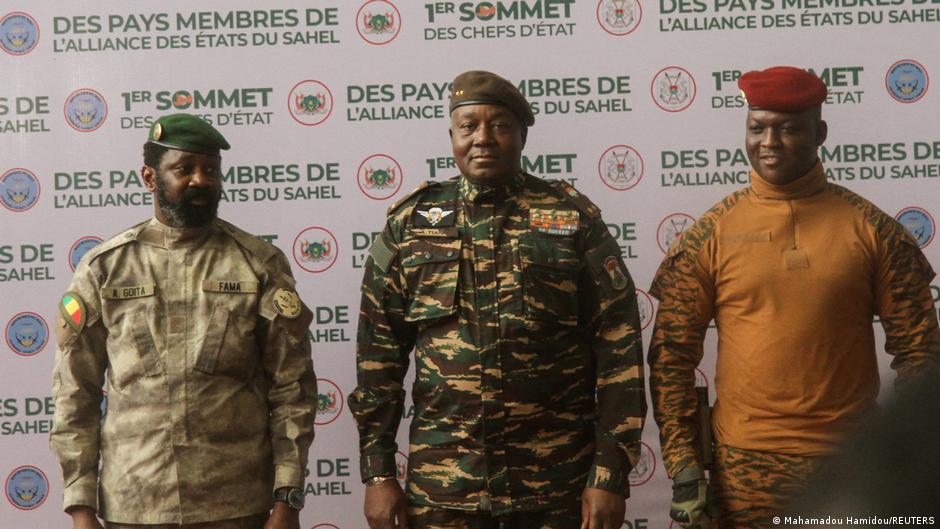
In late February, the U.S. State Department announced a five-year bilateral memorandum of understanding with Burkina Faso, committing $147 million in financial support aimed at bolstering the country’s efforts in combating HIV/AIDS and related diseases. This move followed Washington’s recent expression of respect for Niger’s sovereignty during a telephone conversation with the transitional Prime Minister, Ali Mahamane Zeine.
Meanwhile, the European Union’s Special Representative for the Sahel, João Cravinho, recently visited Bamako, despite strained relations between Mali’s military authorities and Brussels. Could this signal a gradual thaw in ties between Western powers and the Sahel’s ruling juntas?
Francis Kpatindé, a West Africa specialist and lecturer at Sciences Po Paris, examines these shifting dynamics.
analyzing the west’s evolving Sahel strategy
DW: The European Union has recently dispatched its special envoy, João Cravinho, to the capitals of the Alliance of Sahel States (AES). He advocated for a new approach the EU intends to implement. Is this the beginning of a rapprochement between these nations and the EU?
Francis Kpatindé: Caution is essential, as the Sahel has repeatedly defied expectations. While it’s premature to speak of a full thaw, there may be subtle shifts. I wouldn’t yet call this a rapprochement, as relations between Western powers and Sahelian states remain tense and limited.
DW: After Niger and Mali, is Washington’s growing engagement with Burkina Faso—evidenced by the recent HIV/AIDS and related disease funding agreement—a positive sign?
Francis Kpatindé: Absolutely. This is a positive indicator. Western powers are now offering targeted economic and humanitarian cooperation, security training, and counterterrorism support. They recognize that instability in the Sahel could have repercussions beyond the region. Abandoning these countries simply because they assert greater sovereignty would be irresponsible. However, there’s another dimension: access to critical minerals. Niger boasts uranium reserves, Burkina Faso gold, and Mali substantial gold deposits.
the eu’s pivot from regional to bilateral cooperation
DW: Has the European Union transitioned from a regional strategy to a country-by-country approach in the Sahel?
Francis Kpatindé: Indeed. Germany, for instance, maintains strong ties with several Sahelian nations, offering an alternative to France’s historical influence. Not all Sahel states want to follow France’s lead, given its colonial past in Mali, Niger, and Burkina Faso. This divergence creates opportunities for other EU members like Germany and Hungary to serve as diplomatic bridges, potentially allowing France to maintain minimal engagement with these countries.