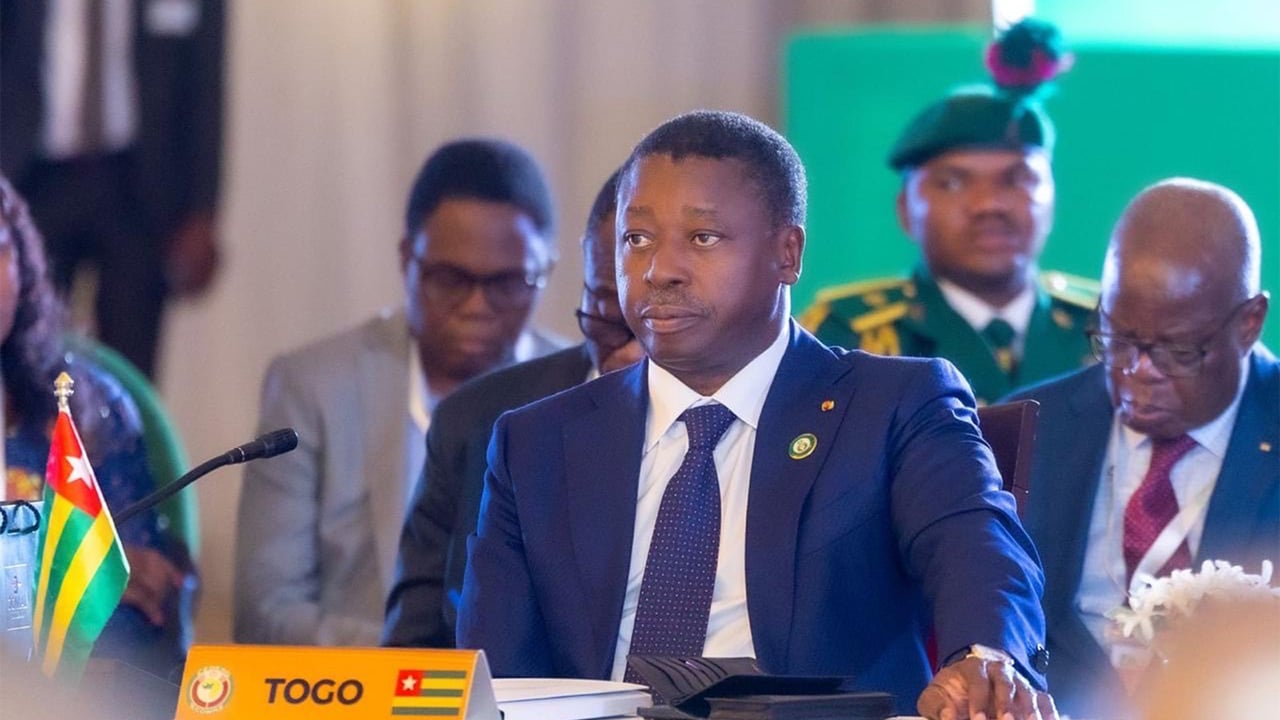

In the realm of international relations, silence can speak volumes. This became evident on 9 March, when Togo’s diplomatic circles maintained a deliberate discretion following a high-profile visit by Russia’s Defense Minister, Andreï Belousov, to Lomé. While the encounter with President Faure Essozimna Gnassingbé was confirmed by a source within the Togolese presidency, no official statement was released about the discussions held.
This strategic ambiguity reflects the careful balancing act Togo is performing on the geopolitical stage. As the country navigates relations with Russia, the Economic Community of West African States (ECOWAS), and the Alliance of Sahel States (AES), President Gnassingbé is leveraging diplomacy to secure national interests without alienating key partners.
the delicate diplomacy of the Togolese president
Faure Gnassingbé’s approach to foreign policy is characterized by measured engagement and calculated neutrality. By hosting Andreï Belousov, Togo signals its willingness to engage with Moscow, particularly in sectors like defense and security where Russian influence has grown across Africa. Yet, the absence of public communication suggests a cautious stance—one that avoids provoking reactions from Western allies or regional blocs like ECOWAS.
Togo’s position becomes even more nuanced when considering its membership in ECOWAS, a bloc that has often clashed with the AES—a coalition formed by Mali, Burkina Faso, and Niger—over governance and security issues. While ECOWAS has imposed sanctions on the AES countries, Togo has maintained diplomatic channels open with all parties involved. This delicate equilibrium allows Lomé to position itself as a mediator rather than a partisan actor.
why Togo’s neutrality matters
The Togolese capital’s diplomatic maneuvering isn’t just about avoiding controversy; it’s a calculated strategy to maximize economic and political opportunities. By not openly siding with any bloc, Togo can attract investments from multiple sources, whether from Western partners, Russia, or emerging economies. This flexibility is crucial for a country that relies on foreign partnerships for development and security cooperation.
Moreover, Togo’s stance could serve as a model for other West African nations seeking to balance competing international interests. In a region where geopolitical tensions are rising, Lomé’s approach demonstrates how small but strategically located countries can carve out a space for themselves on the world stage.
the road ahead for Faure Gnassingbé’s diplomacy
Looking forward, President Gnassingbé’s ability to maintain this balancing act will be tested as global powers continue to vie for influence in West Africa. The secretive nature of the Belousov meeting hints at a leadership style that prioritizes pragmatism over public posturing—a strategy that may well define Togo’s role in the coming years.
As the international community watches closely, one thing is clear: Togo’s diplomatic silence is not a sign of weakness, but a testament to the president’s skillful navigation through turbulent geopolitical waters.